
The Vagus Nerve
 Anatomy & Physiology
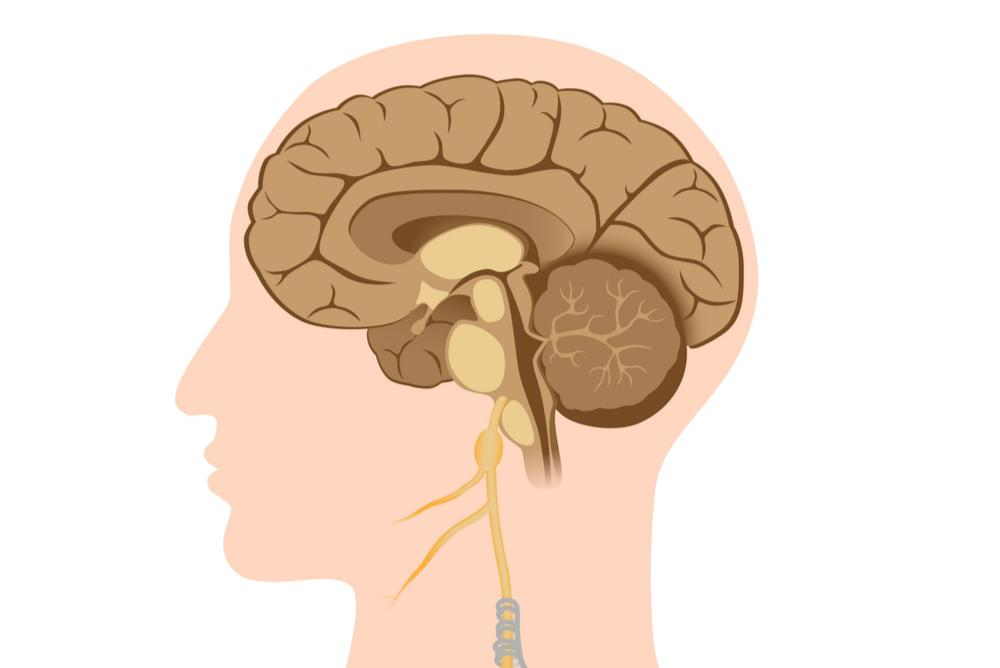
Form
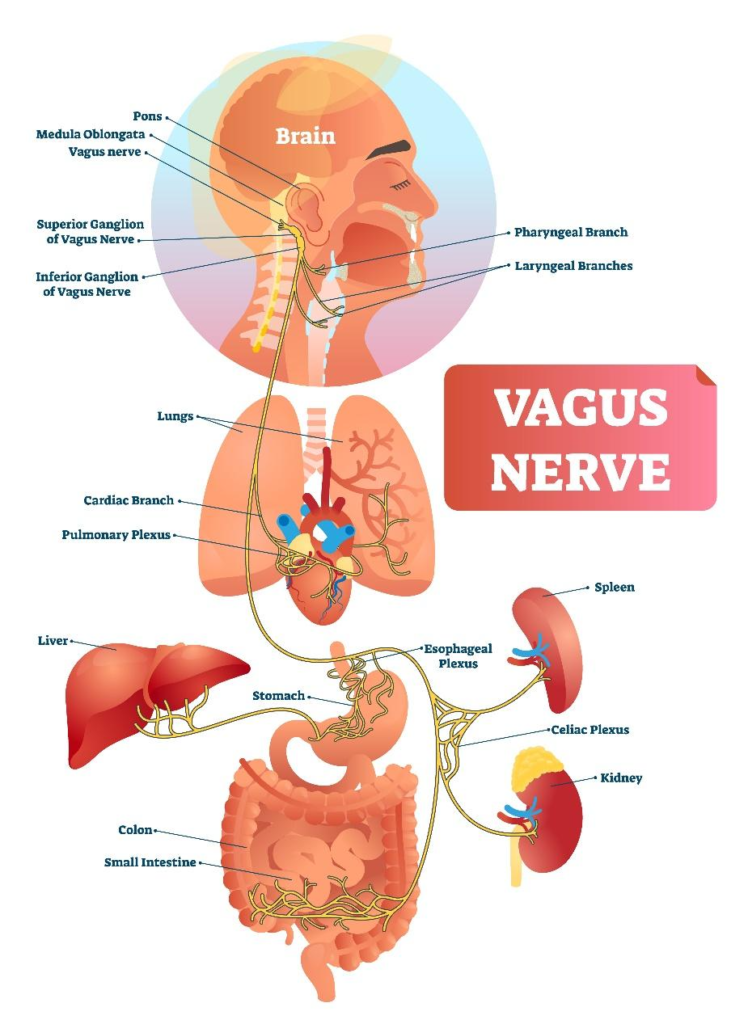
- An element of the parasympathetic nervous system, the vagus nerve is one of 12 pairs of cranial nerves that originate in the brain.
- It is the largest and most complex nerve in the body.
- From the brain, it passes through the neck, spreading nerve fibers through the body.
- “Vagus” means “wandering” in Latin and the vagus nerve is also known as the “wandering nerve” because from its two origination points in the brain, it branches out to the “lowest viscera of the abdomen, touching your heart and most major organs along the way.” (Christopher Bergland)
Function

- The vagus nerve has been called the “air traffic controller” because it helps, among other things, to regulate major bodily functions, influencing the lungs, heart, stomach and intestines.
- The vagus nerve both sends and receives signals between the brain and visceral organs.
- It sends sensory information about the state of the body’s organs to the brain. And, in a mind-body feedback loop, messages also travel to the organs, signaling if there is an inner-calm or if there is danger. (Christopher Bergland)
- In the case of chronic stress, “the SNS becomes consistently dominant and the vagal brake is less frequently applied.” (B. Grace Bullock)
In the YogaUOnline article The Vagus Nerve, Olga Kabel describes all of these functions for the vagus nerve:
- Involved in managing the Autonomic Nervous System
- Communicates between gut and brain
- Regulates muscle movement for breathing
- Helps to decrease inflammation
- Impacts heart rate and blood pressure
- Helps improve mood
- Essential in fear management
- Impacts learning and memory
- Can help relieve cluster headaches
INFORMATION / “GUT INSTINCTS” FROM ORGANS TO BRAIN
The vagus nerve is constantly sending updated sensory information about the state of the body’s organs “upstream” to your brain via afferent nerves. In fact, 80-90% of the nerve fibers in the vagus nerve are dedicated to communicating the state of your viscera up to your brain… Visceral feelings and gut instincts are literally emotional intuitions transferred up to your brain via the vagus nerve. In previous studies, signals from the vagus nerve traveling from the gut to the brain have been linked to modulating mood and distinctive types of fear and anxiety. – Christopher Bergland
LINKED TO EMOTION, COGNITION AND BEHAVIOR
It is inherently linked to social behavior through its activation of the muscles of the face and neck including those that influence facial expression and vocal resonance. Higher states of vagal tone and the capacity to effectively use the vagal brake are linked to greater emotional stability, cognitive flexibility, behavioral regulation, prosody of speech, and appropriate facial expression – all key capacities of socially skilled behavior. Conversely, poor vagal brake regulation is linked to dysfunctional behavior. – B Grace Bullock PhD
RESEARCH SHOWS MIND-BODY COMMUNICATION/CONNECTION
In 2011, [researchers]… conducted a breakthrough experiment where they stimulated the vagus nerve in rheumatoid arthritis patients by implanting an electronic device, similar to a pacemaker. Patients on the trial showed significant improvement and around one-third are in remission – off medication and effectively cured. Measures of inflammation in their blood also went down, and even those who had not experienced clinically significant improvements insisted it helped them; nobody wanted it removed… [Researchers reported that] vagal nerve stimulation appears to restore the body’s natural balance. It reduces the over-production of inflammatory proteins that cause chronic inflammation but does not affect healthy immune function… [As a result of this research,] the Western medical world’s understanding of how the body manages disease has changed forever. Tak says, “It’s become increasingly clear that we can’t see organ systems in isolation, like we did in the past. It’s very clear that the human is one entity: mind and body are one… We didn’t have the science to agree with what may seem intuitive. Now we have new data and new insights.” At last, science is catching up with what yogis and other mystic and healing traditions around the world have known for thousands of years. – Edwina Shaw
Continue Reading with Ashtanga Tech
This study guide is available to members. Join to access 800+ in-depth guides on anatomy, philosophy, sequencing, and the science of practice.
Join for $5.50/mo — the cost of a DC coffeeAlready a member? Log in here
Discussion
or explore Student Union