
⎯⎯⎯⎯⎯ ◆ ⎯⎯⎯⎯⎯
Muscle Movement and Contraction
⎯⎯⎯⎯⎯ ◆ ⎯⎯⎯⎯⎯
 Anatomy & Physiology

Vocabulary

- AGONIST — The muscle providing the predominant contraction for a movement
- AGONIST / ANTAGONIST RELATIONSHIP — When one muscle contracts, another muscle stretches
- ANTAGONIST — The muscle that performs motion in the opposite direction of the agonist; it stretches passively
- CONCENTRIC CONTRACTION — Muscle contraction causing movement against gravity; muscle actively shortens
- ECCENTRIC CONTRACTION — Muscle contraction causing a slowdown of movement with gravity; muscle actively lengthens
- FIXATOR MUSCLE — Another name for stabilizer
- INSERTION — The distal (away) attachment of muscle to bone; on the bone that is most generally moved
- ISOMETRIC CONTRACTION — Muscle contraction with no movement (muscle doesn’t change length); also called static contraction
- ISOTONIC CONTRACTION — Muscle contraction with movement
- MUSCLE CONTRACTION — The activation of tension in muscle fibers
- ORIGIN — The proximal (near) attachment of muscle to bone; on the bone that is relatively stationary
- ORIGIN & INSERTION POINTS — The places where muscles are attached to bones in relation to a movement at a joint
- PRIME MOVER — Another name for agonist muscle
- RECIPROCAL INHIBITION — An unconscious spinal reflex that causes the antagonist muscle to relax when the agonist muscle contracts
- STABILIZER MUSCLE — The muscle that fixes part of the body so that movement can occur
- SYNERGIST MUSCLES — Muscles that contract along with the prime mover to help carry out a motion
The Function of Muscles
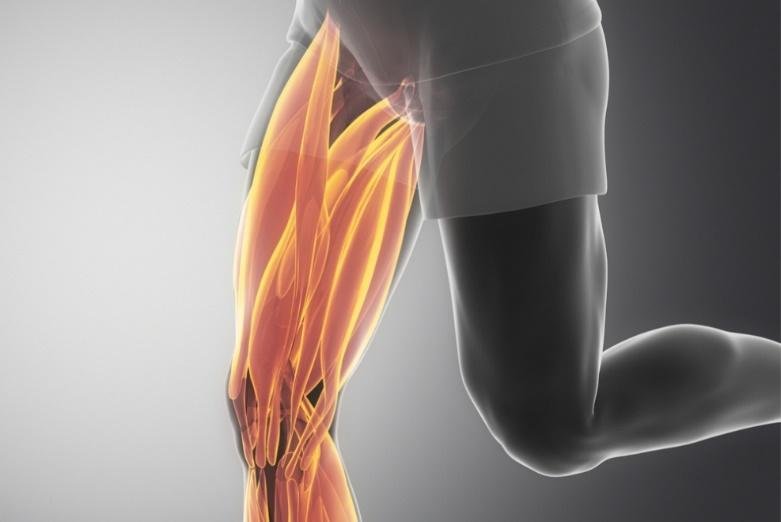
Muscles provide the force behind movement. Muscles are the only tissue in the body that have the ability to contract and therefore move other parts of the body.
Our focus here is on the way that muscles move bones. In addition, muscles are also responsible for:
- Movement of blood and lymph
- Expansion and contraction of the lungs
- Movement of solids and fluids through the digestive tract
How Does Movement Happen?
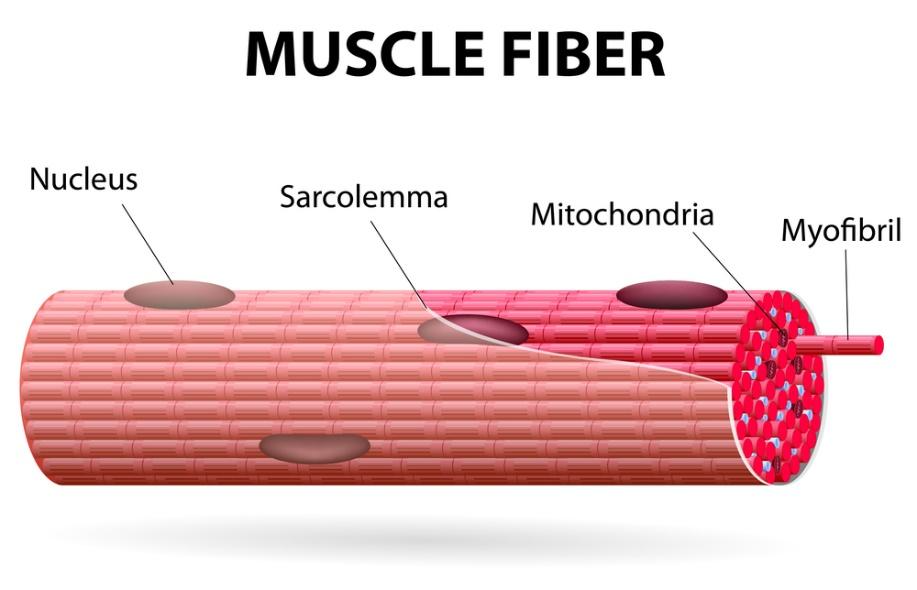
- Movement is produced by muscle fiber (bundles of specialized cells) changing shape (contracting or relaxing).
- Muscle fibers contract in response to the Central Nervous System.
- The force of the contraction is transmitted to the fascial elements surrounding the muscles and eventually on to the bones, moving the joint. (Ray Long)
- See also Flexibility & Stretching.
Continue Reading with Ashtanga Tech
This study guide is available to members. Join to access 800+ in-depth guides on anatomy, philosophy, sequencing, and the science of practice.
Join for $5.50/mo — the cost of a DC coffeeAlready a member? Log in here
Discussion
or explore Student Union