
Fostering Knee Health
 Anatomy & Physiology
Strengthening & Stretching
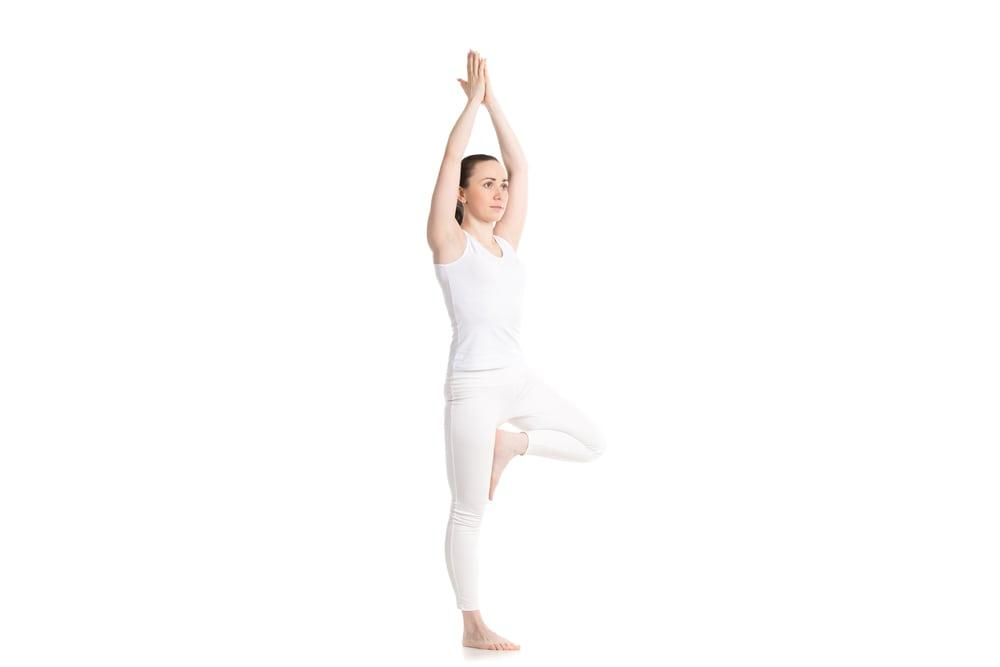
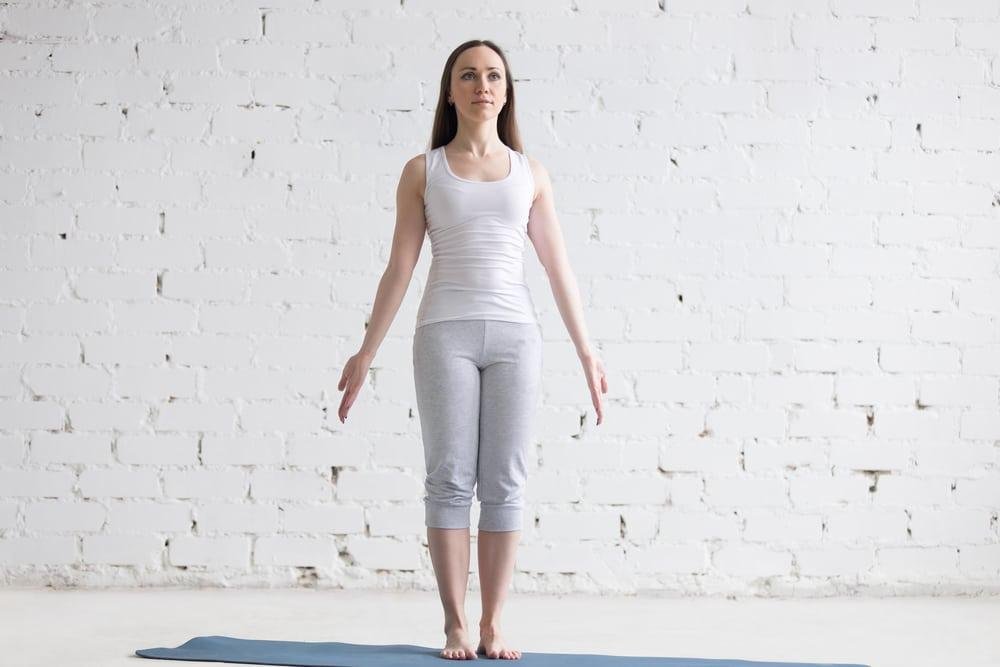
Following are advisements to balance the strength and flexibility of muscles supporting the knees.
- Work on balanced development of muscles that support the knee: quads, hamstrings, TFL and hip rotators. Stretch and strengthen muscles around hips and thighs to address full range of motion in hips, thereby protecting knees. (Anatomy of the Pelvis & Hips)
- The innermost quad muscle tends to be weak and underused, while the outer thigh muscle tends to be stronger from overuse. To keep knee tracking properly in its femoral groove, student must strengthen inner quad. (Doug Keller)
- The key to strengthening the inner quad in standing poses is proper alignment.
INDIVIDUALIZED ALIGNMENT & BALANCED MUSCLE DEVELOPMENT
We must make sure that the practitioner uses proper body alignment for her own structure. Contrary to some yoga philosophies, there is no “right” standard of alignment that can be universally applied. It must be discovered via observation and experimentation with each individual. Beyond that, the goal is to make sure the muscles that support the knee joint are balanced — that the hips, quadriceps, hamstrings and calves are flexible and strong in a balanced way. Simply strengthening one muscle group over another may do more harm than good, especially if we ignore the opposing muscle groups and don’t pay attention to overall flexibility. – Tracy Weber
Knee Locking in Life & in Poses
In this 5-minute talk, Timothy McCall MD neutrally and clearly explains the norms, considerations and subtleties around knee-locking in life and in standing poses (including standing balance).
In addition to some more common considerations, he distinguishes biomechanical effects from energetic ones.

Continue Reading with Ashtanga Tech
This study guide is available to members. Join to access 800+ in-depth guides on anatomy, philosophy, sequencing, and the science of practice.
Join for $5.50/mo — the cost of a DC coffeeAlready a member? Log in here
Discussion
or explore Student Union