
Muscle Pairs in Movement Agonist / Antagonist Relationship
 Anatomy & Physiology
Overview
In this lesson, we define key muscle pairings and explain how this knowledge can inform class planning and teaching.
Objective
Acquire knowledge of key agonist/antagonist muscle pairs in major joint movements, and name poses that utilize them.
What You'll Get
Name the agonist and antagonist muscles and give an example of a pose that utilizes each of these movements: elbow flexion & extension, shoulder flexion & extension, shoulder abduction & adduction, shoulder medial rotation & lateral rotation, spinal flexion & extension, hip flexion & extension, hip abduction & adduction, hip medial rotation & lateral rotation, knee flexion & extension, ankle dorsiflexion & plantarflexion, wrist flexion & extension. Explain how awareness of these muscle pairings impact students and provide examples of how this knowledge can inform sequencing and class planning.
Introduction
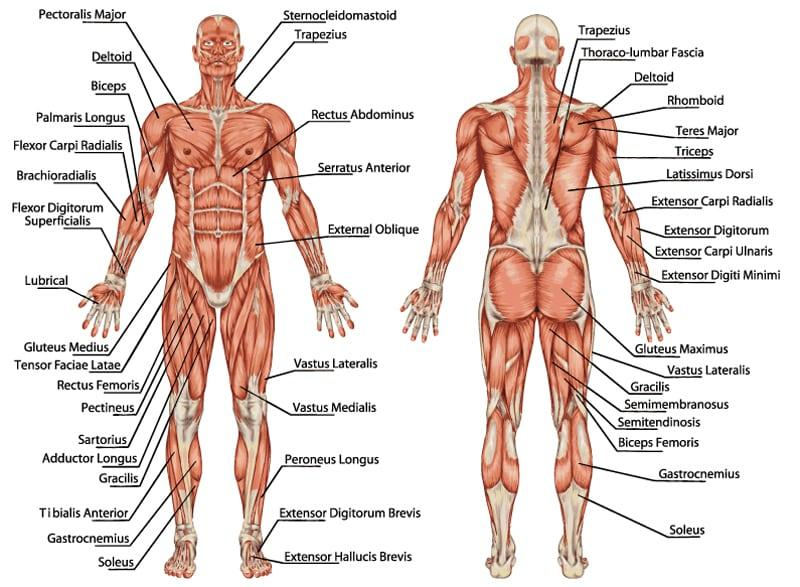
- Following are the key muscle pairs involved in various movements.
- In these examples, the agonist / prime mover and antagonist are noted from this source.
- For more information on the agonist and antagonist muscle relationship, see Muscles, Movement and Contraction.
- For definitions of movement terms such as flexion and extension, see Movement Terminology.
Elbow Flexion & Extension
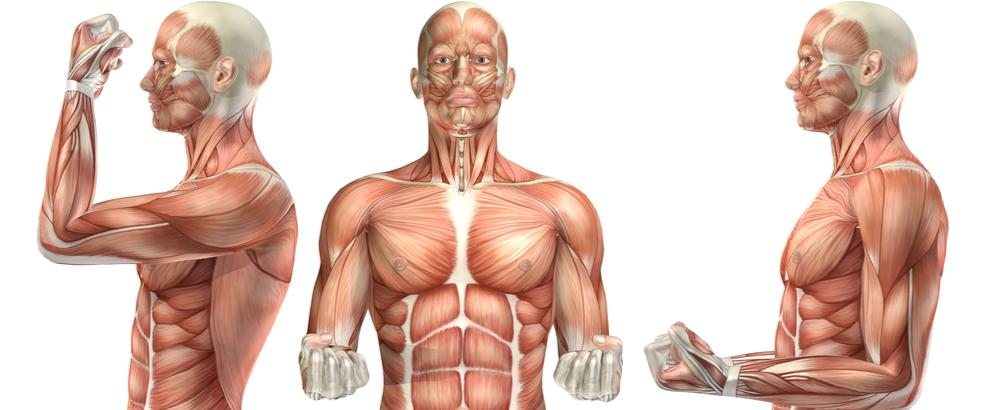
Elbow Flexion

Marjaryasana Variation

Garudasana Arms

Sarvangasana
- Bend arms
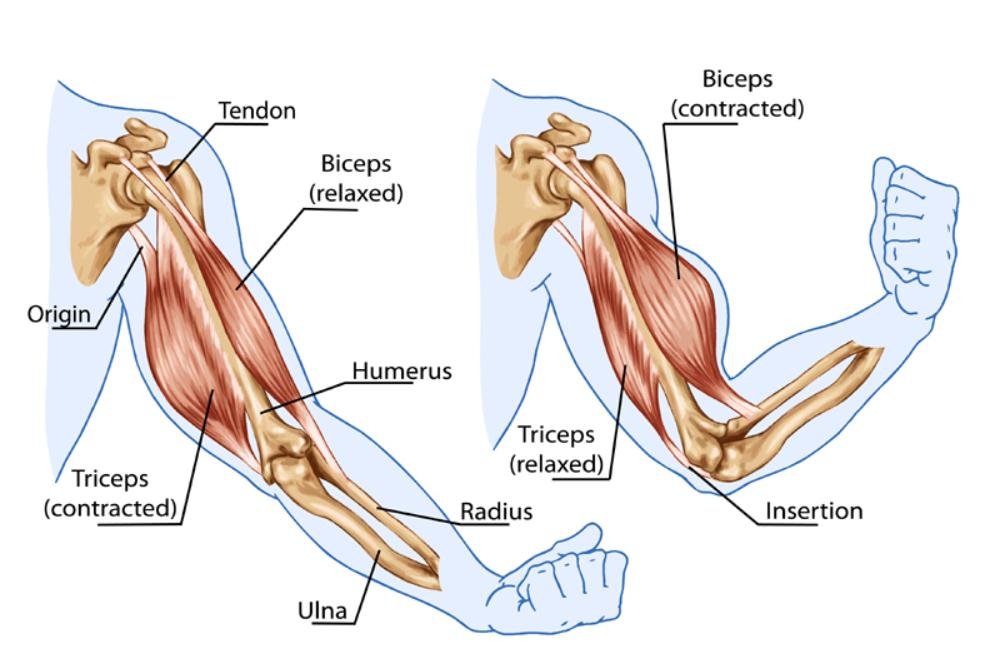
- Prime Mover – biceps
- Antagonist – triceps
Elbow Extension

Adho Mukha Svanasana

Utkatasana

Purvottanasana Variation
- Straighten arms
- Prime Mover – triceps
- Antagonist – biceps
Continue Reading with Ashtanga Tech
This study guide is available to members. Join to access 800+ in-depth guides on anatomy, philosophy, sequencing, and the science of practice.
Join for $5.50/mo — the cost of a DC coffeeAlready a member? Log in here
Discussion
or explore The Mind-Body Organism