
TA & Engaging Deeper Abs

Key Points About the TA
Introduction
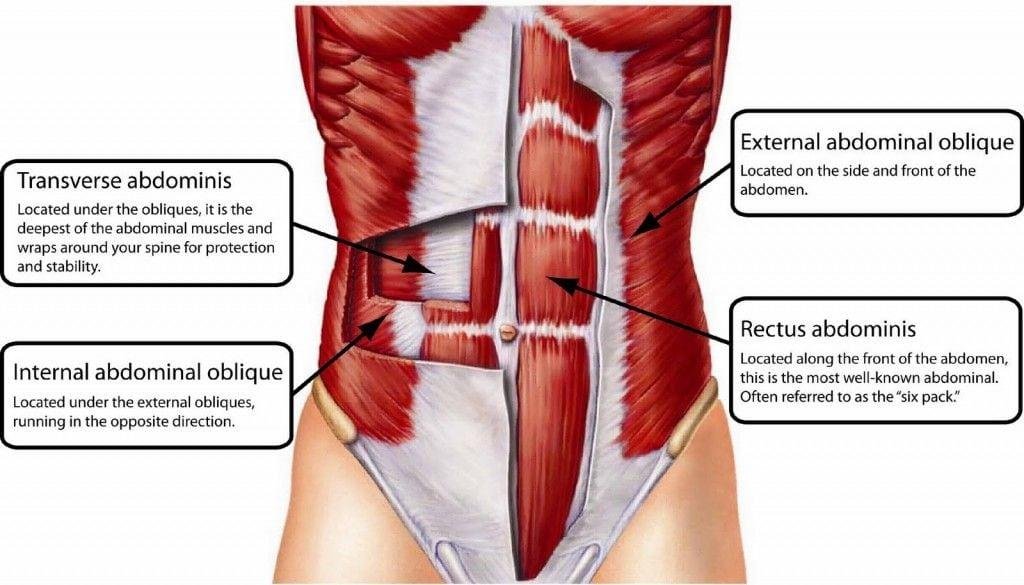
- A significant amount of expert teaching around core recruitment and strengthening is focused on the transversus abdominis (TA).
- The TA is the deepest of the abdominal muscles.
- The TA wraps around the abdomen between the lower ribs and top of the pelvis.
- “There is one transverse muscle on each side joined by a fascial sheet that connects them and allow them to act as one solid muscle.” (Core Walking)
Function
- The Transverse Abdominis supports the abdominal wall, aids forced expiration, and stabilizes the spine and pelvis before movement of the limbs.
- The TA helps with overall core stability.
- When the TA engages / contracts, it has a “corset-like” effect, slightly narrowing the waist and flattening the lower abdomen.
ETYMOLOGY& FUNCTION
Transverse means across. Abdominis comes from the Latin word abdere which means to stow away. From this then you get an idea that the abdominals, in general, function to “stow away” contents (the digestive organs)… The function of the transverse abdominis is to compress the abdominal contents. It’s the natural girdle we all wear. As is the case with all of the abdominal muscles, stabilization is a key function. – David Keil
The following video is less than a minute and shows the specific anatomical origin and insertion points for the TA: Transversus Abdominis: AnatomyOnlineCourse

THE ACHE AFTER LAUGHING HARD AND THE FOCUS IN KAPALABHATI
When you laugh until your belly aches, you are feeling your TA. It is also the muscular focus on Kapalabhati Pranayama. When properly toned, this muscle keeps your organs in place while giving support to the lumbar spine. When habitually gripped, it compresses the organs and leads to abdominal hernias, urinary incontinence, and digestive problems. – Mark Stephens
Finding & Engaging the TA
Continue Reading with Ashtanga Tech
This study guide is available to members. Join to access 800+ in-depth guides on anatomy, philosophy, sequencing, and the science of practice.
Join Ashtanga Tech!
Already a member? Log in here