
Spinal Functions
 Anatomy & Physiology
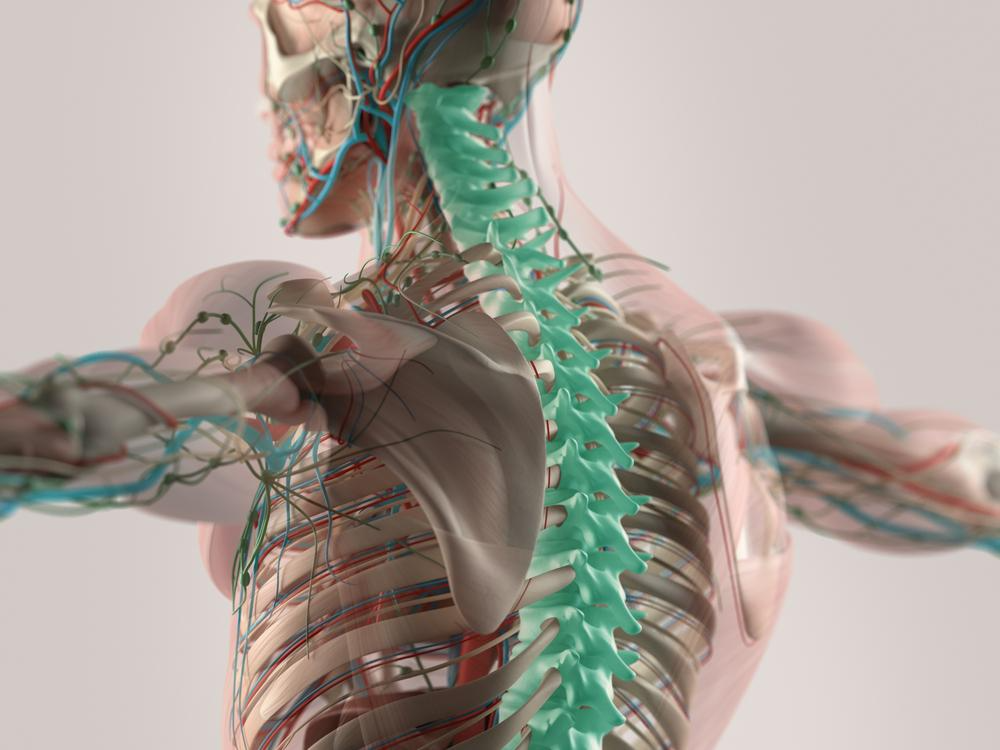
Overview
In this lesson, we introduce the functions of the spine.
Objective
Learn the functions of the spine and the attributes of a healthy spine.
What You'll Get
Describe the function of the spine and the attributes of a healthy spine. Understand the purpose of the spinal curves. Describe the function of the spinal cord and how it accomplishes its job. Give examples of the bodily areas supplied by the nerves in various parts of the spine.
Overview
- The spine houses the spinal cord which provides communication between brain and body. (The spinal cord is part of the all-important nervous system.)
- It transmits loads between the upper body and the lower body.
- The spine is designed for both movement and stability.
- The curves of the spine work like a coiled spring and provide balance, flexibility, stress absorption and distribution of energy.
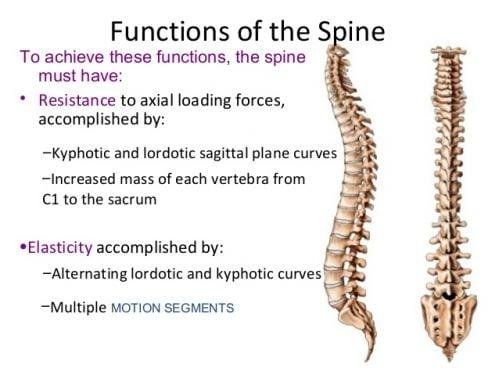
PROTECT SPINAL CORD, ALLOW MOVEMENT, SUPPORT & STABILITY
The spinal column serves a number of important functions. The individual vertebrae protect and support the spinal cord, which connects the brain and the rest of the nervous system. The bones also create attachment points for muscles and other bones, allowing for flexible movement in a range of directions. Finally, the spinal column provides critical support to the animal, and in the case of humans and apes, these bones allow the body to walk upright. – wiseGEEK
THE IMPORTANCE OF STABILITY IN UPRIGHT BIPEDS
The job of the human spine is primarily to safely transmit loads between the upper body and the lower body and secondarily to freely allow movement. Notice the order just presented: Transmitting load or stress is more important than allowing movement. So often in yoga classes, these are reversed and mobility is prized ahead of stability. In an upright biped, the spine must be strong enough to deal with the weight of the upper body pressing down onto the lower body. The spines of animals that walk on all four limbs do not have to continually bear this load; their spines can more easily focus on mobility. Our spine’s foremost priority is stability and it is most stable when in its neutral position; it is least stable when furthest away from its neutral position. – Bernie Clark
ALMOST EVERY MOVEMENT ASSISTED BY MOVEMENT OF THE SPINE
The spine was developed over millions of years of human evolution to support the body’s weight and to protect the spinal cord. The curve of the spine can withstand great amounts of stress by providing a more even weight distribution. Also, when we walk or run, our spines undulate to support our movements. Amazingly, almost every human movement is assisted by the movement of our spine. If the spine doesn’t move well, we have to compensate by engaging other parts. – Kyoko Jasper
Flexibility, Alignment & Stability
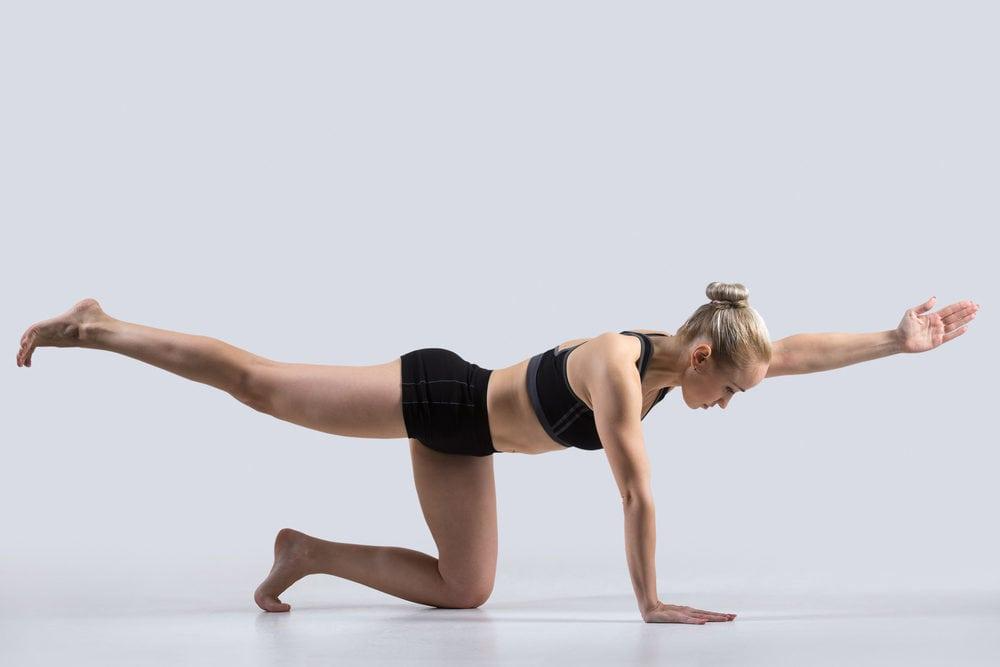
- The spine is designed for movement and for stability, and a healthy spine demonstrates these attributes.
- Stability is due to the structure of the discs and facet joints.
- Mobility of the trunk is due to the flexibility of the vertebrae.
- “The curves work like a coiled spring to absorb shock, maintain balance, and allow range of motion throughout the spinal column.” (Anatomy of the Human Spine)
SPINAL STABILITY
This stability is created in part by the structures in the column that resemble the legs of a tripod stool. These three structures are the intervertebral disc as one leg of the stool and each of the facet joints as the other two legs. When you stand with all the normal curves undisturbed, that is, in the anatomical position, the curves are in a neutral position, and all three legs of the stool are in contact. This is the position in which the spinal column is the most stable. – Judith Lasater
SPINAL CURVES WORK AS SHOCK ABSORBER
[The four spinal curves] provide balance and fluidity of movement. They act as a coiled spring that imparts lightness by working as a shock absorber transferring and dissipating energy. If the curves didn’t exist and if the spine were straight, it would move more like a tight, rigid wire—hard to move and unable to withstand twisting, bending, and extension. – Susi Hately Aldous
Continue Reading with Ashtanga Tech
This study guide is available to members. Join to access 800+ in-depth guides on anatomy, philosophy, sequencing, and the science of practice.
Join for $5.50/mo — the cost of a DC coffeeAlready a member? Log in here
Discussion
or explore Anatomy & Physiology