
Nervous System Overview
 Anatomy & Physiology
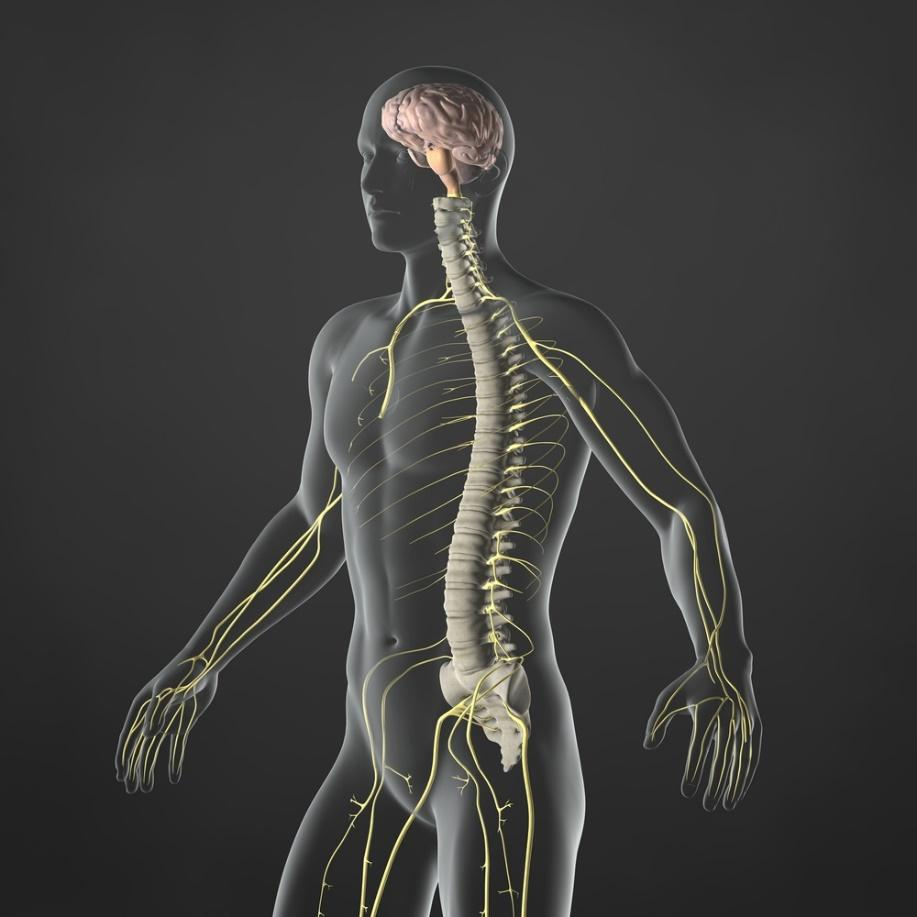
Overview
In this lesson, we introduce the anatomy (structure) and physiology (functions and relationships) of the nervous system.
Objective
Gain an understanding of the foundational anatomy and physiology of the nervous system.
What You'll Get
Define the nervous system and its functions. Explain what is included in the central nervous system (CNS), peripheral nervous system, somatic and autonomic nervous systems. Explain what is associated with the sympathetic nervous system and with the parasympathetic nervous system.
Lesson Overview
In this lesson, we introduce the anatomy (structure) and physiology (functions and relationships) of the nervous system.
Objective
Gain an understanding of the foundational anatomy and physiology of the nervous system.
Description
Define the nervous system and its functions. Explain what is included in the central nervous system (CNS), peripheral nervous system, somatic and autonomic nervous systems. Explain what is associated with the sympathetic nervous system and with the parasympathetic nervous system.
Vocabulary

- AUTONOMIC NERVOUS SYSTEM (ANS) — Governs the typically automatic functions, including breathing, heart rate and the endocrine (hormone) system
- CENTRAL NERVOUS SYSTEM (CNS) — The brain and spinal cord
- NERVOUS SYSTEM — The body’s “electrical wiring” consisting of the brain, spinal cord, neurons, nerves, meninges, cerebrospinal fluid and sensory receptors
- NEURON — A cell that is the “basic working unit” of the nervous system, communicating via electrical signals which are converted into neurotransmitters
- PARASYMPATHETIC NERVOUS SYSTEM — Controls the Relaxation Response and the Rest and Digest state
- PERIPHERAL NERVOUS SYSTEM — All the nerves that lie outside of the spinal cord and brain
- SOMATIC NERVOUS SYSTEM — Controls conscious bodily activities such as moving the arm
- SYMPATHETIC NERVOUS SYSTEM — Triggers the stress response
Continue Reading with Ashtanga Tech
This study guide is available to members. Join to access 800+ in-depth guides on anatomy, philosophy, sequencing, and the science of practice.
Join for $5.50/mo — the cost of a DC coffeeAlready a member? Log in here
Discussion
or explore Anatomy & Physiology