
Stress & Relaxation Response
 Anatomy & Physiology
Overview
In this lesson, we introduce the physiology of sympathetic and parasympathetic nervous system activation.
Objective
Understand the functioning of the sympathetic and parasympathetic nervous systems, and the workings of the Stress Response, Fight or Flight Response and Relaxation Response.
What You'll Get
Explain how the nervous system responds when experiencing stress and give examples of positive triggers for the Stress Response. Describe what happens when stress is perceived to be excessive or threatening. Give examples of conditions that activate the Fight or Flight Response. Explain how the Fight or Flight Response is helpful and under what circumstance it’s harmful. Describe the Relaxation Response and practices that have been shown to initiate it.
Vocabulary

- FIGHT OR FLIGHT RESPONSE— A physiological reaction that occurs when stress is perceived to be excessive or threatening
- HYPERAROUSAL OR ACUTE STRESS RESPONSE — Other names for Fight or Flight Response
- RELAXATION RESPONSE — A physical state of deep rest that changes the physical and emotional response to stress; the opposite of the Fight or Flight Response
Sympathetic Nervous System Activation

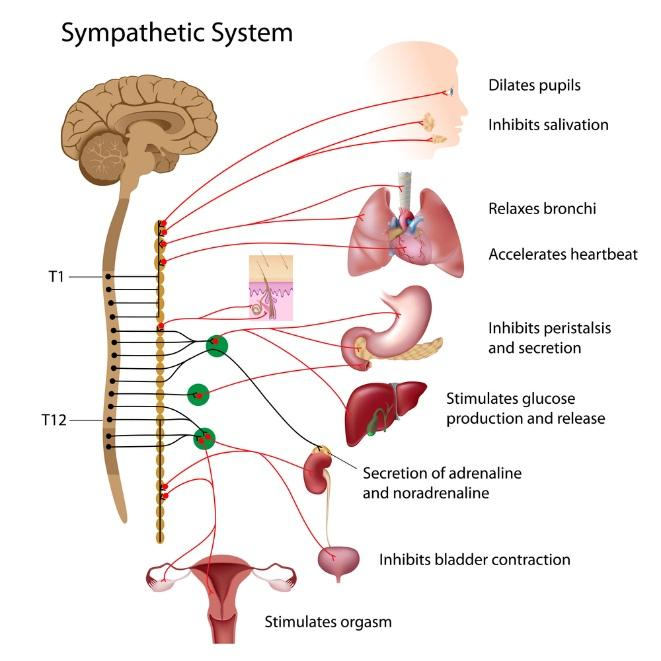
When experiencing stress, the sympathetic nervous system is activated. When stress is perceived to be excessive or threatening, a physiological reaction called the Fight or Flight Response (also called “hyperarousal” or “the acute stress response”) occurs.
- When we experience stress, the sympathetic nervous system moves us from a state of balance to a state of preparation for action.
- The stress response includes an increase in heart rate, breathing rate, muscle tension and elevation of cortisol and other stress hormones.
- Positive challenges such as creating art or participating in a competitive athletic event, for example, may invoke the stress response without causing the Fight or Flight Response. (See more below.)
STRESSORS ARE EXTERNAL, INTERNAL, NEGATIVE, POSITIVE
Stressors are external or internal events that stimulate your nervous system. So if you think about it, any kind of significant change in your life is a stressor. While we tend to think of stressors being negative changes… stressors include many types of positive changes, such as getting married, having a baby, starting a new job, moving to a new city, performing on stage, and so on… And the more significant the change is (in your mind, that is—not everyone experiences the same types of changes in the same ways), the more your sympathetic nervous system is stimulated and the more “stress” you experience. – Nina Zolotow
Continue Reading with Ashtanga Tech
This study guide is available to members. Join to access 800+ in-depth guides on anatomy, philosophy, sequencing, and the science of practice.
Join for $5.50/mo — the cost of a DC coffeeAlready a member? Log in here
Discussion
or explore Anatomy & Physiology