
Respiratory Anatomy Part 1 – Introduction
 Anatomy & Physiology
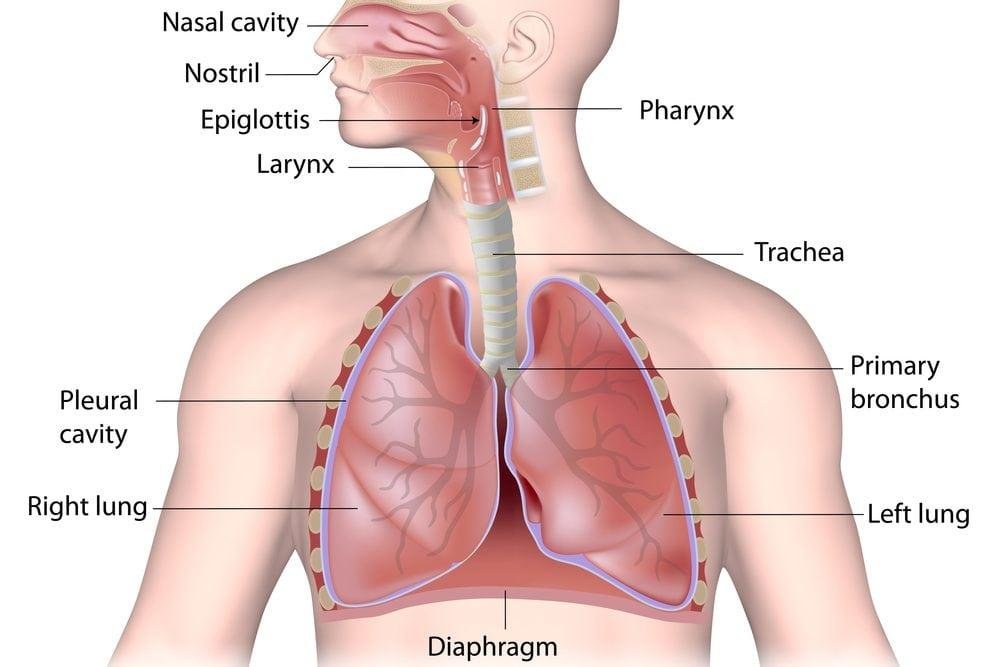
Overview
In this lesson, we introduce the physiology of the respiratory system.
Objective
Gain an understanding of the foundational physiology of the respiratory system.
What You'll Get
Define breathing and respiration. Explain what causes breathing and its purpose. Describe the contents of the thoracic and abdominal cavities and how they change during breathing. Understand why lungs cannot be moved directly at will and the principal muscle involved in breathing. Describe the diaphragm and the movement of the diaphragm during relaxed breathing. Explain problems that a person may have with their diaphragm.
- ABDOMINAL CAVITY —The part of the trunk beginning at the lower rib cage and encompassing the space down into the pelvis; contains digestive organs; during breathing, changes shape but NOT volume
- BREATHING — The movement of air into and out of the lungs
- DIAPHRAGM — A dome-shaped muscle located at the base of the lungs; separates the thoracic and abdominal cavities
- RESPIRATION — The act of breathing
- THORACIC CAVITY — A sealed-off container for the lungs and heart; during breathing, changes shape AND volume
Intro to Breathing & Respiration
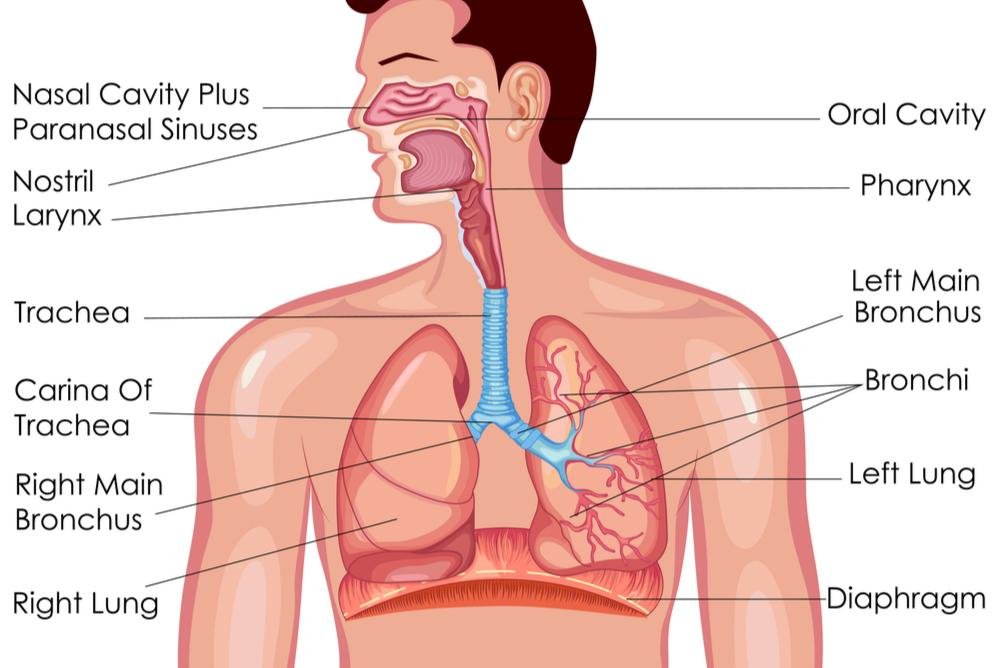
- Breathing is the movement of air into and out of the lungs.
- The primary purpose of breathing is to supply fresh oxygen to the blood and cells, and to discharge carbon dioxide.
- Respiration is the act of breathing.
- Breathing is defined as the “physical and chemical processes by which oxygen is conveyed to tissues and cells, and the oxidation products, carbon dioxide and water, are given off.” (Dictionary.com)
TAKING AIR INTO & OUT FROM LUNGS
Breathing is the process of taking air into and expelling it from the lungs… The passage of air into and out of the lungs is movement, one of the fundamental activities of living things. Breathing… is caused by a three-dimensional changing of shape in the thoracic and abdominal cavities. – Leslie Kaminoff
STARTS WITH INDEPENDENT LIFE, ENDS WHEN LIFE CEASES
Breathing starts with independent life outside the mother and ends when life ceases… During most of one’s life, the depth and rate of breathing are self-regulated through the nervous system to meet the purposes of breathing: to supply in a regulated and controlled way the fresh oxygen which is constantly needed by the cells, and to discharge the carbon dioxide accumulated in them. – B.K.S. Iyengar
OXYGENATION OF THE BLOOD
The unchanging and constant goal of respiration is the oxygenation of the blood. The cells in the tissues need oxygen to function properly, and it is brought to them via the arterial blood, which comes from the lungs and the heart. This mechanism produces a waste product, carbon dioxide, which is carried in the venous blood back to the heart and lungs… Since oxygen cannot be stored in the body, respiration is required without cease, day and night. However, the act of breathing does not always strictly depend on the oxygen needs of the body. [It] may also serve other purposes and be dependent on other circumstances. – Blandine Calais-Germain
How it Works
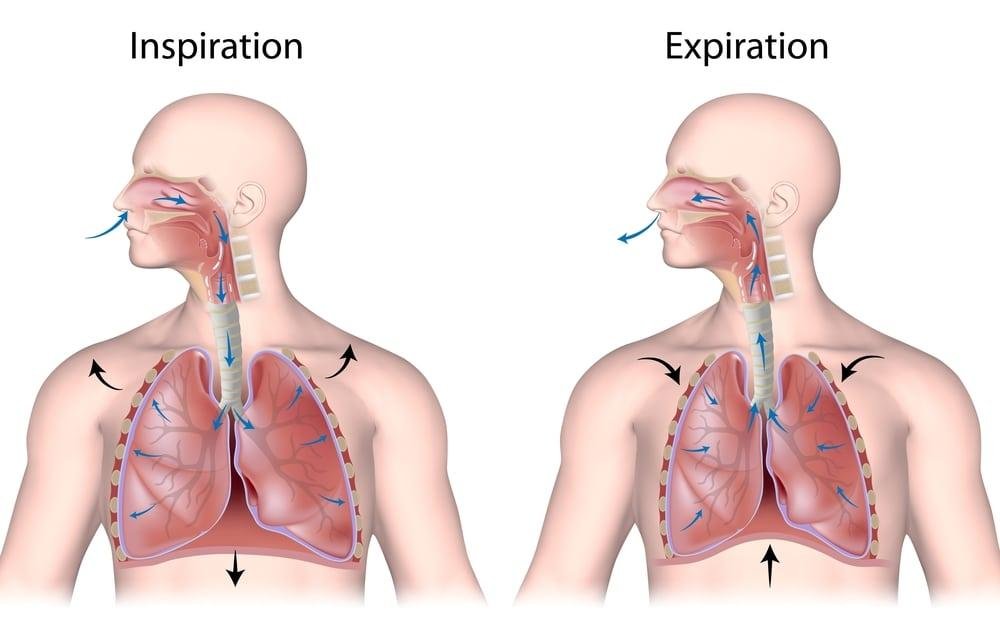
- Breathing is caused by the thoracic and abdominal cavities changing shape.
- Breathing occurs not only at the “level of the organs” but also at the “level of movement.” It involves both the nervous system and muscles.
ORGANS & SYSTEMS WORK TOGETHER
Many different organs and systems in your body work together to enable us to do what we simply call “breathing.” – Baxter Bell, MD
THE EXCHANGE OF OXYGEN & CARBON DIOXIDE
Every cell in the body needs to breathe—taking up oxygen, burning fuel, generating energy, and giving off carbon dioxide. This process, known as cellular respiration, depends on an exchange—moving oxygen all the way from the atmosphere to lungs, to blood, and to cells, and at the same time moving carbon dioxide from cells to blood, to lungs, to atmosphere. – H. David Coulter
AN INTERFACE BETWEEN ORGANS & MOVEMENT
Breathing occurs on the level of the internal organs, just like the beating of the heart; but in contrast to the heart, it also involves muscles, certain parts of the skeleton and joint articulations. It cannot be separated from these. Breathing thus becomes an interface between two levels: the level of the organs and the level of movement. It can therefore be controlled, albeit with limitations, by the nervous systems’ management of either one of these two levels. – Blandine Calais-Germain
Continue Reading with Ashtanga Tech
This study guide is available to members. Join to access 800+ in-depth guides on anatomy, philosophy, sequencing, and the science of practice.
Join for $5.50/mo — the cost of a DC coffeeAlready a member? Log in here
Discussion
or explore Anatomy & Physiology