
Winter Solstice
 Themes
Overview
In this curation, we introduce the part of the calendar and Wheel of the Year known as Winter Solstice.
Objective
Become familiar with the Winter Solstice and with yoga techniques that may help to align with and balance the energies of this time.
What You'll Get
Explain why yoga teachers might care about Wheel of the Year observations. Define “solstice.” Describe the Winter Solstice and explain why the sun appears to stand still at that time. Provide some themes associated with Winter Solstice and yoga teachings you might offer to support a focus on the Winter Solstice.
Theme Overview
In this curation, we introduce the part of the calendar and Wheel of the Year known as Winter Solstice.
Objective
Become familiar with the Winter Solstice and with yoga techniques that may help to align with and balance the energies of this time.
Description
Explain why yoga teachers might care about Wheel of the Year observations. Define “solstice.” Describe the Winter Solstice and explain why the sun appears to stand still at that time. Provide some themes associated with Winter Solstice and yoga teachings you might offer to support a focus on the Winter Solstice.
The Longest Night
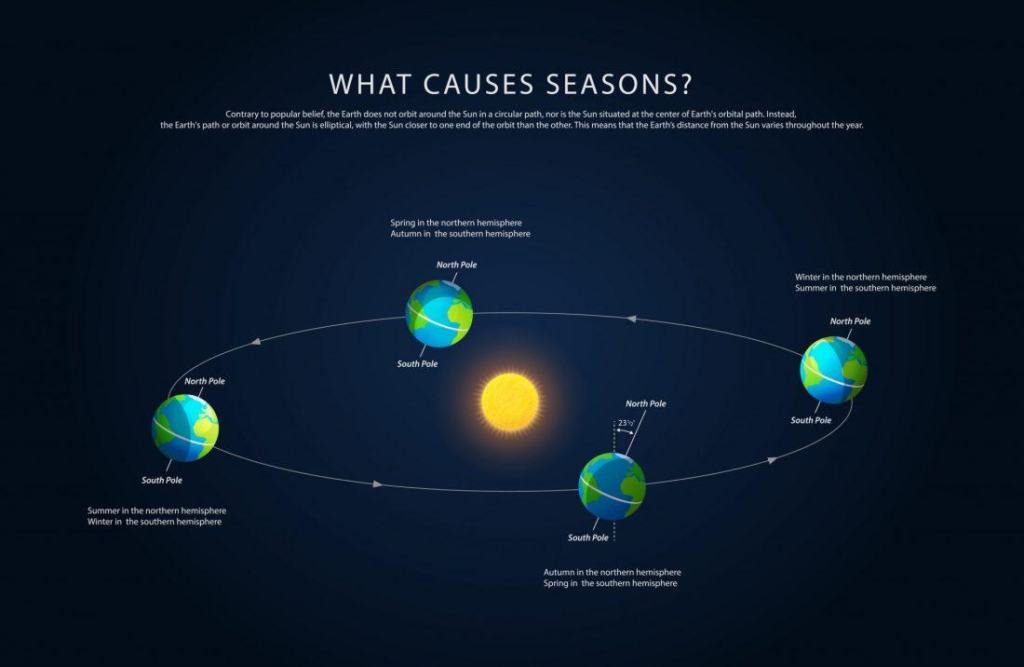
The Tilt of the Earth’s Axis
Seasons are experienced because of the tilt of the earth’s axis, not because of distance from the sun.
- The seasons are caused as the earth, tilted on its axis, travels around the Sun.
- Summer happens in the hemisphere tilted towards the sun and winter happens in the hemisphere tilted away from the sun.
- Earth is closest to the sun every year in early January, when it’s winter in the Northern Hemisphere.
When the Sun “Stands Still”
The word “solstice” comes from the Latin word solstitium meaning “the sun stands still.”
- Due to the earth’s tilt, the sun appears to rise and fall.
- On solstice, the sun appears to stand still as it pauses and reverses direction (as seen from earth).
The Longest Night
Winter Solstice marks the shortest day and longest night of the year.
- On Winter Solstice, we experience the deepest darkness from which “light is reborn.” Days begin to get longer after the Winter Solstice.
- Across cultures, festivals, gatherings, rituals and celebration are common around this time.
- Gatherings to celebrate the gradual return of light may include candlelight, bonfires and “making merry.”
Continue Reading with Ashtanga Tech
This study guide is available to members. Join to access 800+ in-depth guides on anatomy, philosophy, sequencing, and the science of practice.
Join for $5.50/mo — the cost of a DC coffeeAlready a member? Log in here
Discussion
or explore Themes