
Why Thoughts & Beliefs are So Powerful & How They Create & LIMIT Our Reality
 Themes

Introduction
Image from Dr. Joe Dispenza’s site here.
OUR THOUGHTS & BELIEFS MAKE US UNAWARE THAT WE’RE MISSING ANYTHING
Boxed realities are limited versions of reality achieved by avoiding or rejecting realities that do not accord with the limited version. Boxed realities are usually thought of as complete in themselves, and so there is no awareness or recognition of knowledge that is absent or missing in them. What IS missing or absent in boxed realities is usually more significant than whatever is present in them. – Ingo Swann
Our thoughts and beliefs (some of which we aren’t conscious of) are the lens through which we perceive the world. The lens comes to dictate our truth and our limitation, and thus, our very lives. Our thoughts and unconscious beliefs are thus the basis of our reality.
If we aren’t curious, if we don’t question or test our current reality, we create, as Ingo Swann points out, an extremely limited version of our potential reality. Not only may people neglect to question their beliefs, they often feel as if their awareness is complete with nothing missing; therefore, they can be completely unaware of how much more of vast consciousness they are not recognizing or tapping into.
In the first ten minutes of this 2019 video, Scott Schwenk introduces the power of belief to color our reality.
There are at least five notable reasons why beliefs make such a powerful impact on our lives:
- Beliefs that resulted from thoughts that may once have served a role remain unquestioned, severely limiting personal development.
- Some beliefs can become inseparable from the most basic concept of who we are: our self-concept, our identity.
- Thinking and beliefs are enmeshed.
- Beliefs guide actions which then reinforce beliefs.
- Beliefs and thoughts program the brain, and thus our five-senses reality.
A MEGA-THICK LENS
For most people, beliefs form a mega-thick lens through which they view reality. – Paul Marko PhD
BELIEFS SHAPE OUR REALITY
[The] movie, …“What the bleep do we know?!” … gave a simple and down-to-earth introduction to the confusing world of quantum physics. One of the scientists interviewed for the movie was asked: “So hypothetically – can you walk on water?” To which the scientist replied: “Yes you can, if you truly believe it.” The entire movie is really about the power of belief to shape our reality, and make no mistake – we do it all day every day. The way we view the world and interact with it is based on our deeply held beliefs about ourselves and about reality itself. Those beliefs can drive us forward or hold us back, strengthen or ruin relationships, enrich our lives or make them miserable. If something is not working in your life, it might be useful to examine the governing beliefs that are shaping your reality. – Olga Kabel
PEOPLE ARE ADDICTED TO THEIR BELIEFS
In commenting on the resistance he experienced to his own unorthodox views on health, Yale surgeon Dr. Bernie S. Siegel, author of the best-selling book Love, Medicine, and Miracles, asserts that it is because people are addicted to their beliefs. Siegel says this is why when you try to change someone’s belief they act like an addict. There seems to be a good deal of truth to Siegel’s observation, which perhaps is why so many of civilization’s greatest insights and advances have at first been greeted with such passionate denial. We are addicted to our beliefs and we do act like addicts when someone tries to wrest from us the powerful opium of our dogmas. – Michael Talbot
Unquestioned Thoughts, Untested Beliefs
Many beliefs “gradually become more rigid” in great part because “we stop testing them.” (Olga Kabel)
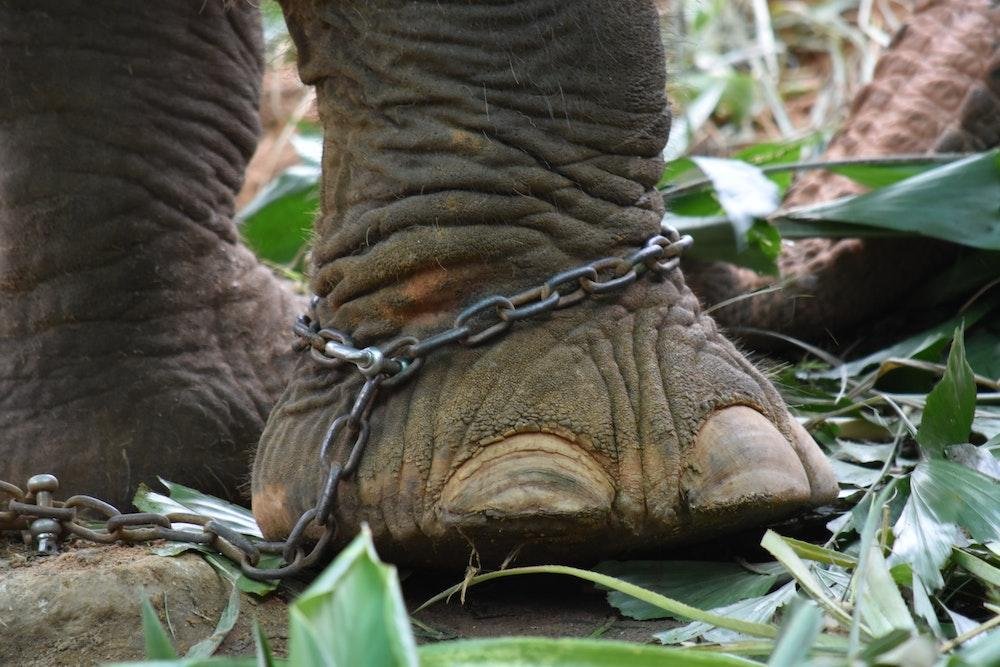
- Beliefs formed early in life often remain unquestioned, even after they’re no longer helpful. The profound observation of elephants in captivity demonstrate this point, as in the quote below.
- Other beliefs that will often remain unquestioned are those associated with information that came from a perceived authority figure, such as a doctor, business leader, news source, academic or parental figure.
WHY ELEPHANTS CAN BE HELD IN PLACE WITH A SIMPLE STAKE
When I was just a little boy, my parents took me to the circus. I wanted to see the elephants. These mighty creatures [were] held in place with a stake. Elephants] could tear a tree right out of the ground, and yet, a simple stake kept them in place. Well, I didn’t understand. And then, my father told me. He said the stakes were used when the elephants were just young, too small to pull them up, and that the animals never tried to pull them up again. – Westworld
OFTEN PEOPLE DON’T QUESTION THEIR THINKING BECAUSE THE ALTERNATIVES SEEM TOO INCREDIBLE
I don’t see the logic of rejecting data just because they seem incredible. – Sir Fred Hoyle
A SERIOUS & TELLING EXAMPLE
In 1969, the American intelligence agencies became aware that the Soviet Union, its KGB, and its military were officially conducting major secret research into the paranormal. This came as something of a shock to the American intelligence agencies that had long considered the paranormal as little more than a giggle factor. However, when the actual scope of the Soviet research was confirmed as extensive, alarm bells began going off throughout high government levels… One of the first situations that needed to be addressed was how to convert what was just yesterday an ignored giggle factor into a serious, in-depth study of something that tomorrow might have serious ramifications… Soon it was realized that the conventional intelligence services were out of their depth so, by the middle of 1972, it was decided to form a government-sponsored research project to help assess the threat, and to house it at Stanford Research Institute (SRI)…
[I] was invited to be a part of the new project at SRI that endured for… sixteen years… [SRI was tasked with providing the government with a series of informative papers.] … One of these papers dealt with the historical, sociological treatment of the paranormal, PSI, ESP, and so forth… and required eight researchers and eighteen months to prepare…. It showed societal taboo-like resistance to any development of psychic faculties and other aspects of the paranormal… The paper revealed that paranormal elements continuously emerge time and again throughout history on a scope much larger than was generally understood, but only to be re-submerged by somewhat disgusting means…
During the 1980s… numerous polls in the United States asked individuals what they experienced of the paranormal… In some categories, many of the polls indicated that as many as 75 percent of those interviewed had consciously experienced some form of paranormal consciousness. Since any statistic above 50 percent can be thought as a majority, and hence qualify as normal, the concept of the paranormal began to become normalized, after which the term also became useless…
The forgoing has been a rather longish way to… highlight… the question of what the consciousness of humans can and does experience VERSUS what they are supposed to experience within the limits of this or that sociological norm. – Ingo Swann
[This fascinating and powerful book goes deeply into consciousness and the “craft of keeping people in their reality boxes.”]
The following 17-min video, 4 False Beliefs that Society is Built On, is written and read by Dr. Bruce Lipton and animated by After Skool. It provides intriguing examples of beliefs many people were taught by authorities which have been proven wrong. Have you questioned your beliefs in these areas and evolved them to reflect the truth?
See Also
- The Superstition of Materialism, Scientific Dogmas & Overcoming an Outdated Worldview
- Microbiome vs Genetic Determinism
I’m grateful to have a much deeper — and more empowering — understanding of how gene expression works. I am now quite sure that testing for the gene [related to a disease found in her family] is a bad idea. The sad truth is that a negative diagnosis or prognosis can send our minds spinning in the exact opposite direction that we want and need for optimum gene expression!…While understanding that our beliefs and our environment play an important part in how our genes express themselves, and subsequently how disease plays out in our lives, is super-empowering, this is really just the tip of the iceberg. The question is, what do we do with that knowledge? Obviously, the answers to that question extend way beyond the scope of this one article. Entire books have been written on the subject, and more is being discovered every day. However, a simple understanding of this new way of looking at gene expression can be enough to help you make decisions and choices that will be more supportive of your overall health and wellbeing. – Sarah Grace Powers, Confluence Daily, Do Your Genes Dictate Your Destiny? link
Continue Reading with Ashtanga Tech
This study guide is available to members. Join to access 800+ in-depth guides on anatomy, philosophy, sequencing, and the science of practice.
Join for $5.50/mo — the cost of a DC coffeeAlready a member? Log in here
Discussion
or explore Student Union