Tech Times Roundup: February 16 – February 22, 2026
This week on Ashtanga Tech:
Dharana Philosophy
– The sixth limb is dharana, defined as “keeping the attention on a single place.” (Nicolai Bachman) Dharana is often defined as concentration. – Dharana may be considered the beginning of meditation or as a practice that leads to the state of meditation. – (See also: Meditation & Mindfulness Introduction.) This process can be described as letting go of everything that is not the object of meditation.
Introduction to Functional Range Conditioning
– Andreo Spina, FRC is rooted in scientific principles of human biomechanics and neurophysiology. – This helps to maintain joint health, prevent stiffness, and increase body awareness. – Progressive Angular Isometric Loading (PAILs) and Regressive Angular Isometric Loading (RAILs): PAILs and RAILs are techniques used to strengthen end-range positions of joints.
Sanskrit Study & Teaching Tips
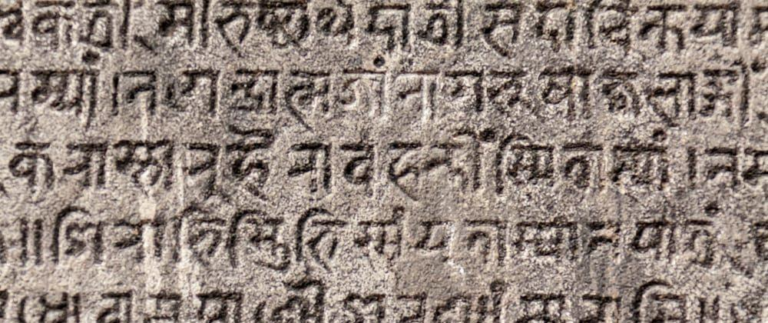
Progressively develop the capability to use Sanskrit in teaching by practicing vowel pronunciation and learning common Sanskrit words that form the components of pose names.
Uttitha Parsvakonasana A & B
– UTTHITA PĀRSVAKOŅĀSANA A (5 MOVEMENTS)1EKAMInhale, open to the right, arms out2DVEExhale, right hand down, left arm reaches3TRINIInhale, up. – Feet parallel, arms out.4CATVARIExhale, left hand down, right arm reaches5PANCAInhale, upUTTHITA PĀRSVAKONASANA B (5 MOMENTS)1EKAMInhale, open to the right, arms out2DVEEXHALE, TWIST LEFT HAND DOWN3TRIŅIINHALE, UP. – 4CATVARIEXHALE, TWIST RIGHT HAND DOWN5PANCHAINHALE, UPEXHALE, SAMASTHITI Anatomy UTTHITA PARSVAKONASANA EXTENDED LATERAL ANGLE POSE This pose represents a natural progression from virabhadrasana II—another exam- ple of continuity between poses.
Sanskrit First Words
Be prepared to introduce Sanskrit words into teaching.
Prasarita Padottanasana A – D
– Each of these dualities demonstrates a dynamic balancing of opposites. – Sequencing in yoga can be used to exaggerate a cycle of expansion and contraction. – We begin with poses that open the front of the body and close with poses that draw the energy inward.
Philosophy Intro
Be aware of the profound depth and potential scope of yoga as a philosophy and practice, and consider multiple perspectives on the purpose of practice.
Controlled Articular Rotations (CARS)
– Controlled Articular Rotations (CARs): CARs involve performing slow, controlled movements that actively articulate a joint through its full range of motion. – The key is to maintain tension and control throughout the movement while exploring the available mobility of the joint. – CARs are typically performed in a controlled manner without the use of external resistance, allowing individuals to focus on proprioception and joint control.