
Energy & Subtle Body Anatomy
 Yoga Techniques and Fitness
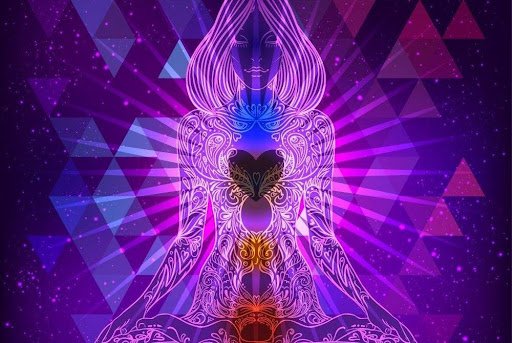

- “Ida Nadi” — Energy channel beginning and ending on the left side of sushumna; lunar, feminine, cooling
- “Nadi” — A line that carries energy; said to channel prana to every cell of the body, keeping us alive
- “Pingala Nadi” — Energy channel beginning and ending on the right side of sushumna; solar, masculine, stimulating
- “Prana” — Life force
- “Sushumna” — Central energy channel, said to be the path to enlightenment
Prana
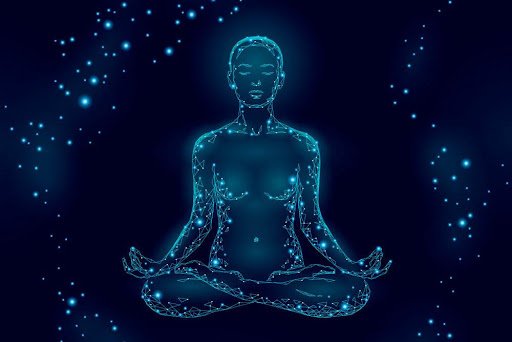
- The Sanskrit word prana means “life force” (referred to as chi in Chinese).
- We extract prana from such sources as food, light and love.
- Gregor Maehle teaches that although “there is only one prana,” it is in different locations, flows in different nadis and has different functions. These various types of prana are called by different names.
- Maehle explains that shakti, kundalini and prakriti refer to solar prana located in the manipura chakra.
- Bindu, amrita, soma, and chandra refer to lunar prana — often used in reference to inversions — located in ajna chakra.
- The movements or functions of prana are called prana vayus and are discussed here.
SOLAR AND LUNAR PRANA
The storehouse of solar prana—that is, prana used for putting our stamp on the world, for being outgoing—is located in the manipura (navel) chakra. The lunar storehouse of prana—that is, prana located to digest sensory impressions and power the mind—is located in the center of the cranium. This area above the soft palate… is the lunar prana center, or in yogic scripture simply the moon… In the lunar center (ajna chakra) is located amrita the nectar of immortality. Please understand that there is only one prana, but depending on where it is stored or in which nadi it flows, it has a different function. – Gregor Maehle
SO, WHAT IS KUNDALINI ENERGY, ANYWAY?
Don’t google it! The minute you look up Kundalini energy or Kundalini yoga, you’re bound to become confused. One of the things that will come up almost right away is the idea that Kundalini is dangerous. It can’t be, it’s an energy that already exists in you. So what is it? It’s your untapped potential that lays dormant at the base of your spine, and your work is to awaken this energy so you can wake up to all that life has to offer you. So how do you awaken this energy? It happens almost imperceptibly through your practice. That’s the beauty of the practice. Day after day, week after week, you start to feel different somehow. You’re clearer, less reactive and so much stronger than you were before. – Gloria Latham
Nadis

- “Nad” = flow, motion or vibration
- Tradition says there are 72,000 to 300,000 subtle pathways, or nadis, within and surrounding the physical body.
- Nadis are said to channel prana to every cell of the body, keeping us alive.
- Nischala Joy Devi describes nadis as circulating and distributing “energy to the physical, mental, and emotional bodies (koshas).”
- The ida and pingala nadis are said to spiral around the sushumna, crossing at every chakra, ultimately all three meeting at the ajna (command) chakra.
- The ida nadi is said to begin and end on the left side of sushumna. It is the lunar nadi – feminine and cooling – represented vibrationally by the color white.
- Pingala nadi is said to begin and end on the right side of sushumna. It is the solar nadi – masculine and stimulating – represented vibrationally by the color red.
- “Bringing ida and pingala into equilibrium is a major focus of hatha yoga—so important, in fact, that the term hatha symbolizes this balance… Balancing sun and moon, or pingala and ida, facilitates the awakening and arising of kundalini, and thus the awakening of higher consciousness.” – James Bailey
WORKING WITH THE SUBTLE BODY
Some are wide and rushing; others are a mere trickle. When this system flows freely, we are vital and healthy; when it becomes weak or congested, we struggle with poor mental and physical health. The practices of hatha yoga are so effective because they strengthen the flow of prana in our bodies, invigorating the current so that it carries away obstructions that block the free flow of energy. Because nadis—like the chakras (psychoenergetic power centers), prana, and other aspects of the subtle body—don’t show up under microscopes, medical science has relegated them to the realm of the merely metaphorical. But traditional yogis believe that the subtle body is real, and that understanding it and working with it complement and counterbalance the emphasis on gross physical anatomy that predominates our current yoga culture. – James Bailey
IDA, PINGALA & THE NERVOUS SYSTEM
The pingala nadi and ida nadi polarize the neutral energy as they wind around the spinal cord. The prana circulates through the pingala nadi (the “ha”or sun, in hatha), generating heat and the masculine attributes of rational thinking and intellectual reasoning. The pingala governs the sympathetic nervous system and corresponds to the left side of the brain. When prana circulates through the ida nadi (the “tha” or moon, in hatha), it produces a coolness and accesses the feminine attributes of emotion, feelings, and intuition. Ida guides the parasympathetic nervous system and corresponds with the right side of the brain. – Nischala Joy Devi
THE NEED FOR BALANCE
Though ida and pingala and their modes of activity are opposite, they are complementary and must be balanced for total health and peace of mind. More than this, though, balance can open the door to the transcendental and to a new mode of functioning. – Swami Satyananda Saraswati
THE NADIS & HATHA YOGA
The interaction between ida and pingala corresponds to the internal dance between intuition and rationality, consciousness and vital power, and the right and left brain hemispheres. In everyday life, one of these nadis is always dominant. Although this dominance alternates throughout the day, one nadi tends to be ascendant more often and for longer periods than the other. This results in personality, behavior, and health issues that can be called ida-like or pingala-like. Bringing ida and pingala into equilibrium is a major focus of hatha yoga — so important, in fact, that the term hatha symbolizes this balance… Balancing sun and moon, or pingala and ida, facilitates the awakening and arising of kundalini, and thus the awakening of higher consciousness. In fact, some yoga teachings hold that as long as either ida or pingala predominates, sushumna stays closed and the power of kundalini lies dormant. – James Bailey
Continue Reading with Ashtanga Tech
This study guide is available to members. Join to access 800+ in-depth guides on anatomy, philosophy, sequencing, and the science of practice.
Join for $5.50/mo — the cost of a DC coffeeAlready a member? Log in here
Discussion
or explore Student Union