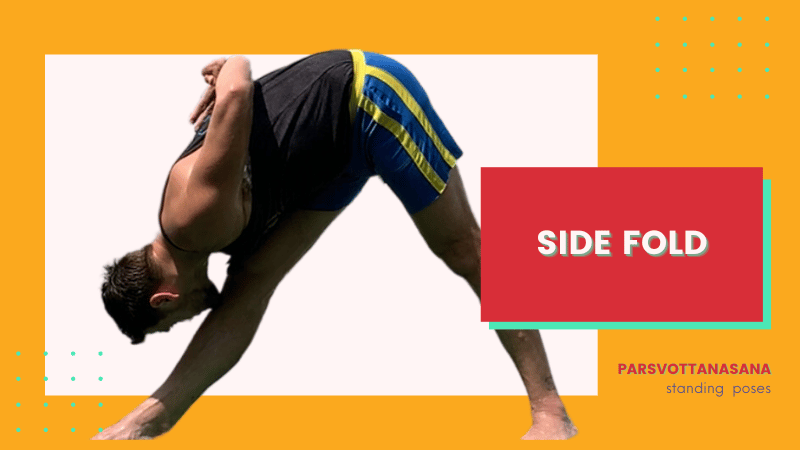
Parsvottanasana
Parsvottanasana intensely stretches the muscles at the back of the thighs and two muscles in the calf of the back leg, the gastrocnemius and the soleus Placing the hands in Namasté behind the back rotates the shoulders inward and intensely stretches the muscles that turn the bone in the upper arm outward, the infraspinatus and teres minor. PÄRSVÕTTANASANA (5 MOVEMENTS)1EKAMInhale, open to the right, hands in prayer behind back2DVEExhale, fold3TRINIInhale, up, turn to the front4CATVARIExhale, fold5PANCAInhale, up, open to the sideExhale, Samasthiti Anatomy PARSVOTTANASANA INTENSE SIDE-STRETCH POSE In parsvottanasana, the pelvis rotates to face the front leg. I place this pose after Ardha Chandrasana to create continuity in the sequence. Later in the practice, we rotate the pelvis further so that this type of pose fits naturally in a sequence that moves from the pelvis facing forward to turning the pelvis to face the front leg, to rotating into a twisting pose such as Parivrtta Trikonasana. Turning the pelvis changes the orientation of the muscle fibers in the back-leg gluteals and front-leg hip flexors, activating the muscle from every direction. This illustrates how designing your yoga practice to have continuity yet change awakens muscle groups efficiently, making the whole of the practice greater than the sum of its parts. The focal point of the stretch in Parsvottanasana is the front-leg hamstrings. Remember to firmly engage the quadriceps and hip flexors to stimulate reciprocal inhibition of the hamstrings; observe how engaging these muscles changes the sensation of the stretch.
Key Takeaways
– Later in the practice, we rotate the pelvis further so that this type of pose fits naturally in a sequence that moves from the pelvis facing forward to turning the pelvis to face the front leg, to rotating into a twisting pose such as Parivrtta Trikonasana.
– Turning the pelvis changes the orientation of the muscle fibers in the back-leg gluteals and front-leg hip flexors, activating the muscle from every direction.
– This illustrates how designing your yoga practice to have continuity yet change awakens muscle groups efficiently, making the whole of the practice greater than the sum of its parts.
– The focal point of the stretch in Parsvottanasana is the front-leg hamstrings.