
Anatomy of the Spine: Spinal Regions & Vertebrae
 Anatomy & Physiology
Overview
In this lesson, we introduce the anatomy of the spine.
Objective
Become proficient in the anatomy of the spine including each of the five regions, the spinal curves and the vertebrae.
What You'll Get
Name the regions of the spinal column, the number of vertebrae in each region, and how vertebrae are labeled/numbered. Explain where we experience the most movement in the spine, and why. Describe the shape of each spinal curve. Understand the primary and secondary curves and why they are given those names. Describe vertebra and the joints related to vertebrae.
Vocabulary
backbone, cervical spine, coccyx, lumbar spine, normal curves, sacrum, spinal column, spine, thoracic spine, vertebrae, vertebral column
Vocabulary
- BACKBONE – Another name for the spine
- CERVICAL SPINE – Top region of the spine, labeled C1-C7
- COCCYX – Three to five fused vertebrae with a tip that typically points straight down
- LUMBAR SPINE – Low back region of the spine, labeled L1-L5
- NORMAL CURVES – A term used by anatomists to underscore the importance of the four spinal curves
- SACRUM – Five fused vertebrae that make up the base of the spine and the back of the pelvis
- SPINAL COLUMN – Another name for the spine
- SPINE – Made up of 33 specialized bones called vertebrae
- SPINOUS PROCESSES – The bony projections from the vertebra that you can feel when you palpate your spine; they provide attachment points for muscles and ligaments
- THORACIC SPINE – Middle region of the spine, labeled T1-T12
- VERTEBRAE – Specialized bones that make up the spine
- VERTEBRAL COLUMN –Another name for the spine
Overview of the Spine
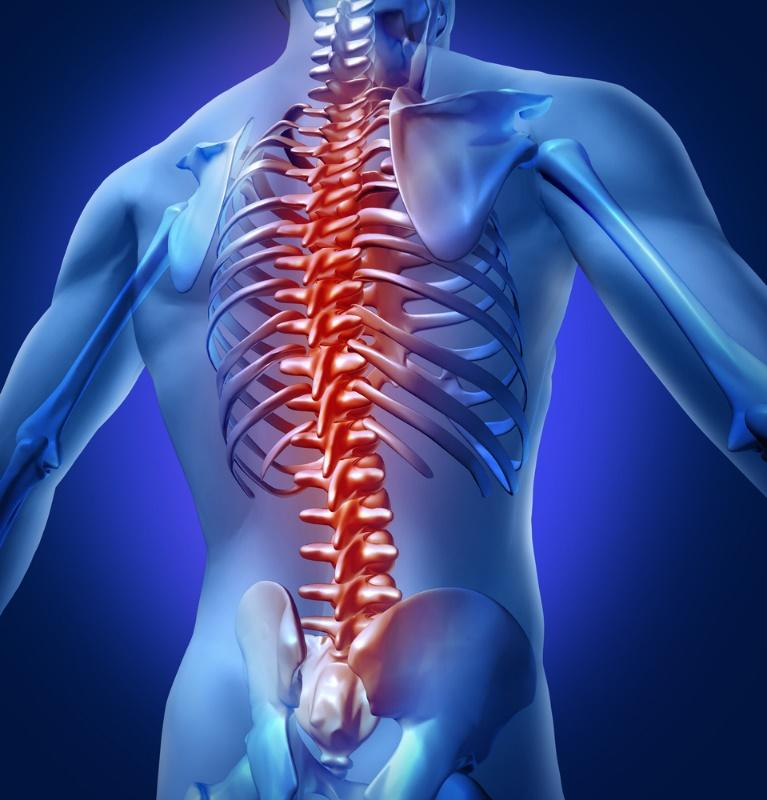
The spine is also known as the spinal column, vertebral column or the backbone.
- The spinal column is made up of 33 specialized bones called vertebrae.
- Because the vertebrae of the sacrum and coccyx eventually fuse, there are, in effect, 24 vertebrae plus the sacrum and coccyx.
- The spine has four “normal curves,” a term used by anatomists to underscore their importance.
- Spinal curves are affected by genetics and postural habits.
Continue Reading with Ashtanga Tech
This study guide is available to members. Join to access 800+ in-depth guides on anatomy, philosophy, sequencing, and the science of practice.
Join for $5.50/mo — the cost of a DC coffeeAlready a member? Log in here
Discussion
or explore Anatomy & Physiology