
Origins & Sources of Yoga
 Humanities

Overview
In this lesson, we introduce the source texts of yoga.
Objective
Gain a basic understanding of the roots of yoga philosophy.
What You'll Get
Discuss the potential impact of yoga philosophy within a well-rounded yoga practice. Explain the origins of yoga philosophy and its relationship to Hinduism. Review basic facts related to original source texts, including the Vedas, the Upanishads, the Yoga Sutras, the Bhagavad Gita, the Hatha Yoga Pradipika and the Gheranda Samhita. Name the person and event often recognized as a key moment in the genesis of yoga’s expansion to the West.
Introduction

Yoga practices are based on a vast and profound philosophy.
- Yoga philosophy is not taught as a belief system but is intended for practitioners to experience for themselves.
- As Pema Chodron points out, when life becomes intense, mere philosophical belief isn't going to be enough. We each have to find out the truth for ourselves. The following quote comes from a discussion of Buddhist philosophy but is broadly applicable.
TEACHINGS MUST BE EXPERIENCED
[Teachings] have to be experienced because when the real quality of our lives, including the obstacles and problems and experiences that cause us to start questioning, becomes intense, any mere philosophical belief isn't going to hold a candle to the reality of what we are experiencing... Maybe [it's] the worst advice anybody could give you, but you have to find out for yourself. Often, we hear the teachings so subjectively that we think we're being told what is true and what is false. But the [wisdom teachings] never tell you what is true or what is false. It just encourages you to find out for yourself. – Pema Chodron
More Effective Than Physical Practices Alone
Researchers at the University of Mississippi reported study results that reflect what many yoga practitioners find as they study more: a regular yoga practice that includes philosophical teachings may ease anxiety more effectively than physical practices alone.
FUNDAMENTAL IMPORTANCE OF YOGA PHILOSOPHY
There is good reason for yoga to have many adherents. It offers not only the much-sought way, but also a philosophy of unrivaled profundity. Yoga practice is unthinkable, and would also be ineffectual, without the ideas on which it is based. It works the physical and the spiritual into one another in an extraordinarily complete way. – C. G. Jung
RESEARCH SUMMARY
A regular practice that includes yoga’s spiritual and ethical teachings may ease anxiety more effectively than a practice of asana, breathing, and relaxation alone, according to a recent study. Yoga students learning about the yamas and niyamas had significant decreases in anxiety, including lower levels of the stress hormone cortisol. “Spiritual principles can help you see meaning in your life situation,” says researcher Tammy Greer of the University of Southern Mississippi, “and that can lower stress.” – Carol Krucoff
See Also
Originating Source for Yoga Philosophy
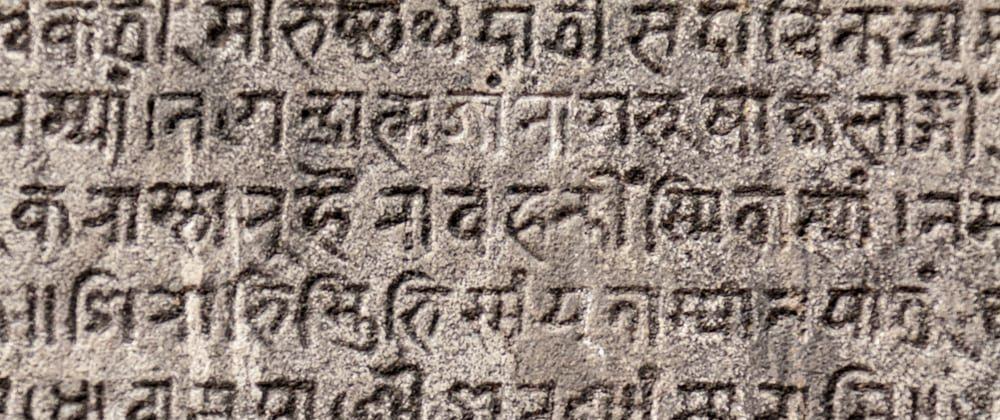
The origins of yoga philosophy are traced back to The Vedas (veda = knowledge) of India, estimated to have been written between 3,000 and 6,000 years ago.
- The four books of The Vedas are The Atharva Veda, The Rg Veda, The Sama Veda and The Yajur Veda.
- The verses within The Vedas are said to be revealed scriptures, having been heard by enlightened sages (rishis), seers in states of deep yogic meditation, or samadhi.
The 4 Vedas (Rig, Yajur, Sama & Atharva vedas) are the original source of all knowledge and they are not attributed to any specific authors or messiahs. They are considered as originating from God, heard and registered by great rishes (seers) of the yore. Hence, they are known as Shruti (as heard). Vedas are also known as apaurusheya (not made of man). Even though certain hymns and mantras are attributed to certain Rishis in the vedic texts, they are recognized as the seers… of those texts and not the authors. – C.V. Rajan
Yoga is one of six major schools of thought (darshanas) that make up Hinduism: Samkhya, Yoga, Nyaya, Vaisheshika, Mimamsa, and Vedanta. Thus, we find that historically, those philosophers who developed the ideas from the Vedas called their body of work “Hindu philosophy” or “the Vedic tradition.” As we see in the Hinduism overview (in the note* below), Hinduism is known as a “natural religion.” While Yoga philosophy is rooted in Vedic / Hindu scholarship, yoga is universally known to NOT be a religion.
In September of 2000, yoga expert, son of Krishnamacharya and lifelong citizen of India, T.K.V. Desikachar offered. “Yoga was rejected by Hinduism because yoga would not insist that God exists. It didn’t say there was no God but just wouldn’t insist there was.” And, he added, there was an important lesson for yogis inherent in this schism: “Yoga is not a religion and should not [affiliate] with any religion.” (source)
YOGA PHILOSOPHY IS ONE OF SIX PRIMARY PHILOSOPHIES
THAT DRAW FROM THE VEDAS
Believed to be timeless wisdom that was realized by sages through meditative states at some point in the distant past, passed on through an oral tradition before eventually being compiled in written form thousands of years ago, the vision of the Vedas gave rise to a variety of philosophical schools through a dynamic tradition of inquiry and intelligent debate. Approaching the same texts and teachings from different perspectives, these debates generated six influential darshanas (“seeing” in Sanskrit) or theological traditions, related to the different ways of “seeing” the Divine force behind the universe’s order, and the nature of our relationship with this force. Though these six schools — called Sankhya, Vaisheshika, Nyaya, Mimamsa, Yoga, and Vedanta — arrive at different conclusions, they all are categorized as astika (“there exists” in Sanskrit), because they all accept the Vedas as a spiritual authority. – Syama Allard
VEDIC TRADITIONS = HINDU PHILOSOPHY
Hinduism contains within it six major schools of thought, or darshana: Samkhya, Yoga, Nyaya, Vaisheshika, Mimamsa, and Vedanta. The underlying thread between these six darshanas is that they are inspired by the Vedas and other Hindu concepts. Thus, Hindu philosophy is often described as Vedic or the Vedic tradition. – Hindu American Foundation, The Hindu Roots of Yoga
- In The Seven Spiritual Laws of Yoga, Deepak Chopra and David Simon explain, “Yoga is the practical aspect of Vedic science.”
- The writings are on one hand “poetic, nonlinear and therefore difficult to understand” and on another, “as simple, pure, and pristine as the rishis who received them.”
- Yoga becomes more defined in The Upanishads (which include hundreds of philosophical texts) with language that is less symbolic and more direct than The Vedas.
- Additional key source texts include the Yoga Sutras of Patanjali, the Bhagavad Gita, the Hatha Yoga Pradipika and the Gheranda Samhita. (More on these texts below.)
THE PRACTICAL ASPECT OF VEDIC SCIENCE
With roots in the Indus Valley civilization going back over five thousand years, The Vedas represent the poetic cognitions of enlightened sages on the origins of the universe and the evolution of life… The Vedas are the expression of perennial wisdom, and yoga is the practical aspect of Vedic science. – Deepak Chopra & David Simon
APAURUSEYA: NOT GIVEN BY MAN
These sacred writings are at the very root of Hindu thought and philosophy… They are known as “apauruseya,” not given by man. Yoga, too, is apauruseya. Because these sciences are not man-made, they are universal and are meant for the whole of humanity. Brahma was the founder of yoga, which is therefore as old as civilization. Ayurveda is also as old as civilization. – B.K.S. Iyengar
RISHIS RETAINED THE PRISTINE MIND
We all came to the world with an uncomplicated mind. Those who retained this pristine mind came to be known as rishis (seers), for they were able to see the truth without distortion. Scriptures such as the Vedas embody the experiences of these rishis and so are regarded as the original sources of religion and spirituality. The knowledge and experiences documented in these primary sources are as simple, pure, and pristine as the rishis who received them… The experiences attained by these immortal beings were so profound and wondrous that they could not be contained or expressed in speech. What little could be expressed was extremely compact and exceptionally potent. These expressions — which came to be regarded as revelations or mantras — form the foundation of spirituality. The techniques that enable us to gain experiences similar to those of the rishis are spiritual practices. – Pandit Rajmani Tigunai
VEDIC COMMENTARIES
The Vedic texts were not composed in a discursive philosophical style. They were poetic and nonlinear and, as such, complicated and difficult to understand. Commentaries by great masters emerged to explain them. These commentaries took the form of philosophical discourses and oral teachings collectively known as smriti, that which was remembered. The oldest of these systems is Sankhya, founded by the great sage Kapila. The Sankhya system formed the metaphysical foundation for Patanjali’s yoga philosophy recorded in his Yoga Sutra. In this sense, yoga can be thought of as applied Sankhya. – Gary Kraftsow
THE UPANISHADS
The first books to refer to yoga were the ancient Tantras and later the Vedas, which were written about the time the Indus Valley culture was flourishing. Although they do not give specific practices, they allude to yoga symbolically. In fact, the verses of the Vedas were heard by the rishis, seers, in states of deep yogic meditation or samadhi, and are regarded as revealed scriptures. It is, however, in the Upanishads that yoga begins to take a more definable shape. These scriptures collectively form Vedanta, the culmination of the Vedas, and are said to contain the essence of the Vedas. – Swami Satyananda Saraswati
MORE BEHIND THE VEDAS & UPANISHADS
In mythological times, Brahma, the Creator, saw the ignorance and confusion of humankind. With his infinite compassion, he sent his sons to restore the wisdom of Divine Consciousness and alleviate suffering. This wisdom became the Vedas, and Brahma’s sons became the Great Vedic Rishis. The four principal Vedas and their supporting texts contain the spiritual knowledge encompassing all aspects of life… However, the essence of each Veda is contained in the parts known as the Upanishads. Upanishad literally means “to sit close by.” So these “hidden” teachings were reserved for those select students deemed ready for higher states of consciousness. While the Vedas prepare us and bring us to the door of enlightenment, the Upanishads lift us over the threshold into the magnificence of Self-realization. Thus, as the culmination of knowledge, they became known as Vedanta, the “end of the Veda.” – Chopra Center
Continue Reading with Ashtanga Tech
This study guide is available to members. Join to access 800+ in-depth guides on anatomy, philosophy, sequencing, and the science of practice.
Join for $5.50/mo — the cost of a DC coffeeAlready a member? Log in here
Discussion
or explore Humanities