
Equity in Yoga – Inclusion & Diversity – Creating a Welcoming, Inclusive & Relaxing Space
 Teaching Arts
Context & Perspective
Media Bias & Influence
Many people of color and/or working class people I know assume… that yoga studios will inevitably be inhospitable to them. Oftentimes this assumption comes from experience, but the way yoga is promoted can be so alienating to some people that they won’t even set foot in a studio. That is the perception that mainstream yoga must combat. – Chanelle John
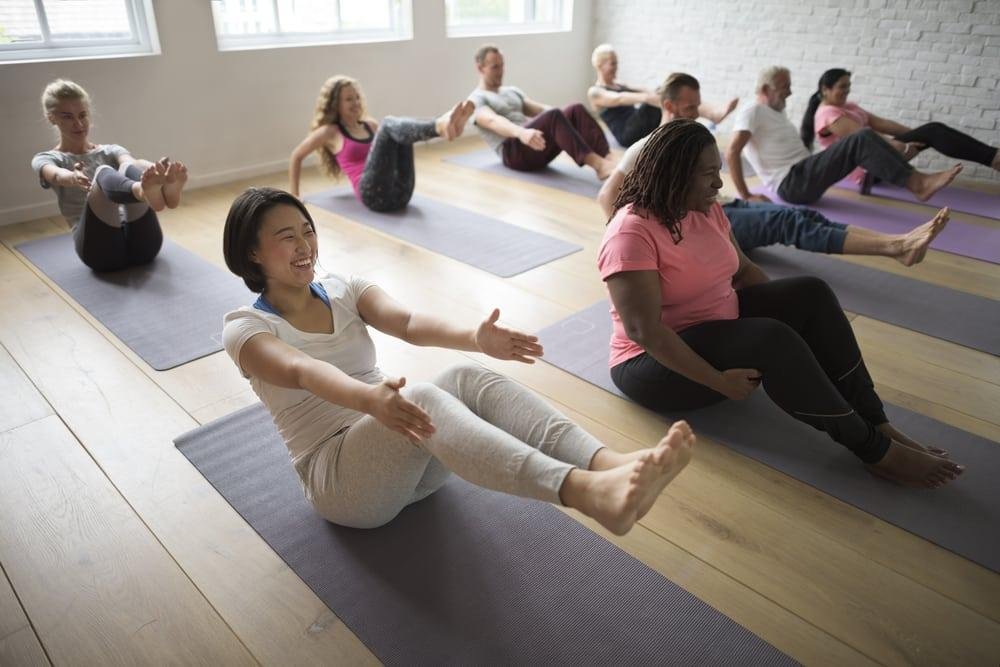
Pop culture has inundated the world with images of:
- White women
- Young and thin
- “High-class” and rich
- Demonstrating yoga poses that are inaccessible to the vast majority of people
YOGA ISN’T FOR ME
We barely have representation in mainstream publications. There are a lot of women of color who do not care to practice yoga because they feel it is not really for them. Before I started practicing and became a yoga teacher, I felt the same way. – Kenya Marsh CYT-500
RACIAL BIAS IN YOGA MEDIA
Jivana Heyman: Yoga Journal had offered Nicole Cardoza a cover… and then they did some kind of weird market survey thing where they posted pictures of Nicole… with a white yoga teacher, and asked people to vote on which cover they wanted… they had already told her that she was the cover. And they had made that contract with her. It was really messy… I was amazed by what Nicole did. She turned this really painful situation into a learning opportunity for all of us and Yoga Journal. She handled it so beautifully and we all learned from what she was teaching us.
Nicole Cardoza: It was actually ironic because they were coming on tour with my non-profit (Yoga Foster) that brings yoga and mindfulness to schools… We were really excited about having a big media partner to be able to help with that. They (Yoga Journal) did a feature on Yoga Foster, they were going to do a feature on me, and it was a natural progression to be on the cover. So what an honor to be able to be on the cover because of that work. So you can imagine how shameful it was to be told that the work was great and the story about the work was great, it was just my body and my skin and my hair, or whatever else they saw in the photos that they chose to take, that wasn’t good enough for the cover… what started for me was shame because I wore my hair natural––because I’ve worn it with a relaxer or weaves for most of my life. I shouldn’t have been in such a casual pose. It felt like it was my fault. That’s something that happens not just in this yoga community and that’s the way that the inaccessible yoga space is packaged, that’s what we’re taught by systemic oppression, that’s what we’re taught by white supremacy, that’s what we’re taught because that’s how capitalism thrives. Then I got hella mad. Hella mad. [continue reading]
– Nicole Cardoza’s Accessible Yoga Conference Keynote Speech, NYC 2019
THE BOOMING VOICE OF MODERN POSTURAL YOGA IN MAINSTREAM MEDIA
One issue is… how much our understanding of yoga is shaped by the media. Is what we see on the cover of Yoga Journal actually yoga? Scholars refer to the Westernized yoga practice as MPY (Modern Postural Yoga), and this is what most people think of when they hear the word, “Yoga.” While MPY is relatively new in the history of yoga, it has such a loud booming voice that it has drowned out much of the other subtler traditional practices like ethical living, chanting, meditation, and self-inquiry. It has also had the unfortunate effect of convincing people that yoga is only for the young and able-bodied by making us believe that contortionism is the same as embodiment… Anyone who has studied the history and philosophy of yoga knows that it is complex and diverse. Yoga is more of an organic, living thing than a static, definable object. Yet MPY has convinced us that yoga is simply a form of exercise, and that performing complex asanas makes us more “advanced” when it may just mean that we’re hypermobile or used to be a gymnast when we were younger. – Jivana Heyman
Continue Reading with Ashtanga Tech
This study guide is available to members. Join to access 800+ in-depth guides on anatomy, philosophy, sequencing, and the science of practice.
Join for $5.50/mo — the cost of a DC coffeeAlready a member? Log in here
Discussion
or explore Student Union