
⎯⎯⎯⎯⎯ ◆ ⎯⎯⎯⎯⎯
Book Two Overview
⎯⎯⎯⎯⎯ ◆ ⎯⎯⎯⎯⎯
 Humanities

Vocabulary
abhinivesha, ahimsa, aparigraha, asana, ashtanga yoga, asmita, asteya, atman, avidya, brahmacharya, dharana, dhyana, dvesha, gunas, hatha yoga, ishvara pranidhana, jnana yoga, karma, klesha, maya, niyamas, prakriti, pranayama, pratyahara, purusha, raga, rajas, sadhana pada, samadhi, santosha, sattva, satya, saucha, svadhyaya, tamas, tapas, viveka, yamas

- “ABHINIVESHA”— Fear of death
- “AHIMSA” — Non-harming, non-violence, non- killing, compassion
- “APARIGRAHA” — Nonattachment, non-grasping, non- possessiveness
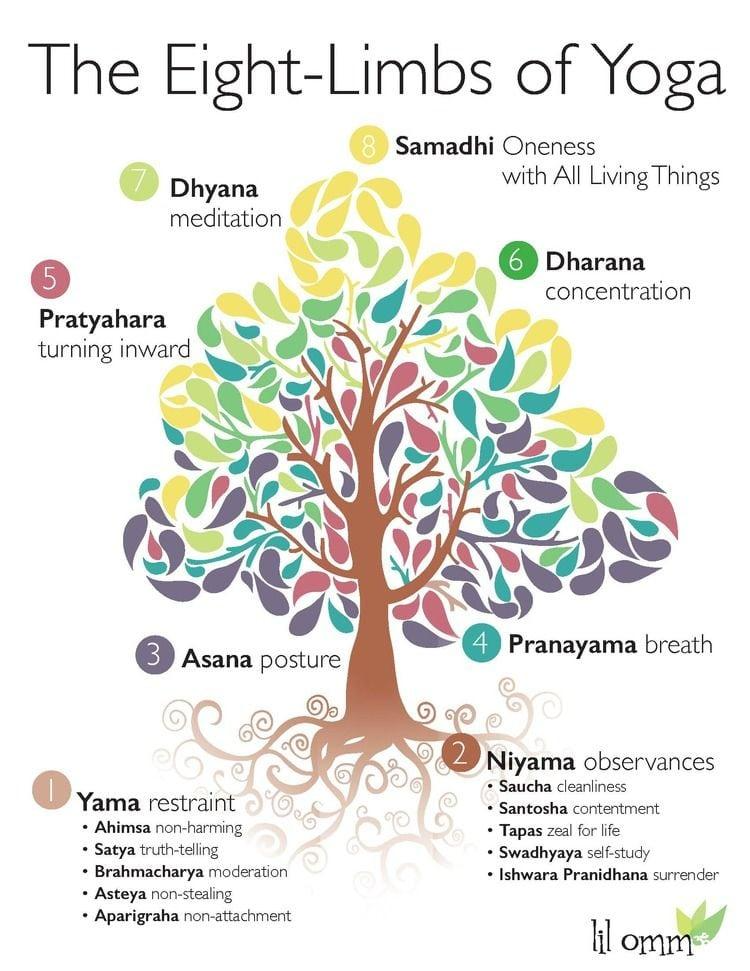
- “ASANA” — Posture or seat
- “ASHTANGA YOGA”— Eight Limbs of Yoga
- “ASMITA” — Egoism
- “ASTEYA” — To not steal or misappropriate that which belongs to another
- “ATMAN” — The experiencer or True Self, consciousness that is an individual expression of universal intelligence
- “AVIDYA” — Misapprehension, spiritual ignorance
- “BRAHMACHARYA” — Self-restraint, moderation and mindfulness in expending energy
- “DHARANA” — Concentration or attention
- “DHYANA” — Meditation
- “DVESHA” — Aversion
- “GUNAS” — Modes of being, properties or characteristics of nature; tamas, rajas, sattva
- “HATHA YOGA” — Yoga of Body, Breath & Sensory Harmony
- “ISHVARA PRANIDHANA” — Surrender to a higher power or Source
- “JNANA YOGA” — Yoga of Knowledge
- “KARMA” — The law of universal causality, action and consequence
- “KLESHA” — Obstacle or veil
- “MAYA” — The cosmic illusion caused by an error in spiritual perception
- “NIYAMAS” — Observances; relationship with self; qualities of an “evolutionary personality;” saucha, santosha, tapas, svadhyaya and ishvara pranidhana
- “PRAKRITI” — Substance, the object of experience
- “PRANAYAMA” — Breathing techniques for directing energy
- “PRATYAHARA” — Turning senses inward
- “PURUSHA” — Spirit, consciousness, the principle of universal consciousness in us
- “RAGA” — Attachment
- “RAJAS” — A characteristic of nature (gunas): activity / unrest
- “SADHANA PADA” — Book 2 of The Yoga Sutras, On Practice
- “SAMADHI” — Absorption, union or superconsciousness; a state in which the “intellect becomes keen, reasoning is clear” and there is “bliss and a sense of pure being”
- “SANTOSHA” — Being at peace in the moment; being content with what we have
- “SATTVA” — A characteristic of nature (gunas): clarity / purity / illumination
- “SATYA” — Truthfulness in thought, word and action
- “SAUCHA” — Cleanliness/purity of body and mind to allow Self-Realization
- “SVADHYAYA” — Gaining self-reflection through study of self and spiritual texts
- “TAMAS” — A characteristic of nature (gunas): heaviness / stability / inertia
- “TAPAS” — Enthusiasm, effort, self-discipline, burning off impurities
- “VIVEKA” — Discriminative discernment
- “YAMAS” — Restraints; principles of behavior in relationships; ahimsa, satya, asteya, brahmacharya and aparigraha
Book Overview
Introduction
- Book Two has 55 sutras.
- It’s entitled Sadhana Pada.
- It’s about practice.
- It’s targeted to those who are just beginning their spiritual development.
Continue Reading with Ashtanga Tech
This study guide is available to members. Join to access 800+ in-depth guides on anatomy, philosophy, sequencing, and the science of practice.
Join for $5.50/mo — the cost of a DC coffeeAlready a member? Log in here
Discussion
or explore Student Union