
⎯⎯⎯⎯⎯ ◆ ⎯⎯⎯⎯⎯
The Bhagavad Gita Introduction
⎯⎯⎯⎯⎯ ◆ ⎯⎯⎯⎯⎯
 Humanities
Vocabulary

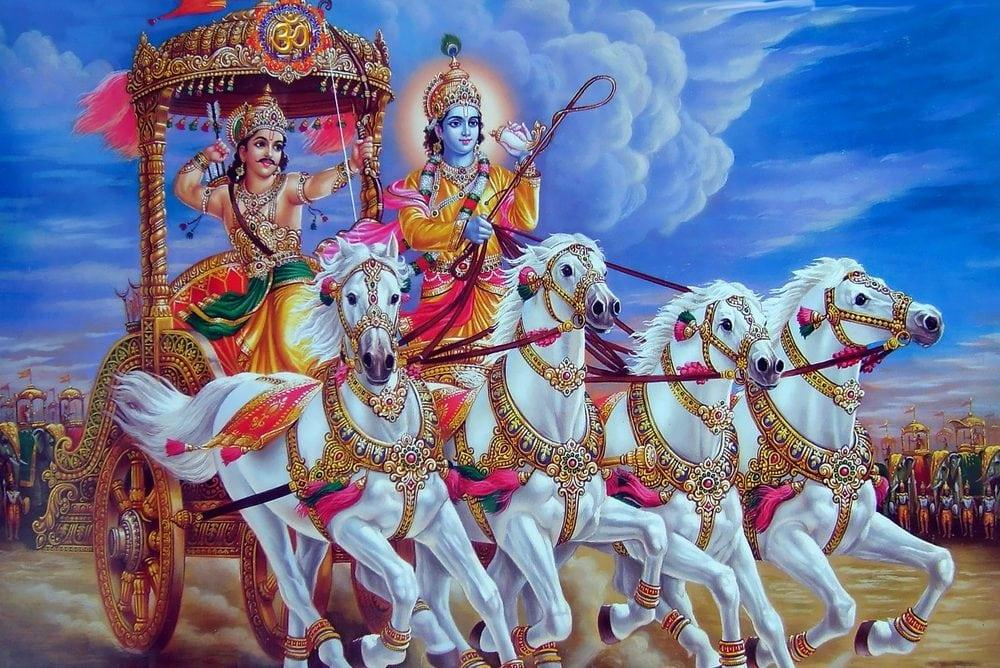
- ARJUNA — In The Bhagavad Gita, a warrior-prince who faces a moral crisis
- THE BHAGAVAD GITA — A portion of the Mahabharata featuring "a dialogue that takes the soul on an inward journey culminating in the ultimate state of yoga"
- DETACHMENT — Doing the right thing for its own sake, not for the expected results
- GITA — Another name for The Bhagavad Gita
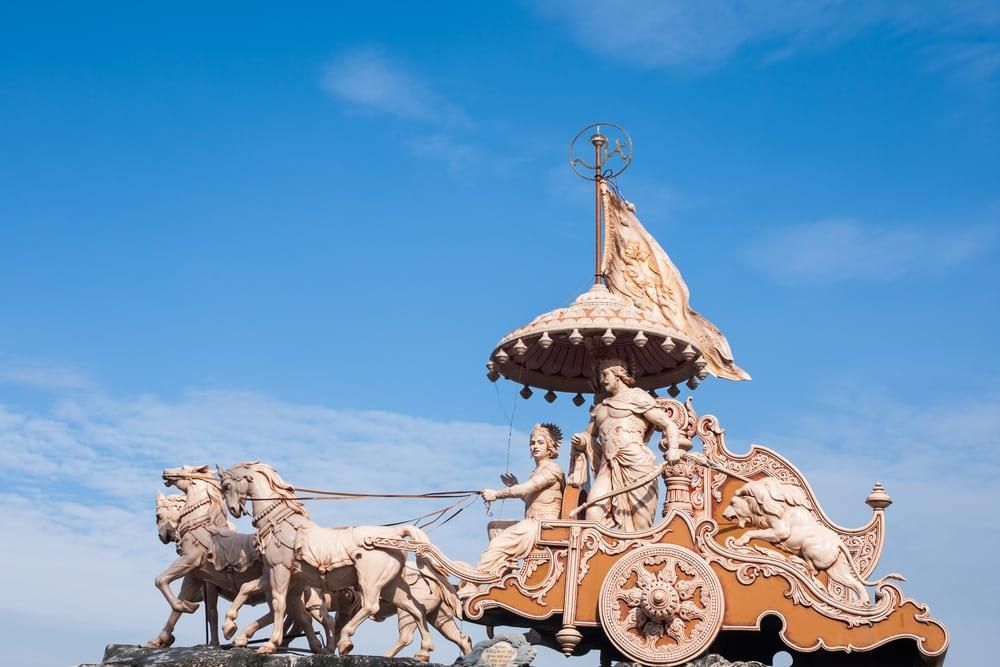
- KRISHNA — An incarnate god, in the form of a charioteer in The Bhagavad Gita
- MAHABHARATA — An epic poem containing 18 books and approximately 100,000 verses (the meaning of "epic" in this use is "a long narrative poem recounting the deeds of a legendary or historical hero")
- RENUNCIATION — Active involvement without seeking rewards and results
Introduction
THE FIRST FULL-FLEDGED YOGA SCRIPTURE
Its importance for the student of Yoga is obvious, since it must be regarded as the first full-fledged Yoga scripture. Indeed, the Gita speaks of itself as a yoga-shastra, or yogic teaching, restating ancient truths. – Georg Feuerstein
- The Bhagavad Gita has been translated as the Lord’s Song, Song of the Spirit, the Song of God and the Song of the Beloved Lord.
- Often simply called “the Gita,” it is a portion of the Mahabharata, an epic poem containing 18 books and approximately 100,000 verses.
- The Mahabharata is said to have been authored by the illumined sage Vyasa.
- The Gita is 700 verses and forms 18 chapters (23 through 40) of the sixth book.
- “It stands out among the holy books of the major world religions, for its flowing Sanskrit verses present a uniquely vivid portrait of the intimacy between humanity and divinity. Indeed, this divine intimacy is revealed in the form of a dialogue that takes the soul on an inward journey culminating in the ultimate state of yoga, in which souls unite with the heart of God.” – Graham M. Schweig
Continue Reading with Ashtanga Tech
This study guide is available to members. Join to access 800+ in-depth guides on anatomy, philosophy, sequencing, and the science of practice.
Join for $5.50/mo — the cost of a DC coffeeAlready a member? Log in here
Discussion
or explore Student Union