
Mantras & Chanting: Practice Guidelines
 Yoga Techniques and Fitness
Overview
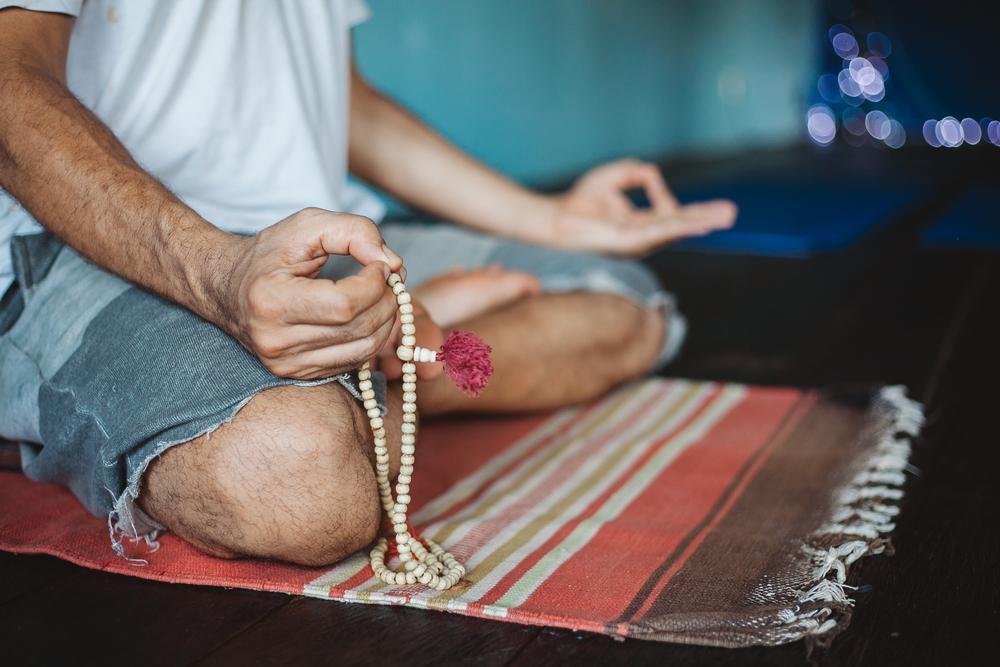
In this lesson, we present practice guidelines for mantra and chanting, including pronunciation, pacing, and the use of a mala for counting repetitions.
Objective
Understand the traditional methods and considerations for establishing a personal mantra practice.
What You'll Get
You'll get practical guidance for beginning or deepening a chanting practice. For your own practice, you'll learn how to use a mala, whether to chant aloud or silently, and why pronunciation matters. For teachers, you'll understand the recommendation to practice a mantra for at least a year before offering it to students, and how different pacing affects energy and mind.
Questions Answered Here
- What does Dr. David Frawley suggest the practitioner do before starting to chant?
- Does he recommend chanting out loud or silently?
- What is said to be the effect of chanting fast? Chanting slowly?
- What is the recommended minimum time that you practice a mantra before teaching it to others?
- Girish teaches that sages have touted “for eons” that mantras be practiced with what two qualities?
- What considerations might help you to choose a mantra?
- What is the meaning of the word “mala?”
- What is a mala and what is it used for?
- On a mala, there is one bead that is different from the rest. What is the name, meaning and purpose of that bead?
- In what way is a mala traditionally held?
- Why is the same mala not traditionally used for all mantras?
Practice Guidelines

Following is a brief summary of the guidelines provided by Dr. David Frawley in Mantra Yoga and Primal Sound 2010 p 165.
- Chant with a peaceful intention and calm mind.
- Before starting to chant, honor the Divine power of the mantra.
- Seek assistance from a guru, holy site or force of nature.
- Pronounce the mantra properly.
- Begin chanting out loud, then chant softly and move to mental chanting. Do most chanting silently.
- Repeat the mantra so often that it begins to repeat itself spontaneously.
- Count mantras using a mala or rosary of 108 beads. For longer mantras, count one recitation of the mantra per bead. With single syllable bija mantras, it can be easier to count 16 repetitions per bead in which case 60 rounds are necessary for 100,000 repetitions.
- Chanting fast helps energize prana. Chanting slowly helps calm the mind.
- “It is best not to give to others mantras that you yourself have not already practiced or worked with for some period of time. Usually a year is a good minimum. It is better yet to only pass on mantras that you have been taught by a teacher or empowered by a tradition to teach.”
Sincere Feeling & Intense Concentration
For eons, yogis, sages, and saints have touted the practice of mantra and meditation as a means to inner peace, happiness, love, and wisdom. Within their words and teachings on the practice of mantra, one theme is ever-present: mantra practice must be done with “sincere feeling… intense concentration… until Divine contact is actually felt,” as Yogananda said… The quality of mantra practice that these wise beings described is not merely rote repetition of some mystic incantation… [It] is, instead, an occasion for a deeply felt, powerful, and embodied experience within the mind, heart, and body of the chanter. – Girish
Continue Reading with Ashtanga Tech
This study guide is available to members. Join to access 800+ in-depth guides on anatomy, philosophy, sequencing, and the science of practice.
Join for $5.50/mo — the cost of a DC coffeeAlready a member? Log in here
Discussion
or explore Yoga Techniques