
About the Polarities of Yin & Yang
 Yoga Techniques and Fitness

Lesson Overview
In this lesson, we introduce the subject of energetic polarities described as “yin” and “yang.”
Objective
Gain a basic understanding of the polarities of “yin” and “yang.”
Description
Review the fundamental aspects described by the polarities, “yin” and “yang” and explain how the terms “yin” and “yang” are similar to “hatha.” Provide a lengthy list of qualities that are yin in nature and those that display yang qualities. Give an example of a yoga practice that is yin in nature but distinct from the style called Yin Yoga.
Introduction: Yin & Yang, and Ha & Tha
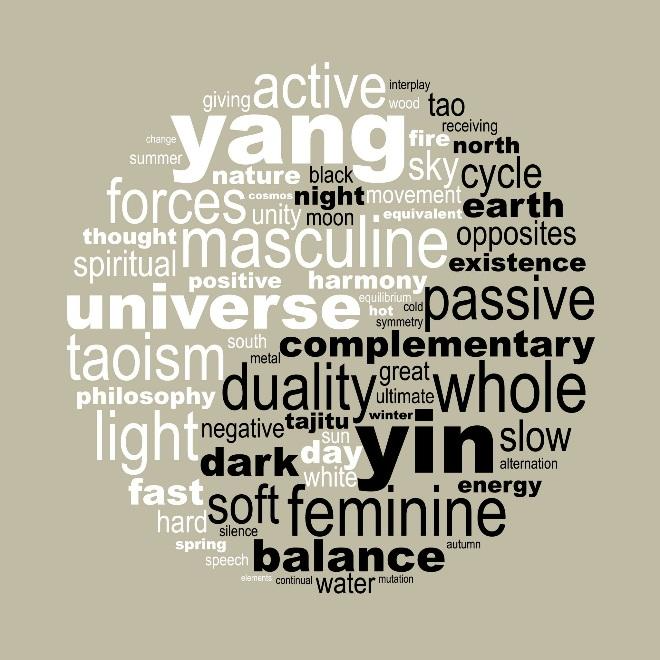
Taoist Yogis teach that as life force energy expresses physically, it splits into two complementary polarities.
Yin and Yang theory describes oppositional but complementary relationships within and between everything. – Josh Summers
- Because they describe polarities, “yin” and “yang” are thus relative and complementary terms.
- As complementary energies, one cannot exist without the other. Rather, they describe qualities in relation to each other.
- As Sarah Powers points out, the terms “yin” and “yang” reflect the same opposites described in the term, “Hatha Yoga” where ha, refers to warming, sun qualities and tha to the cooling or moon elements.
YIN YOGA HELPS TO WORK OUR OTHER HALF
Most forms of yoga today are dynamic, active practices designed to work only half of our body, the muscular half, the “yang” tissues. Yin Yoga allows us to work the other half, the deeper “yin” tissues of our ligaments, joints, deep fascial networks, and even our bones. – Bernie Clark
Continue Reading with Ashtanga Tech
This study guide is available to members. Join to access 800+ in-depth guides on anatomy, philosophy, sequencing, and the science of practice.
Join for $5.50/mo — the cost of a DC coffeeAlready a member? Log in here
Discussion
or explore Student Union