
Arthritis & Yoga
 Adaptation

Research

Randomized control study: “Significant reduction in disease activity” (2020) link and link
- This was a randomized, controlled clinical trial (the most definitive form of scientific evidence) for rheumatoid arthritis (RA).
- Study performed with 166 newly diagnosed rheumatoid arthritis (RA) patients. The control group had 83 people and the yoga group had 83 people.
- This study assessed the effect of 12-weeks of yoga therapy on disease activity, inflammatory markers, and heart rate variability (HRV).
- The study found statistically significant reduction in disease activity.
Randomized control study: clinically significant improvements (2015) link
- This was a randomized, controlled clinical trial (the most definitive form of scientific evidence) for osteoarthritis and rheumatoid arthritis.
- The study involved an eight-week yoga program introducing yoga to 75 sedentary adults with rheumatoid arthritis or knee arthritis.
- The subjects either participated in eight weeks of hatha yoga (two sixty minute classes and one home practice) or were waitlisted. The yoga classes included breath work, chanting, asana, savasana and meditation.
- Two yoga therapists with ten+ years of experience led the yoga classes, and they closely supervised the students and provided individual attention.
- The researchers concluded that eight weeks of yoga classes and home practice was associated with “clinically significant improvements in physical and mental health, fitness, psychological function, and HRQOL, with no adverse outcomes.” The “strongest evidence of benefit” was in reducing pain and improving mood.
Yoga eases symptoms of osteoarthritis (2014) link
- The study involved 20 women with knee pain resulting from osteoarthritis.
- They practiced up to four yoga sessions per week for 12 weeks.
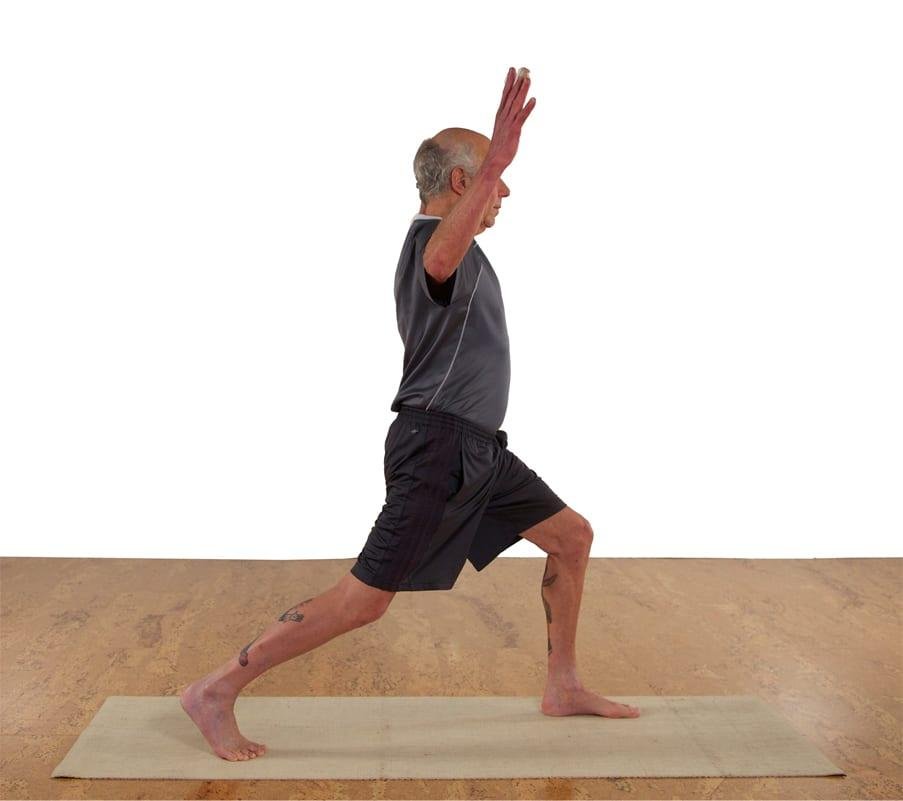
- The sessions featured poses “with a focus on proper alignment and avoiding pain. They included… warrior, goddess, chair and some standing balance poses, and hip-mobilization stretches using a strap.”
- Participants experienced improvements in muscle strength, reduced pain, and increased mobility.
Review of multiple studies finds improvement in pain, function and mood (2011) link
- A review of 7 studies evaluating yoga in arthritis (some osteoarthritis (OA) and RA, some RA only).
- “Outcomes ranged from changes in symptoms, function, and mobility to improvements in fitness parameters including strength, balance, and flexibility.”
- “We concluded that overall the studies were of low quality, and the heterogeneity of the studies precluded meta-analysis. Nevertheless, there was a consistent trend suggesting some evidence of improvement in pain, function, mood, energy, and self-efficacy with regular yoga practice. None of the studies reported evidence of disease worsening or increased joint symptoms, and there was some very preliminary evidence of improvement in disease activity including reductions in tender and swollen joint counts.”
Reduced symptoms of osteoarthritis & increased knee strength & mobility (2015) link and link
- Clincial study of 39 women 50+ years old with knee osteoarthritis as defined by American College of Rheumatology
- “An evaluation of knee osteoarthritis symptoms, mobility, maximal oxygen consumption, and a biomechanical analysis of knee extensor and flexor strength was conducted on all participants before and after completing a yoga sequence. The yoga sequence used was specifically designed with the intention to increase the strength of knee flexors and extensors as well as improve functional knee mobility.” (source)
- Participants reduced arthritis symptoms and increased knee strength and mobility.
Randomized control study: Chair Yoga reduced pain and fatigue (2016) link and link
- 131 older adults were randomly assigned to an eight-week program of chair yoga or a Health Education Program.
- Researchers measured pain, balance, gait speed, fatigue, and functional ability.
- “An 8-week chair yoga program was associated with reduction in pain, pain interference, and fatigue, and improvement in gait speed, but only the effects on pain interference were sustained 3 months post intervention.”
Multiple arthritis-specific studies link
- A 2009 study conducted at the Dubai Bone and Joint Center in Dubai looked at the effects of a biweekly yoga program for people with RA. Twenty-six out of 47 study subjects participated in 12 yoga sessions and reported significant improvements in measurements of disease activity.
- An Indian study looked at a week-long, intensive yoga program’s effects on people with RA. Sixty-four men and women with the disease were studied. All participants showed reduced disability scores on the standardized Health Assessment Questionnaire measuring function, and reduced rheumatoid factor levels. In addition, some participants showed improved hand grip strength following a week of yoga.
- A study conducted at the University of Pennsylvania in 1994 also showed that yoga could provide relief for people with hand osteoarthritis. An eight-week yoga regimen improved hand pain, tenderness and finger range of motion in the participants.
Randomized Control Study: Non-drug Interventions Effective for Osteoarthritis of the Hand (2018) link
- Randomised, controlled 2-month trial with 151 people (74 in intervention group, 77 in “routine-care-plus-placebo group”)
- Studied the impact of “combined-intervention by rheumatology-trained health professionals from different disciplines” delivering “detailed information on functioning, activities of daily living, physical activity, nutrition, assistive devices, instructions on pain management and exercises.”
- “Grip strength significantly increased in the combined-intervention group and decreased in the routine-care group (dominant hand, mean 0.03 bar (SD 0.11) after 8 weeks.”
See Also
How Does it Work?
YOGA IS AN IDEAL RESOURCE FOR OSTEOARTHRITIS FOR MANY REASONS
In my experience of teaching seniors’ yoga classes, I’ve found yoga to be extremely helpful in reducing arthritic symptoms… Osteoarthritis is progressive. Therefore, movement is crucial to the treatment of arthritis and to delay its progression. The slow, gentle movements of yoga, combined with the ability to easily modify the asanas, make yoga an ideal exercise for arthritis patients. The fluid movements of yoga also help stabilize or even increase range of motion of the commonly affected joints… In his book Yoga as Medicine, Dr. Timothy McCall says yoga is ideally suited to handle the long-term effects of dysfunctional movement patterns, bone misalignments, lack of body awareness and poor posture that can lead to osteoarthritis… When joints move safely, the surrounding cartilage and bones become lubricated with synovial fluid… When cartilage is well lubricated, the joint surfaces glide smoothly across each other, reducing wear and tear, therefore increasing range of motion and decreasing pain. The stress relief aspects of yoga are also beneficial to those with arthritis. When people become stressed they tend to tighten their muscles by hunching shoulders or making fists with their hands. The pain from the tight muscles increases the arthritic pain, leading to more stress and distress. – Jennifer Williams-Fields
Some of the general benefits of yoga are helpful for people suffering from arthritis and the associated pain and limitation. Yoga in general can help to:
- Increase muscle strength and endurance.
- Improve proprioception and balance.
- Improve mobility and flexibility.
- Increase the nutrition to joint structures.
- Reduce stress and anxiety and promote a sense of calm and well-being.
- Manage pain.
- Promote healthy body weight.
- “Some evidence also suggests that yoga may also help decrease inflammatory mediators including C-reactive protein and interlukin-6.” (source)
See Also
Continue Reading with Ashtanga Tech
This study guide is available to members. Join to access 800+ in-depth guides on anatomy, philosophy, sequencing, and the science of practice.
Join for $5.50/mo — the cost of a DC coffeeAlready a member? Log in here
Discussion
or explore Student Union