Arm Balancing
 Yoga Techniques and Fitness
Overview
In this lesson, we examine arm balancing poses as a category, and ways to apply this knowledge in teaching.
Objective
Become proficient in the nature and effects of arm balancing poses, and considerations for wisely teaching and sequencing them.
What You'll Get
Describe three types of arm balances, noting the shoulder joint position and relative joint stress for each. Describe the effects of arm balance poses beyond balancing in general. Provide precise instructions and considerations for hand placement in weight-bearing poses. Speak to the subject of activating the feet and legs in arm balance poses. Provide additional teaching considerations for practice and for sequencing of arm balancing poses. Provide a list of poses that may serve as alternatives or preparation for arm balancing. Name arm balancing poses.
- ADHO MUKHA VRKSASANA — Handstand / Downward Facing Tree Pose
- ARM BALANCING POSES — Weight of the body is balanced upon one or both hands or forearms
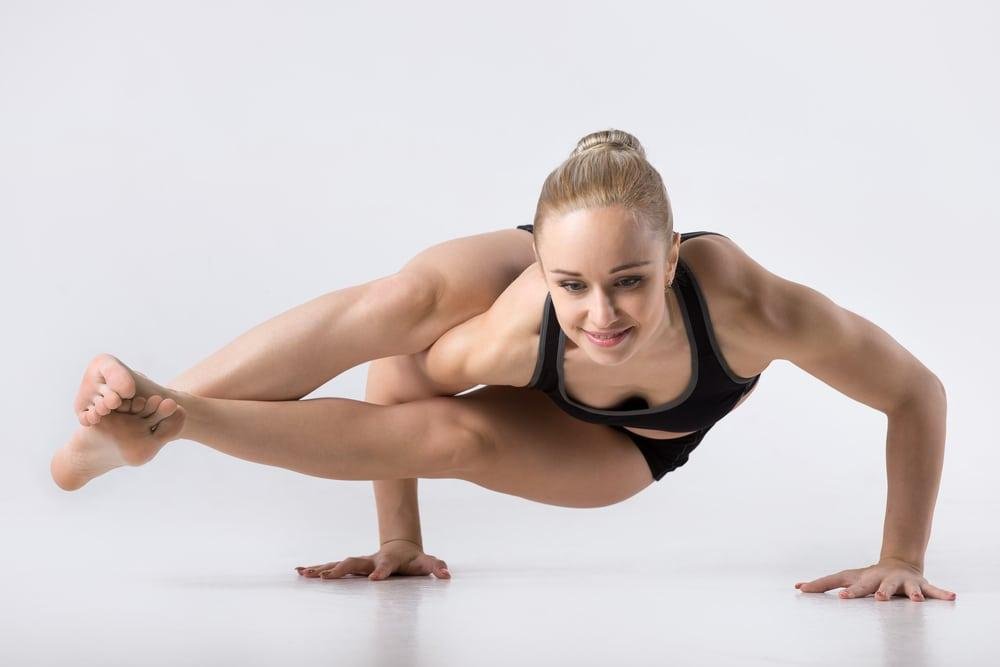
- ASTAVAKRASANA — Eight Angle Pose
- BAKASANA — Crane Pose
- BHUJAPIDASANA — Arm Pressure Pose
- CAMATKARASANA — Wild Thing
- DWI PADA KOUNDINYASANA — Two-Legged Koundinya’s Pose
- EKA HASTA BHUJASANA — Leg Over Shoulder Pose
- EKA PADA BAKASANA — One Legged Crane Pose / Flying Crow
- EKA PADA GALAVASANA — Flying Pigeon Pose
- EKA PADA KOUNDINYASANA — Pose Dedicated to Sage Koundinya
- EKA PADA KOUNDINYASANA II — Flying Splits
- KAKASANA — Crow Pose
- KUKKUTASANA — Cock / Rooster Pose
- LOLASANA — Pendant Pose
- MAYURASANA — Peacock Pose
- PARSVA BAKASANA — Side Crane/Crow Pose
- PINCHA MAYURASANA — Peacock Feather Pose / Forearm Balance
- TITTIBHASANA — Firefly Pose
- TOLASANA — Scale Pose
- VASISTHASANA — Side Plank
- VISVAMITRASANA — Flying Warrior
- VRSCHIKASANA — Scorpion Pose
Introduction
In arm balancing poses, students bear their weight on one or both hands or forearms.
Olga Kabel of SequenceWiz offers the following excellent overview of arm balance types and the characteristics of each. (source)
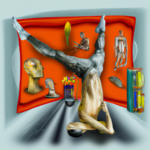
As shown in the graphic, there are three types of arm balances:
Mostly Upright
- Neutral shoulder, arms close to body
- Less stress on joint
Leaning Forward
- Shoulder flexion 45 to 90 degrees, arms in front of body
- More stress on joint
Upside Down
- Shoulder flexion 90 to 180 degrees, arms above head
- Most stress on joint
Effects & Benefits
Continue Reading with Ashtanga Tech
This study guide is available to members. Join to access 800+ in-depth guides on anatomy, philosophy, sequencing, and the science of practice.
Join for $5.50/mo — the cost of a DC coffeeAlready a member? Log in here
Discussion
or explore Asana Theory