
Lateral / Side Bends & Asymmetrical Poses
 Yoga Techniques and Fitness
Overview
In this lesson, we examine lateral/side bending poses as a category, and ways to apply this knowledge in teaching.
Objective
Become proficient in the nature and effects of lateral/side bending poses, and considerations for wisely teaching and sequencing them.
What You'll Get
Explain the effects of side bending poses and the benefits or uses of asymmetrical poses. Describe the types of students for which seated side bends may be problematic and how these students might progressively practice lateral bends. Describe sequencing considerations for side bending and asymmetrical poses.
Introduction
- Here we cover two pose categories: Lateral / Side Bends and Asymmetrical Poses.
- While all side bends are asymmetrical, not all asymmetrical poses are side bends, of course.
Lateral / Side Bending
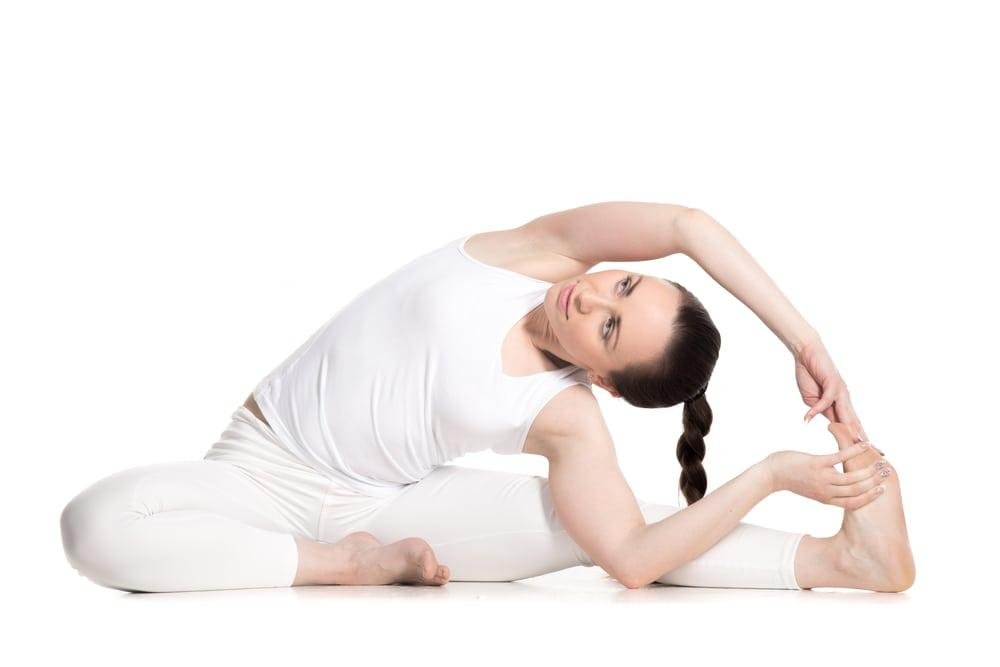
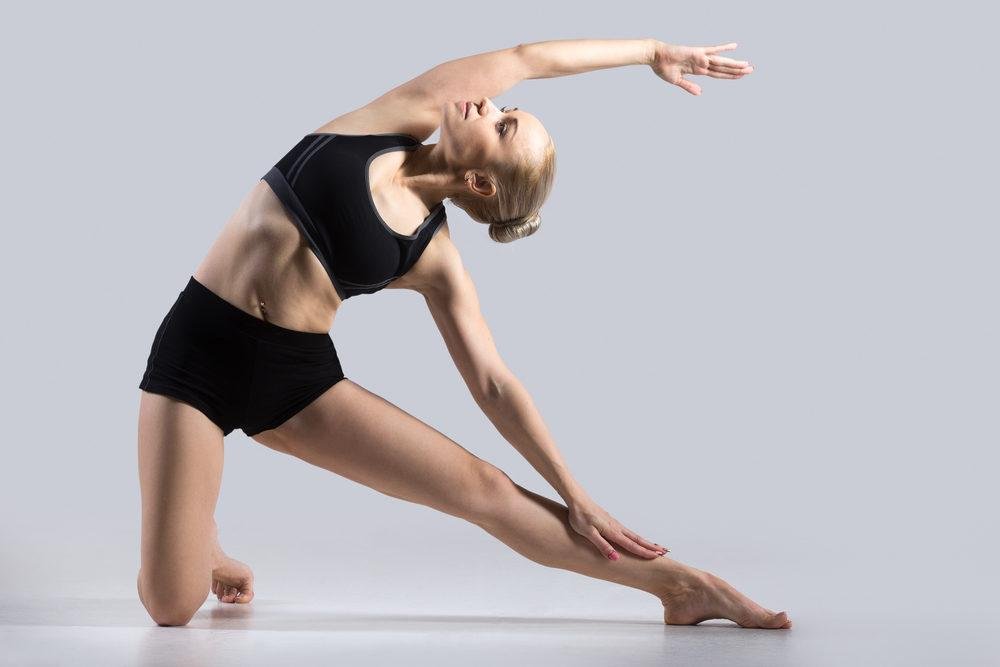
- Purpose: Alternately stretch and contract each side of the body.
Asymmetrical Poses
- Purpose: Help to balance sides.
Effects & Benefits
People Experience Poses Differently
- The following effects may be associated with this category of poses.
- Knowing such common effects is typically useful for planning sequences. However, since there are no universal truths in how different people experience poses, please use caution with this information.
- For example, rather than telling students what to expect when practicing a pose or technique, you may wish to invite them to take note of effects on their breathing and their mind, and what they feel in their body.
See Also
- Wise Word Choice
- Inclusive & Accepting Word Choice
- Asana Categories Hub
- Planning & Sequencing Hub
Side Bending
- Stretch muscles between the ribs and pelvis.
- Increase spinal flexibility.
- Open sides of the rib cage.
- Stretching the intercostals can allow for more expansion of the lungs and improved breathing.
- Develop strength, especially of the abdominal region.
- Tone waist.
- Improve digestion.
- “In sidebends where an arm stretches overhead to reach for the foot, the latissimus dorsi muscle, which extends from the back waist to the armpit, will also stretch.” (Julie Gudmestad)
- Bring awareness to the side body.
HELPFUL FOR LOW BACK, SPINE & SHOULDERS
[Side bends are] the most efficient way to stretch some of the major muscles of the back and sides, such as the latissimus dorsi and the quadratus lumborum, which may leave your lower back feeling more comfortable and flexible… Increasing your range of motion in the side body will help create more mobility in your spine and shoulders, leading to a feeling of greater ease and contentment in your body. – Jason Crandell
HIGHLY NEEDED RELEASE
Side bending is not a common action in our daily lives, which means we are majorly lacking in—and longing for—the release and space a side bend offers. They improve breathing capacity by stretching your intercostal muscles, relieve lower back pain by releasing your QL, and serve as a fantastic prep for backbends. – Kathryn Budig
Asymmetrical Poses
- Demonstrate differences in strength and flexibility.
- Help to balance sides.
Continue Reading with Ashtanga Tech
This study guide is available to members. Join to access 800+ in-depth guides on anatomy, philosophy, sequencing, and the science of practice.
Join for $5.50/mo — the cost of a DC coffeeAlready a member? Log in here
Discussion
or explore Asana Theory