
Inversion Poses
 Yoga Techniques and Fitness

Overview
In this lesson, we examine inversion poses as a category, and ways to apply this knowledge in teaching.
Objective
Become proficient in the nature and effects of inversion poses, and considerations for wisely teaching and sequencing them.
What You'll Get
Explain what is meant by yoga inversions and the terms “classic inversions,” “full inversions” and “mild inversions.” Give examples of poses that are both arm balances and inversions and provide various names that have the same meaning as “mild inversions.” Explain what is meant by “gentle” or “restorative” inversions. Provide conditions for which inversions of any type are contraindicated and describe important cautions related to inversions in general. Individual inversion poses will each have their own contraindications and cautions; provide an example of a caution for a specific inversion pose. For cases when inversions are not contraindicated but poses such as Headstand and Forearm Balance are not appropriate, provide examples of safer alternatives. Describe the general physical effects and energetic effects of inversions, and the yoga philosophy perspective regarding inversions and amrita. Provide sequencing considerations for inversions and a list of poses.
Contents
- Introduction
- Asana Category - Inversions
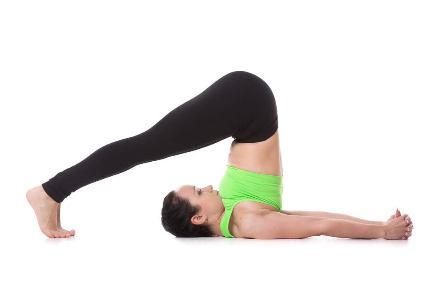
- Halasana (Plow / Plough Pose)
- Salamba Sarvangasana ( Supported Shoulderstand)
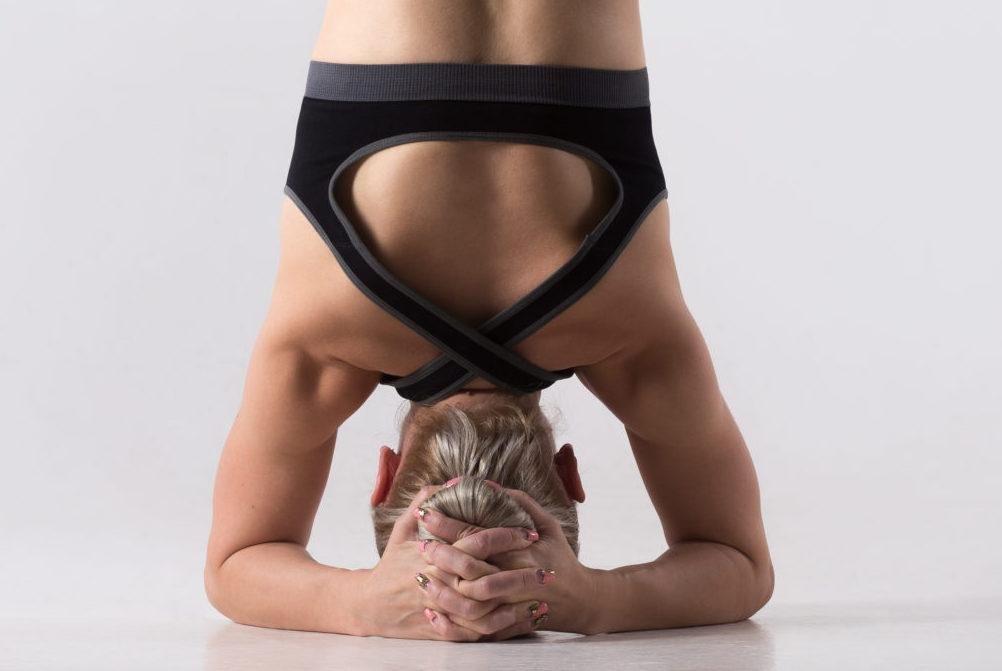
- Salamba Sirsasana (Supported Headstand)
Introduction
People Experience Poses Differently
In this lesson bundle, you’ll find benefits and effects that may be associated with the poses. Knowing common effects associated with each pose is useful for planning sequences and choosing poses to meet intentions.
However, since there are no universal truths in how different people experience poses, please take care with this information, using it only as a guideline or reference. Be sure to promote the truth that students may have different experiences.
While you might express intentions of various poses, AVOID TELLING students what they will experience with a pose or technique. Instead invite self-reflection by observing sensations throughout the body, as well as effects to their breathing and state of mind.
Inversions
Continue Reading with Ashtanga Tech
This study guide is available to members. Join to access 800+ in-depth guides on anatomy, philosophy, sequencing, and the science of practice.
Join for $5.50/mo — the cost of a DC coffeeAlready a member? Log in here
Discussion
or explore Asana Theory