Prasarita Padottanasana (Wide Legged Standing Forward Bend)
 Yoga Techniques and Fitness
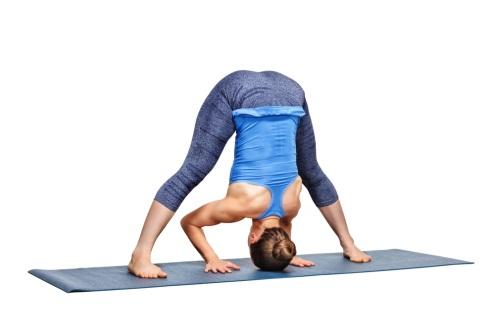
Prasarita Padottanasana A
Prasarita Padottanasana B
Prasarita Padottanasana C
Prasarita Padottanasana D
Prasarita Padottanasana
prasarita = spread out, separated or expanded
pada = foot or leg
uttan = intense stretch, extended
Expanded Leg Intense Stretching Posture
Also known as: Wide Legged Standing Forward Bend
Heart of Pose
- Standing Forward Bend
Naming
- Version A: Hands to floor
- Version B: Hands at waist
- Version C: Clasped behind back
- Version D: Clasping big toes
Notes
Prasarita Padottanasana is one of the quieter standing poses. This pose stretches the hamstrings, but more gently than poses in which the legs are closer together… You can include this pose at the end of your standing pose practice, as a rest between vigorous standing poses, as a preparation for a long practice of seated forward bends, or before or after Down Dog. In addition, it can be practiced before you begin inverted poses. – Judith Lasater
- Sometimes used as a milder inversion such as an alternative for Headstand
- Version C prepares shoulders for Shoulderstand
- Often sequenced at end of standing poses to relieve fatigue
- “This is a resting pose…” (Silva Mehta)
See Also
Benefits
Musculoskeletal
- Stretches hamstrings, adductors (inner thigh muscles), and calves
- “Makes hips joints more flexible” (Judith Lasater)
- Strengthens “and stabilizes” legs
- Strengthens feet & ankles
- “Spinal traction relieves upper body tension, elongates spine and core” (Erich Schiffmann)
- “Hydrates the spinal disks” (Joseph LePage)
Energy, Mood, Emotion
- Relieves fatigue
- “Deep release and introspective quality of this pose quiets and soothes the nervous system” (Baron Baptiste)
Continue Reading with Ashtanga Tech
This study guide is available to members. Join to access 800+ in-depth guides on anatomy, philosophy, sequencing, and the science of practice.
Join for $5.50/mo — the cost of a DC coffeeAlready a member? Log in here
Discussion
or explore Student Union