
⎯⎯⎯⎯⎯ ◆ ⎯⎯⎯⎯⎯
Back Muscles
⎯⎯⎯⎯⎯ ◆ ⎯⎯⎯⎯⎯
 Anatomy & Physiology
Vocabulary
deep or intrinsic back muscles, erector spinae (spinal erectors), intermediate back muscles, multifidus muscles, superficial back muscles, quadratus lumborum (QL)
Vocabulary
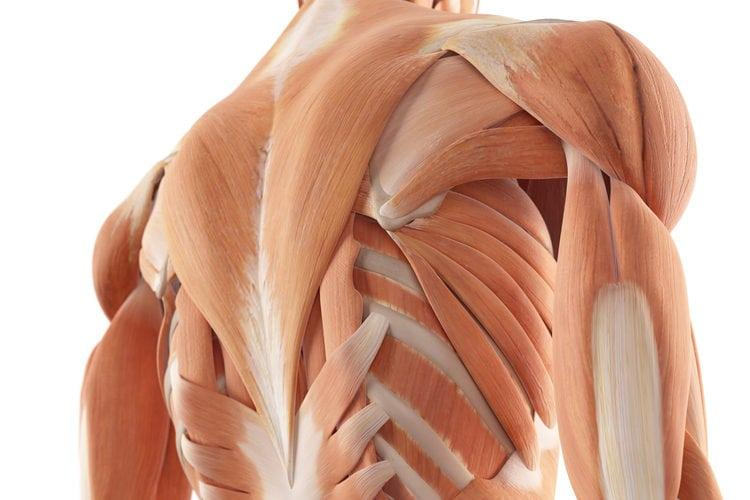
- DEEP OR INTRINSIC BACK MUSCLES — Erector spinae, quadratus lumborum (QL), multifidus
- ERECTOR SPINAE (SPINAL ERECTORS) — Three groups of muscles that run the length of either side of the spine, helping to maintain erect posture
- INTERMEDIATE BACK MUSCLES — Serratus posterior superior and serratus posterior inferior
- MULTIFIDUS MUSCLES — A series of deep muscles that run the length of the spine, stabilizing vertebrae and assisting in spinal rotation and extension
- SUPERFICIAL BACK MUSCLES — Trapezius, latissimus dorsi (lats), levator scapulae, rhomboids
- QUADRATUS LUMBORUM (QL) — Muscles located on either side of the lumbar spine, between the pelvis and the lowest ribs; involved in movement and stabilization of the lumbar spine and pelvis, and also involved in breathing
Continue Reading with Ashtanga Tech
This study guide is available to members. Join to access 800+ in-depth guides on anatomy, philosophy, sequencing, and the science of practice.
Join for $5.50/mo — the cost of a DC coffeeAlready a member? Log in here
Discussion
or explore Student Union