
Parivrtta Parsvakonasana (Revolved Side Angle Pose)
 Yoga Techniques and Fitness
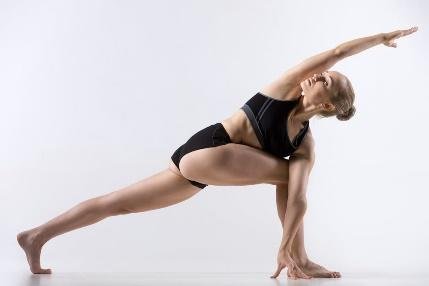
Parivrtta Parsvakonasana
par-ee-VRT-tah parsh-vah-cone-AHS-anna
“parivrtta” = revolved
“parsvakona” = lateral angle
Revolved Side Angle Pose
Also known as: Rotated or Revolving Lateral Angle Pose
Common variations from High or Low Lunge may be called: Revolved Lunge or Lunge Twist
Heart of Pose
- Standing Twist and Side Body Lengthening
Notes
- Pose shown is a common variation: full pose in upper body but back leg in Crescent Lunge rather than Virabhadrasana I.
COMBINED ACTION OF TURNING SHOULDERS IN ONE DIRECTION & PELVIS IN OTHER
Two stories take place simultaneously here: lunging forward and turning the torso. The main story in this pose is the combined action of turning the shoulders in one direction and the pelvis in the other; the connection between the shoulders and the pelvis turns the spine. – Ray Long
Effects / Benefits
Energy, Mood, Emotion
Effects to energy, mood or emotion may include the following.
- Increases lung capacity; facilitates deeper breathing.
- Energizes.
- Builds focus.
- Develops willpower and stamina.
Continue Reading with Ashtanga Tech
This study guide is available to members. Join to access 800+ in-depth guides on anatomy, philosophy, sequencing, and the science of practice.
Join for $5.50/mo — the cost of a DC coffeeAlready a member? Log in here
Discussion
or explore Student Union