
⎯⎯⎯⎯⎯ ◆ ⎯⎯⎯⎯⎯
Balancing
⎯⎯⎯⎯⎯ ◆ ⎯⎯⎯⎯⎯
 Yoga Techniques and Fitness
Vocabulary
anantasana, ardha baddha padmottanasana, ardha chandrasana, ardha chandrasana chapasana, balancing poses, garudasana, natarajasana, niralamba, parivrtta ardha chandrasana, salamba, utthita hasta padangusthasana, vestibular system, virabhadrasana III, vrksasana
- “ANANTASANA” — Side Reclining Leg Lift / Vishnu’s Pose
- “ARDHA BADDHA PADMOTTANASANA” — Half Bound Lotus Standing Stretch
- “ARDHA CHANDRASANA” — Half Moon Pose
- “ARDHA CHANDRASANA CHAPASANA” — Half Moon Bow Pose / Sugarcane
- BALANCING POSES— Remove an element of support to strengthen and stabilize the body and mind
- “GARUDASANA” — Eagle Pose
- “NATARAJASANA” — Lord of the Dance Pose
- “NIRALAMBA” — “Without support”
- “PARIVRTTA ARDHA CHANDRASANA” — Revolved Half Moon Pose
- “SALAMBA” — “With support” (such as using a prop, or placing a limb for balance support)
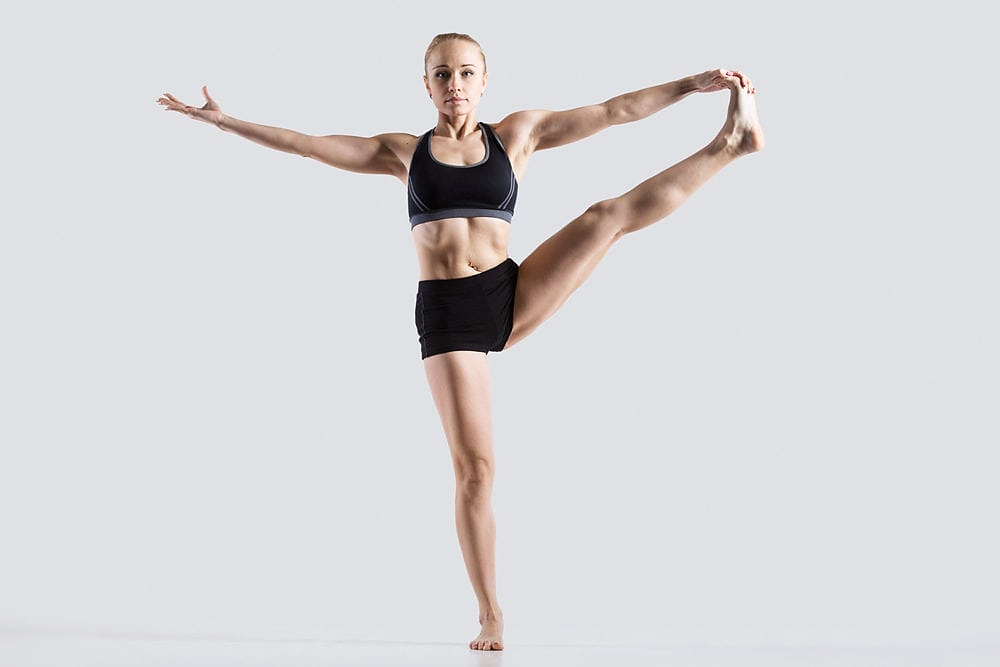
- “UTTHITA HASTA PADANGUSTHASANA” — Extended Hand to Toe Pose
- VESTIBULAR SYSTEM — Sensory system located in the inner ear that regulates balance and spatial orientation (Premier Neurology Center)
- “VIRABHADRASANA III” — Warrior 3 Pose
- “VRKSASANA” — Tree Pose
Introduction
Balancing postures remove an element of support to strengthen and stabilize the body and mind.
- Balancing may be practiced from a variety of foundations including: standing on one leg, balancing on one arm and one leg, arms only, seated balance and head balancing.
- Balancing strengthens, stabilizes and requires integrating various parts of the body.
- Balance poses help students learn to hold and move their body weight.
- Most balancing poses require strong core engagement.
- “Because balance is a learned skill, we must challenge our balance in order to improve it.” (Rachel Land)
As Olga Kabel describes here, Balancing Poses may be categorized by their foundation: 1) standing balance, 2) arm balancing, 3) arm-leg balances, 4) seated balances, and 5) head balancing. See more on each below.
Standing Balance
- Balancing on toes or on one leg
- Examples: Virabhadrasana III (Warrior 3 Pose), Vrksasana (Tree Pose), Garudasana (Eagle Pose), Utthita Hasta Padangusthasana (Extended Hand to Toe Pose), Eka Pada Tadasana (One Legged Mountain Pose), Eka Pada Malasana (One Legged Squat), Natarajasana (Lord of Dancer’s Pose), Goddess Pose Variation (Heels Lifted)
- See also: Standing Poses (Information in that lesson is not duplicated here)
Continue Reading with Ashtanga Tech
This study guide is available to members. Join to access 800+ in-depth guides on anatomy, philosophy, sequencing, and the science of practice.
Buy NowAlready a member? Log in here
Discussion
or explore Student Union