
⎯⎯⎯⎯⎯ ◆ ⎯⎯⎯⎯⎯
Twisting
⎯⎯⎯⎯⎯ ◆ ⎯⎯⎯⎯⎯
 Yoga Techniques and Fitness
Vocabulary
ardha matsyendrasana, bharadvajasana, jathara parivartanasana, marichyasana III, paripurna matsyendrasana, parivrtta parsvakonasana, parivrtta trikonasana, twisting poses
- ARDHA MATSYENDRASANA — Half Lord of the Fishes Pose
- BHARADVAJASANA — Bharadvaja Sage Twist
- JATHARA PARIVARTANASANA — Revolved Abdomen Pose / Reclined Twist
- MARICHYASANA III — Marichi’s Pose Twist
- PARIPURNA MATSYENDRASANA — Complete Lord of the Fishes Pose
- PARIVRTTA PARSVAKONASANA — Revolved Side Angle Pose
- PARIVRTTA TRIKONASANA — Revolved Triangle Pose
- TWISTING POSES — Asanas that rotate the spine
Introduction
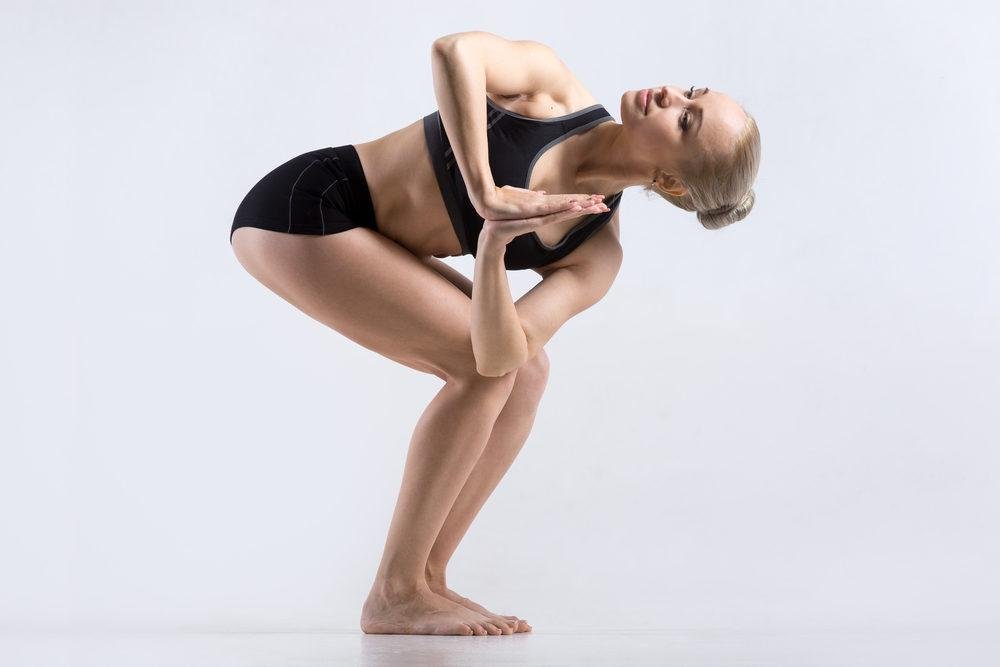
Twisting poses rotate the spine.
- In some twisting asanas such as a Reclined Twist, the arms and shoulders are acting separately from the pelvis. In other poses such as Ardha Matsyendrasna (Half Lord of the Fishes Pose), the arms are used as leverage, leading to a stronger rotation of the spine and shoulders.
- Because the SI joint is a joint of stability — not mobility — consider focusing on keeping the sacrum and pelvic bones together and allowing the pelvis to move during twists. (See much more detail below.)
Types of twists include: 1) standing, 2) supine, 3) seated, 4) arm balance, and 5) twisted inversions. See more on each below.
Standing Twists
Examples: Prasarita Twist, Parivrtta Trikonasana (Revolved Triangle), Parivrtta Parsvakonasana (Revolved Side Angle), Parivrtta Ardha Chandrasana (Revolved Half Moon), Parivrtta Hasta Padangusthasana (Revolved Hand to Foot)
Continue Reading with Ashtanga Tech
This study guide is available to members. Join to access 800+ in-depth guides on anatomy, philosophy, sequencing, and the science of practice.
Join for $5.50/mo — the cost of a DC coffeeAlready a member? Log in here
Discussion
or explore Student Union