
Your Knee Rotates (Until It Doesn’t)
This is Ashtanga Tech Support — long-form, mechanism-first conditioning pieces for the joint actions the practice quietly demands and rarely trains directly.
The question that prompts this
Some version of: “My knee hurts in lotus.” “My knee hurts in Marichyasana D.” “My teacher told me to externally rotate my knee in Trikonasana and now it clicks.” “Can I ‘open’ my knee like I open my hip?”
The short answer: the knee does rotate, but only when it’s bent. When the knee is straight, the joint locks itself against rotation. If you try to rotate a straight knee, you’re not rotating the knee — you’re tearing the things that hold the knee together.
The longer answer is one of the most important pieces of knowledge an Ashtanga practitioner can carry around. So let’s walk through it.
Anatomy in one paragraph (the screw-home)
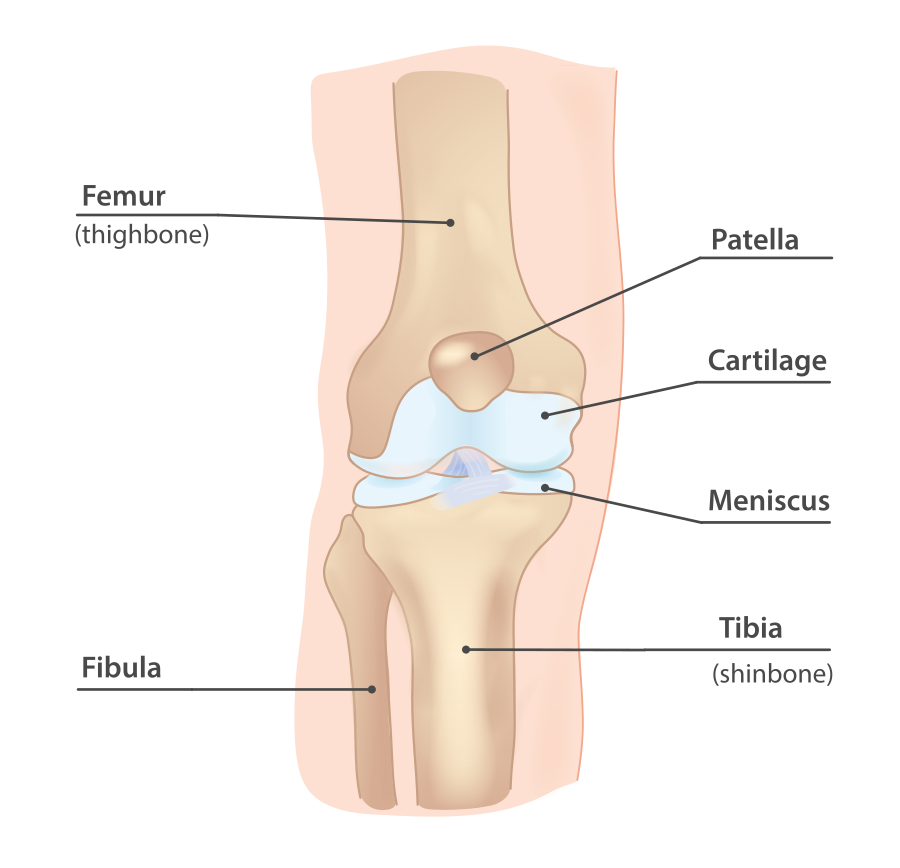
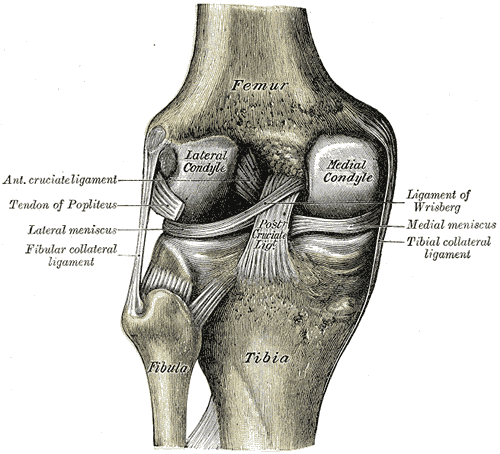
The knee is a modified hinge. The femoral condyles (the two knuckles at the bottom of the femur) are not the same shape — the medial condyle is longer than the lateral. As the knee approaches full extension during the last ~20°, this asymmetry forces the tibia to externally rotate relative to the femur, which tightens the cruciate ligaments and locks the joint against further rotation. This is the screw-home mechanism, and it’s a feature, not a bug — it’s what lets you stand for hours without your knees being a continuous active stabilization problem. The corollary: a knee that is fully extended cannot rotate. The rotation you “feel” when you torque a straight knee is happening in the soft tissue — the menisci, the medial collateral ligament, the joint capsule. That is not range of motion. That is damage in slow motion.
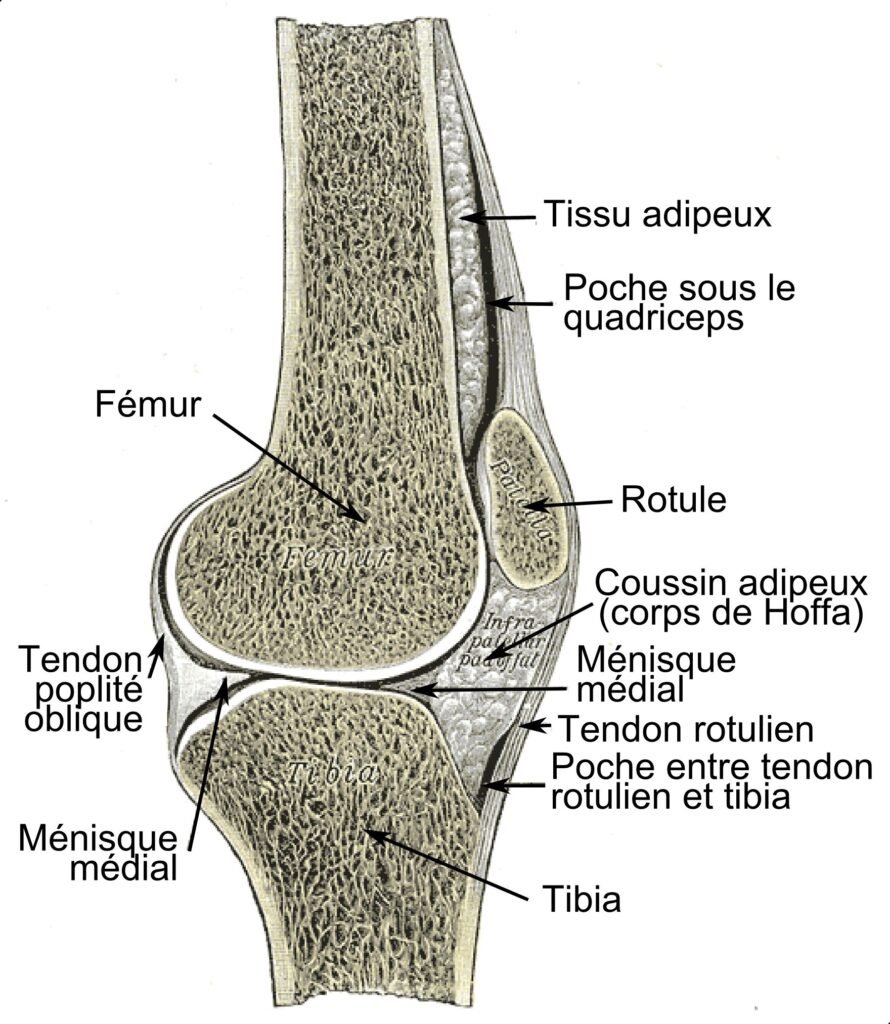
When the knee is flexed past ~20°, the screw-home unlocks, the cruciates slacken, and rotation becomes available: roughly 45° of external rotation and 30° of internal rotation at 90° flexion (peak rotational range). Below 90° (more flexed), rotation modulates again as the soft tissues tension. The window of meaningful rotation is therefore from about 30° to 110° of flexion. Train the rotation there. Never anywhere else.
Where rotation IS available
| Knee position | Rotation available |
|---|---|
| Full extension (0°) | None. The screw-home is locked. |
| Slight flexion (0–20°) | Negligible. Joint still mostly locked. |
| Mid flexion (30–90°) | External rotation up to ~45°, internal rotation up to ~30°. This is the training window. |
| Deep flexion (90–135°) | Rotation persists but tapers as the soft tissues tension. Padmasana lives here. |
| End-range flexion (>135°) | Limited by tissue compression. Forcing rotation here is how knees get hurt. |
Translation for the practice:
- Trikonasana (straight front knee): NO knee rotation. The “rotation” is happening at the hip.
- Padmasana / half-lotus (deeply flexed knee): rotation is available — and required.
- Marichyasana B & D (knee flexed past 90° in half-lotus): rotation available but soft-tissue-limited.
- Janu Sirsasana C (flexed knee with rotated tibia): rotation available; foot position dictates the rotation.
The conditioning happens in the window where rotation lives. Outside that window, there is nothing to condition — only things to protect.
Where rotation is NOT available (and what to do about it)
This is the part most yoga students need explicitly stated:
If the knee is extended (or close to it), do not torque it. This means:
- In Trikonasana, the front leg is straight. Do not “rotate the knee.” Rotate the femur at the hip.
- In Parsvottanasana, the front leg is straight. Same rule.
- In Paschimottanasana, the knees are extended. Do not turn the toes.
- In Padangusthasana / Padahastasana, knees extended. Toe rotation is foot business, not knee business.
The cue “open your knee” applied to a straight leg is, mechanically, the cue “tear your medial collateral ligament slowly over six months.” Replace it. The cue you actually want is rotate the femur at the hip — and keep the foot honest (second toe pointing the same direction as the kneecap).
Assessment: the rotational range you actually have
Sit on the edge of a chair. Knees flexed to 90°. Bare feet on the floor. Each side independently.
- Active external rotation — keeping the femur still, swing the foot inward across the midline. The lower leg rotates externally on the femur. Most people can find ~30°. Target: ~45°.
- Active internal rotation — swing the foot outward away from the midline. Most people find ~15–20°. Target: ~30°.
- Quality of motion — does the femur stay still or does it cheat? If the hip rotates too, the knee is offloading work. Pin the femur. Try again.
The asymmetry between sides matters. The asymmetry between rotation directions matters more — most students have decent external rotation and almost no active internal rotation. That gap is where intermediate-series knee complaints come from.
Reference video — Tibial Internal & External Rotation Assessment:
Watch:
Protocol 1: Knee CARs (the rotational warm-up)
For the rotational degrees of freedom only. The flexion/extension component is its own protocol — this one isolates rotation.
How:
- Seated on a chair or table edge, knee at 90° flexion. Femur stabilized with the hands.
- Slowly rotate the lower leg through its full active range — internal to external — like a windshield wiper.
- 5 reps each direction. The femur does not move. Only the tibia.
- Then a second pass: knee at 60° flexion. Same drill.
- Then a third pass: knee at 120° flexion (sit cross-legged or kneel as needed). Same drill.
Why three flexion angles: rotation availability is different at each, and the joint capsule needs information at each.
Reference video — Knee CARs (tibial rotation, seated):
Watch:
Protocol 2: Tibial External Rotation PAILs/RAILs
The lotus-prep protocol. For the rotation that brings the foot up and the heel toward the opposite hip crease without torquing the knee.
Setup: Sit cross-legged. Pick up one shin in your hands. Knee flexed ~90°. Now actively externally rotate the tibia — turn the foot inward toward the opposite knee. Find end range without forcing.
The sequence:
- Passive position — 90 seconds. Lower leg held in maximum tibial external rotation.
- PAILs — 10 seconds. Press the foot into your hands as if trying to rotate back (toward internal rotation), 100% effort. Your hands resist; the leg doesn’t move.
- RAILs — 10 seconds. Now actively pull the foot deeper into external rotation against your hand resistance. 100% effort.
- Passive return — 60 seconds. Settle.
- Repeat 2–3 rounds.
Reference video — Knee External Rotation PAILs/RAILs:
Watch:
Protocol 3: Tibial Internal Rotation PAILs/RAILs
The under-trained direction. Required for Janu Sirsasana C, useful for Vatayanasana, and the missing piece in most students’ rotational profile.
Setup: Sit on the floor with one knee flexed, foot flat. Hands on the shin. Now actively internally rotate the tibia — turn the foot outward away from the midline while keeping the femur still. Most people will find 15–20°. Push the limit gently.
The sequence:
- Passive position — 90 seconds.
- PAILs — press the foot against your hands toward external rotation, 10 seconds at 100%.
- RAILs — pull deeper into internal rotation, 10 seconds at 100%.
- Passive return — 60 seconds.
- Repeat 2–3 rounds.
Reference video — Tibial Rotation PAILs/RAILs (covers both directions):
Watch:
This protocol will reveal asymmetries no other drill will. The side that struggles with internal rotation is the side that complains in Marichyasana D.
Reference video — Tibial Internal Rotation PAIL/RAIL (focused IR drill):
Watch:
End-Range Work
Once Protocols 1–3 are tolerable, integration begins.
End-Range Drill 1: Loaded Bharadvajasana Setup
Sit in Bharadvajasana shape — legs to one side, one knee flexed in virasana, the other in half-lotus. Settle there for 60 seconds. Switch sides. This is rotational end-range under load. The knee is flexed; rotation is present; the body weight asks the joint to own the position.
Reference video — Bharadvajasana (rotational end-range under load):
Watch:
End-Range Drill 2: Active Half-Lotus from Tabletop
On hands and knees, lift one shin and externally rotate the tibia, drawing the foot toward the opposite hip. Hold the foot mid-air with the rotation only — no hands. 30 seconds → build to 90 seconds. This is half-lotus prep without floor support. If you cannot hold this without ankle assistance, return to Protocol 2 for another four weeks before forcing lotus.
Reference video — Active Lotus Prep (hip ER + tibial rotation, tabletop family):
Watch:
End-Range Drill 3: Janu C Foot Position
Sit. One leg extended, the other flexed with the foot pointing down and turned slightly inward (Janu Sirsasana C foot prep). Hold the position with active tibial internal rotation. 30 seconds → 90 seconds.
Reference video — Janu Sirsasana A/B/C tutorial (foot position for the C variant is the IR end-range demand):
Watch:
The principle is the same as the ankle work: don’t stretch into end range, own end range. The screw-home protects you outside the rotation window. Protocols and drills give you something to own inside it.
Where this shows up in the practice
| Pose | Knee Position | Rotation Demand |
|---|---|---|
| Padmasana / full lotus | deep flexion (~135°) | maximum tibial external rotation; tested under load |
| Ardha Baddha Padmottanasana | deep flexion (lifted leg) | tibial external rotation + hip external rotation |
| Ardha Baddha Padma Paschimottanasana | deep flexion (folded leg) | same — but loaded forward fold compounds the demand |
| Marichyasana B | half-lotus (deep flexion) | tibial external rotation in setup |
| Marichyasana D | half-lotus + twist | external rotation + spinal rotation; binding tension reveals weak spots |
| Bhekasana | deep flexion + plantarflexion | tibial rotation (variable), heels-to-hips compression |
| Vatayanasana | half-lotus standing + flexed standing knee | rotation under bodyweight; high demand |
| Bharadvajasana | virasana side (internal-leaning) + half-lotus side | bilateral rotational demand |
| Janu Sirsasana C | flexed knee + tibial internal rotation | the under-trained corner — internal rotation under load |
| Eka Pada Sirsasana | deep flexion | rotation through extreme range; precondition for Yoga Nidrasana |
| Garbha Pindasana, Pindasana, Urdhva Padmasana | padmasana under load | sustained external rotation |
| Yoga Mudra | padmasana + forward fold | sustained external rotation under spinal flexion |
| Matsyasana, Kukkutasana | padmasana | external rotation maintenance under arm balance / backbend |
| Supta Vajrasana | virasana + recline | rotation toward neutral with hip extension |
Where rotation is NOT happening (no matter what anyone tells you):
- Trikonasana (front knee straight)
- Parsvottanasana (front knee straight)
- Utthita Hasta Padangusthasana (lifted-leg knee straight)
- Paschimottanasana (knees extended)
- Anything with locked-out knees
Programming
Beginner / pre-protocol:
- Knee CARs daily, 90 seconds per side, all three flexion angles
- 4 weeks before adding PAILs/RAILs
- No forced lotus during this period — use sukhasana with prop support
Established practitioner:
- Knee CARs daily before practice
- Tibial External Rotation PAILs/RAILs, 3x/week
- Tibial Internal Rotation PAILs/RAILs, 2x/week
- End-Range Drill 1 (Bharadvajasana load) daily
- End-Range Drill 2 (lotus prep from tabletop) before any padmasana entry
Advanced / teaching: All of the above, plus pre-screen every student’s seated knee CARs before assigning Marichyasana D or any half-lotus variant. The student who cannot find 30° of active tibial external rotation at 90° flexion is the student whose knee is going to complain at intermediate series.
A note on knee pain and contraindications
If a student presents with knee pain that:
- Hurts during straight-leg poses → it’s almost certainly not rotational. Look at the patellofemoral joint, the hip, the foot. Refer if persistent.
- Hurts during deep-flexion poses (lotus, Marichyasana) → the rotation is being forced outside the available range, OR the rotation is being demanded from a knee that should not yet be loading it.
- Clicks, locks, or gives way → meniscus territory. Stop. Refer to sports-medicine orthopedist before any further loading.
- Has a history of ACL/MCL/meniscus injury → the rotational protocols above are still valuable, but should be cleared and supervised. The screw-home mechanics may be altered post-surgery.
The general rule remains: rotation is a flexion-position privilege. Take rotation out of straight-knee poses. Train rotation deliberately in flexed-knee positions. Trust the screw-home to do its job everywhere else.
The knee is honest. It tells you exactly what it can do — when it’s bent. Listen to it then.
Further Reference
Each video below opens inline — click to expand. The full FRC playlist link is at the bottom.
Watch: Knee CARs (tibial rotation, seated)
Watch: Knee External Rotation PAILs/RAILs
Watch: Tibial Rotation PAILs/RAILs (both directions)
Watch: Functional Anatomy Seminars FRC playlist
Watch: Tibial Internal & External Rotation Assessment
Watch: Knee Mobility — Tibial Internal Rotation PAIL/RAIL
Watch: Bharadvajasana — Bharadvaja's Twist (Hatha tutorial)
Watch: Active Lotus Prep (hip ER active flexibility)
Watch: Janu Sirsasana A/B/C Detailed Tutorial
Functional Range Conditioning® and FRC® are registered trademarks of Functional Anatomy Seminars. Linked videos are referenced for educational purposes; the protocols described here are derived from FRC principles taught through formal certification.
Companion Tech Support: the Lower Limb series
This piece is one of four. The lower limb is a chain — the ankle’s four corners feed the knee’s rotation window, which feeds the hip’s 2×2 matrix, which the hallux finally has to push off from. Train one in isolation and the next one up the chain will quietly compensate. Train the chain.
- The Ankle: Four Corners — The four-corner ankle complex and the FRC protocols the practice quietly demands.
- Hallux Conditioning — The big toe is a joint. Train it, or the chaturanga pivot will collect rent.
- Hip Adduction × Rotation — The 2×2 matrix of hip adduction with internal and external rotation — Padmasana on one side, Eagle on the other.
Not sure where to start?
Chat with the intake assistant — tell it about your practice and it’ll point you to what fits.
Talk to the Intake Bot →
Discussion
or explore Student Union