
Halasana
 Yoga Techniques and Fitness
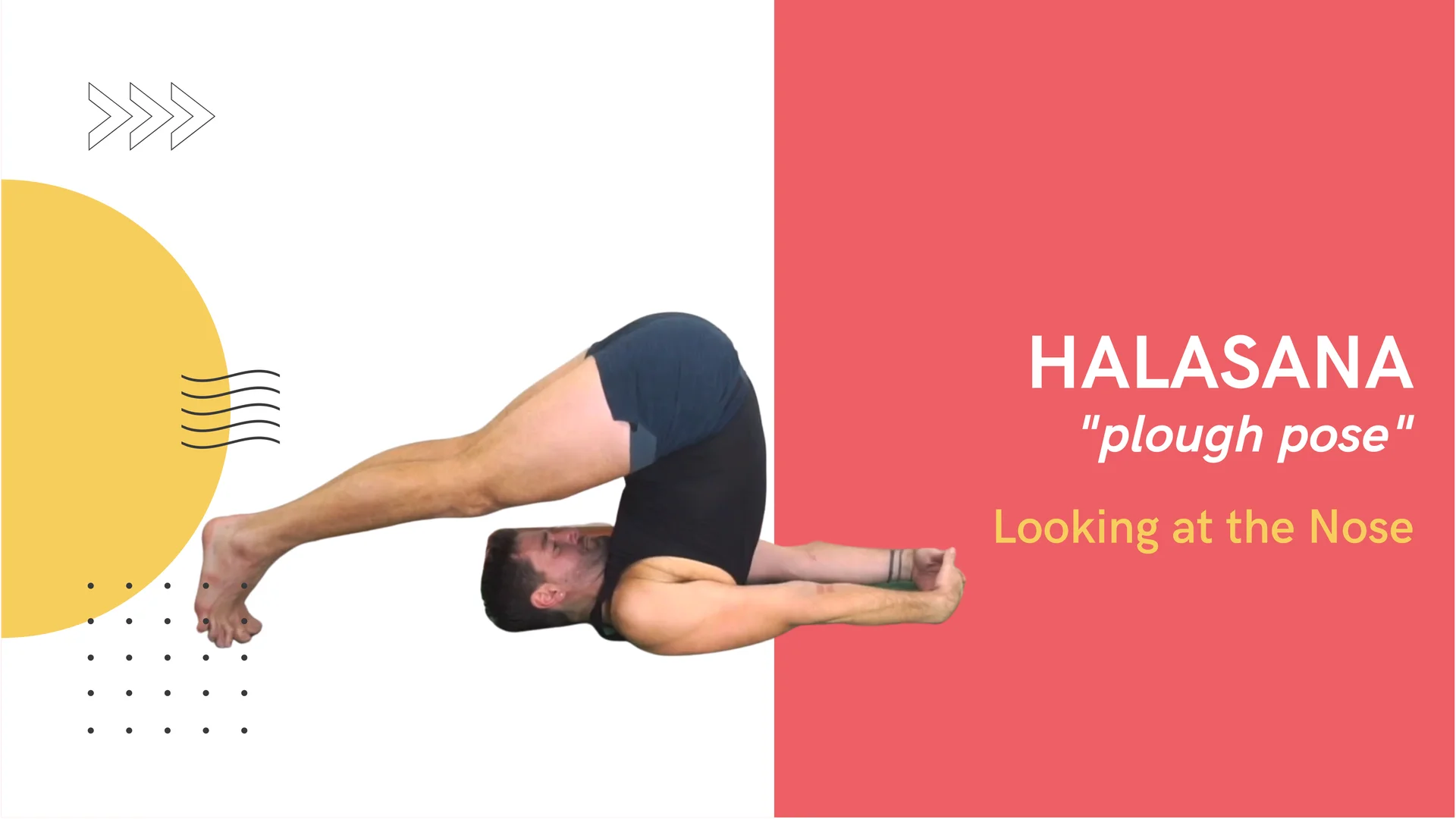
Halasana is one of the restorative poses that is usually performed near the end of the practice. It is also an inversion. Thus, it has beneficial effects on the cardiovascular system and the flow of cerebral spinal fluid.
| HALASANA (11 movements) | ||
| ASTAU | Exhale, lower feet, bind | |
Anatomy
We finish the series with Halasana (Plough Pose) and Shoulder Stand (Sarvan- gasana). Like other inversions, these postures can affect the autonomic nervous system by stimulating pressure receptors located in the aorta and carotid arteries. This can result in a temporary lowering of the heart rate and blood pressure. BothHalasana and Shoulder Stand have a calming effect on the body and mind and help to prepare for deep relaxation in Savasana. Like Headstand, they stimulate the nerves associated with the fourth, fifth, and sixth chakras. Note that this series follows the order for Headstand and Shoulder Stand that is advocated by the Iyengar Yoga tradition. In the classical Ashtanga system, the Shoulder Stand precedes Head- the stand. Both systems have similar benefits in relation to the autonomic nervous system and chakras. Try each method to find what works best for you.
Synergizing/Activating
- The biceps flex the elbows. This causes the hands to press into the back, lifting and supporting it while opening the chest.
- The posterior deltoids extend the humeri toward the floor, further lifting the back.
- The quadratus lumborum and psoas combine to lift and stabilize the lower back.
- The psoas and pectineus flex the hips.
- The adductor longus and brevis draw the thighs toward the midline.
- The quadriceps extend the knees.
- The tibialis anterior dorsiflexes the ankles.
- The peroneus longus and brevis evert the ankles and open the soles of the feet.
Cerebrospinal fluid (CSF) is a clear liquid that circulates in the subarachnoid space surrounding the brain and spinal cord and throughout the ventricular system of the brain. It serves as a mechanical cushion against trauma and distributes nutrients and neuroendocrine factors, such as endorphins, to various parts of the central nervous system. Inverting the body alters the flow of CSF, bathing the brain in endorphins and improving circulation to regions of stagnant flow.
Inversions and the Cardiovascular System Inverting the body affects blood flow, increasing the return of blood from the torso and lower extremities through the inferior vena cava to the heart. The heart pumps more efficiently when the chambers are filled optimally and cardiac output increases. Oxygenated blood is pumped out of the heart through the aorta and distributed to the body. The aorta and carotid arteries have pressure receptors that aid in regulating blood pressure, maintaining the mean arterial pressure within a narrow range. These receptors respond to increased cardiac output or blood pressure by signaling the brain to increase parasympathetic outflow. This results in a slowing of the heart rate and a lowering of the blood pressure. Conversely, when the blood pressure is low (hypotension), signals from the baroreceptors decrease, with cardiac output and blood pressure rising. The net effect is homeostatic balancing of the cardiac output and blood pressure. Inverting the body in persons with normal blood pressure increases the firing of the baroreceptors, thus increasing parasympathetic outflow (from the vagus and glossopharyngeal nerves). The result is a temporarily lowered heart rate and blood pressure. Always come out of inversions slowly to avoid light-headedness. Child’s. The pose is excellent for re-equilibrating the body’s hemodynamics following inverted poses. Persons with blood pressure problems, including hypertension hypotension, or glaucoma, should always consult their physician before practicing inversions such as headstands or shoulder stands.
Continue Reading with Ashtanga Tech
This study guide is available to members. Join to access 800+ in-depth guides on anatomy, philosophy, sequencing, and the science of practice.
Join for $5.50/mo — the cost of a DC coffeeAlready a member? Log in here
Discussion
or explore Student Union