
Sirasasna A (with b)
 Yoga Techniques and Fitness
We spend most of our waking hours either sitting Or standing, with the head above the heart. Headstand inverts and balances this habitual position, potentially affecting a variety of physiological processes.
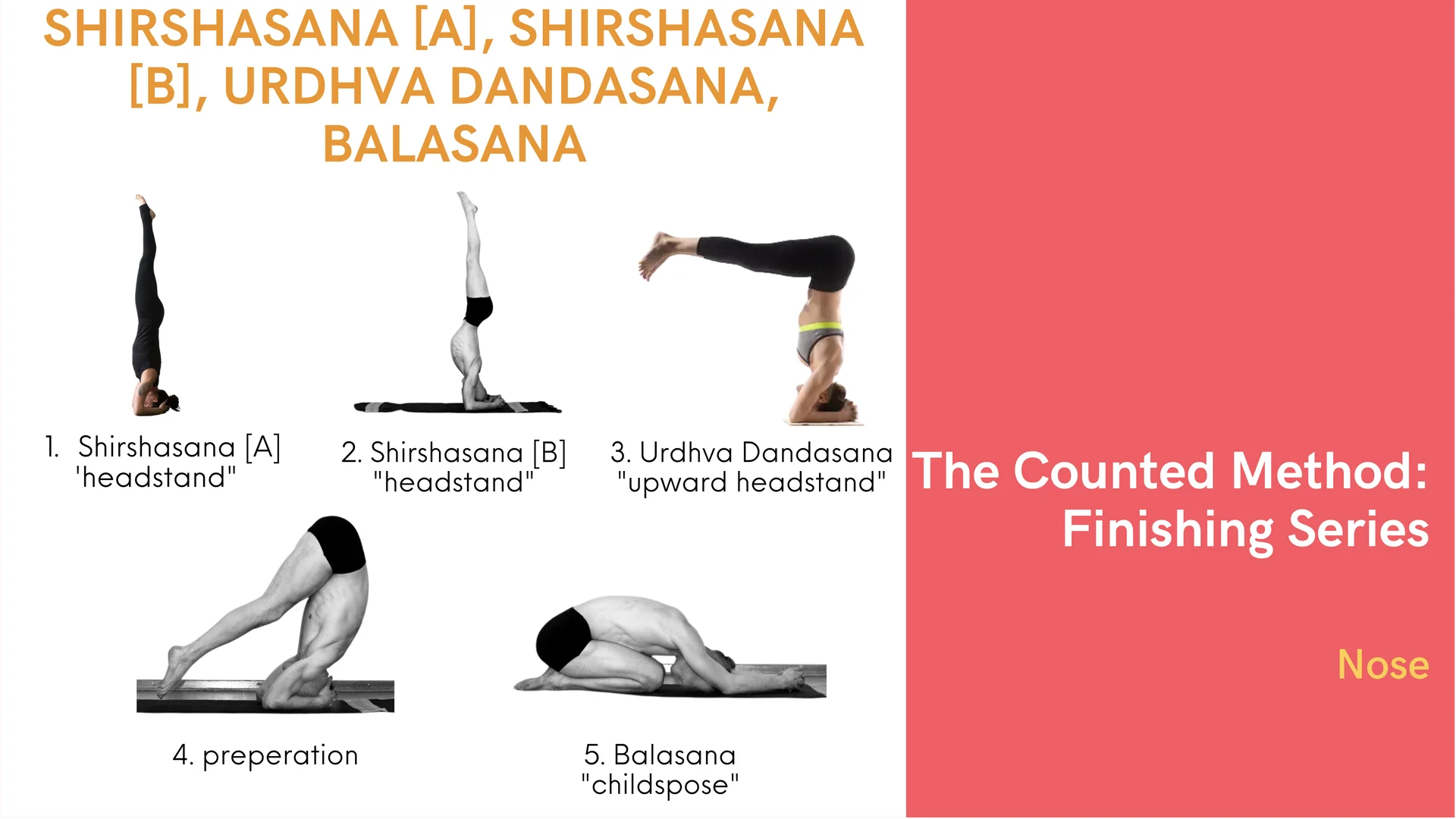
| SİRŞASANA (11 movements) | ||
| 7 | SAPTA | Exhale, prepare |
| 8 | AŞTAU | Inhale, up |
| 9 | NAVA | Exhale, halfway down |
| Inhale, lift up | ||
| 10 | DASA | Exhale, down |
| Balasana s breaths | ||
| 11 | EKADAŚA | Exhale, jump back, Chaturanga |
| 12 | DUÄDASA | Inhale, Upward-Facing Dog |
| 13 | TRAYODAŚA | Exhale, Downward-Facing Dog |
Anatomy
We spend most of our waking hours either sitting Or standing, with the head above the heart. Headstand inverts and balances this habitual position, potentially affecting a variety of physiological processes. For example, there is an increase in the blood returning to the heart (venous return), which can improve (at least temporarily) cardiac output. Also, baroreceptors in the aorta and carotid arteries are stimulated, resulting in increased parasympathetic outflow from the central ner- vous system. This can, in turn, temporarily lower heart rate and blood pressure. Additionally, the cerebral spinal fluid that bathes the brain is likely affected, altering the flow to various regions and potentially improving the transport of nutrients to the brain. Headstand can also have musculoskeletal benefits, including strength- ened paraspinous muscles and improved alignment of the vertebral column.
When you’re in the pose, it is important to align the direction of the force of gravity with the anatomical axis of the vertebral column, such that the weight of the body is taken into the shoulders and distributed evenly throughout the interver- tebral discs and vertebral bodies. The preparatory section below provides guidance on how to strengthen and train “muscle memory” in the paraspinous muscles, prior to actually going up into the pose. Note, however, that Headstand can also be potentially hazardous, especially if you have any pathology in the cervical spine region. It should always be practiced under the direct supervision of a qualified instructor. If you choose not to practice Sirsasana, there are effective alternatives in the restorative pose sequence that allow you to obtain many of the benefits of inversions while avoiding the dangers.
BASIC JOINT POSITIONS
- The shoulders flex and externally rotate.
- The elbows flex.
- The forearms are neutral.
- The wrists flex.
- The trunk extends.
- The hips extend and adduct.
- The knees extend.
- The ankles are neutral or the plantar flexes slightly.
- The feet evert.
- The toes extend.
Continue Reading with Ashtanga Tech
This study guide is available to members. Join to access 800+ in-depth guides on anatomy, philosophy, sequencing, and the science of practice.
Join for $5.50/mo — the cost of a DC coffeeAlready a member? Log in here
Discussion
or explore Student Union