
Parsvottanasana
 Yoga Techniques and Fitness
Overview
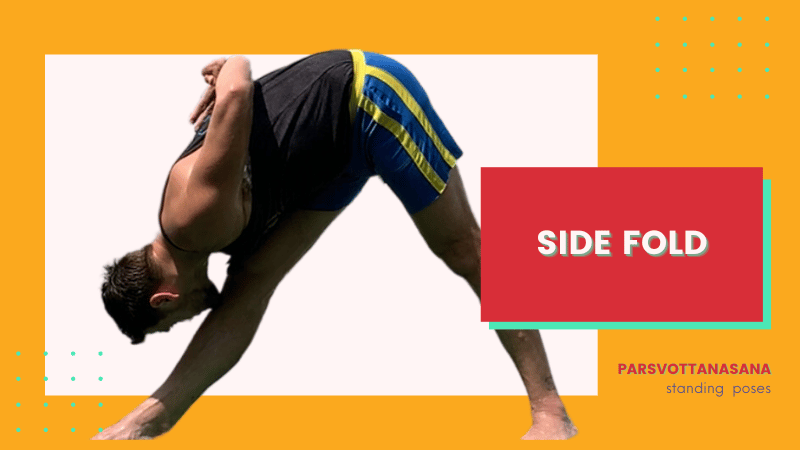
In this lesson, we present Parsvottanasana, an intense side stretch that combines forward bending with shoulder opening through the hands-in-prayer position behind the back.
Objective
Gain understanding of how rotating the pelvis to face the front leg creates a unique stretch in both the hamstrings and the external rotators of the shoulder.
What You'll Get
You'll walk away knowing how to sequence this pose logically after poses where the pelvis faces forward. We cover the biomechanics of the back leg, what's being stretched in the shoulders when the hands are in reverse prayer, and how to modify for students who can't get the hands into position. You'll learn how to activate the front-leg hip flexors to deepen the hamstring stretch and how this pose prepares students for more complex rotations later in the sequence.
Parsvottanasana intensely stretches the muscles at the back of the thighs and two muscles in the calf of the back leg, the gastrocnemius and the soleus Placing the hands in Namasté behind the back rotates the shoulders inward and intensely stretches the muscles that turn the bone in the upper arm outward, the infraspinatus and teres minor.
PÄRSVÕTTANASANA (5 MOVEMENTS) | ||
| 1 | EKAM | Inhale, open to the right, hands in prayer behind back |
| 2 | DVE | Exhale, fold |
| 3 | TRINI | Inhale, up, turn to the front |
| 4 | CATVARI | Exhale, fold |
| 5 | PANCA | Inhale, up, open to the side |
| Exhale, Samasthiti | ||
Anatomy
PARSVOTTANASANA INTENSE SIDE-STRETCH POSE
In parsvottanasana, the pelvis rotates to face the front leg. I place this pose after Ardha Chandrasana to create continuity in the sequence. Later in the practice, we rotate the pelvis further so that this type of pose fits naturally in a sequence that moves from the pelvis facing forward to turning the pelvis to face the front leg, to rotating into a twisting pose such as Parivrtta Trikonasana. Turning the pelvis changes the orientation of the muscle fibers in the back-leg gluteals and front-leg hip flexors, activating the muscle from every direction. This illustrates how designing your yoga practice to have continuity yet change awakens muscle groups efficiently, making the whole of the practice greater than the sum of its parts. The focal point of the stretch in Parsvottanasana is the front-leg hamstrings.
Remember to firmly engage the quadriceps and hip flexors to stimulate reciprocal inhibition of the hamstrings; observe how engaging these muscles changes the sensation of the stretch. A subplot of this pose is the stretch of the back-leg hamstrings and gastrocnemius. The position of the pelvis, back hip, and back foot creates a unique opportunity to stretch these muscles. Augment this stretch by attempting to drag the back foot away from the front foot on the mat, opening the back of the knee. The classical version of Parsvottanasana has the hands in prayer position (na- masté) on the back. This is one example of the ancient yogis devising a way to stretch some of the more hidden and difficult-to-access muscles—the external rotators of the shoulders, including the infraspinatus and teres minor, as well as elements of the deltoids and other muscles. Be careful not to put undue pressure on the extended wrists in this pose.
BASIC JOINT POSITIONS
- The back foot rotates inward 30 degrees and supinates.
- The front foot rotates out 90 degrees.
- The trunk flexes.
- The front hip flexes and externally rotates.
- The back hip internally rotates.
- The knees extend.
- The shoulders internally rotate.
- The wrists extend.
- The cervical spine flexes slightly.
Continue Reading with Ashtanga Tech
This study guide is available to members. Join to access 800+ in-depth guides on anatomy, philosophy, sequencing, and the science of practice.
Join for $5.50/mo — the cost of a DC coffeeAlready a member? Log in here
Discussion
or explore Student Union