
Triyang Mukha Eka Pada Paschimottanasna
 Yoga Techniques and Fitness
Overview
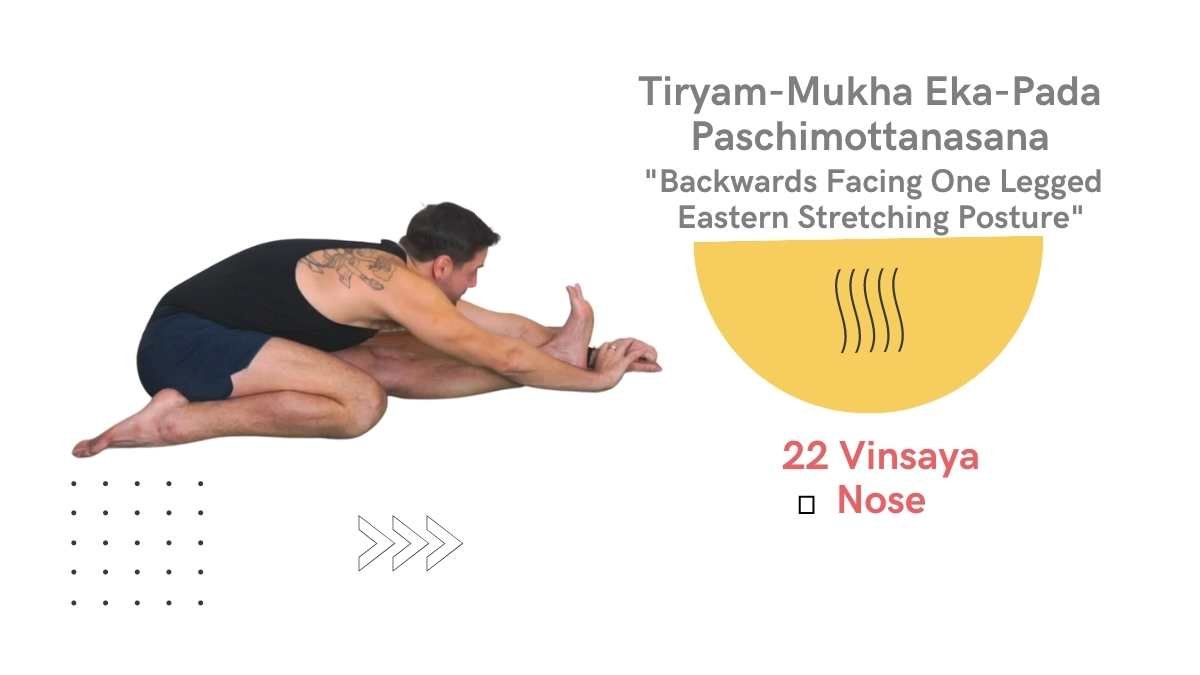
In this lesson, we present Triang Mukhaikapada Paschimottanasana, an asymmetrical forward bend where one knee flexes alongside the body while the other leg extends forward.
Objective
Understand how to work with the awkward off-balance feeling of this pose and how to level the pelvis before attempting to fold forward.
What You'll Get
You'll walk away knowing how to help students find evenness in the pelvis despite the asymmetry of the legs. We cover why props are useful bridges to working independently, how to engage the bent leg and straight leg to shift the center of gravity, and what's being stretched along the back side of the body. You'll learn how to cue the hip and knee flexors on the bent side and the abductors on the straight side to create balance, and when this complex setup is worth the effort.
Triang mukhaikapada paschimottanasana can feel awkward and off balance. One knee is flexing alongside the body and the other leg extends forward.
| TIRYANG MUKHAIKAPĀDA PASCHIMATĀNĀSANA (20 MOVEMENTS) | ||
| 7 | SAPTA | Inhale, jump through, right knee forward |
| 8 | ASTAU | Exhale, fold |
| 9 | NAVA | Inhale, look up |
| Exhale | ||
| 10 | DASA | Inhale, lift up |
| 11 | EKĀDASA | Exhale, jump back, Chaturanga |
| 12 | DUADASA | Inhale, Upward-Facing Dog |
| 13 | TRAYODASA | Exhale, Downward-Facing Dog |
| 14 | CATURDASA | Inhale, jump through, left knee forward |
| 15 | PANCADASA | Exhale, fold |
| 16 | SODASA | Inhale, look up |
| Exhale | ||
| 17 | SAPTADASA | Inhale, lift up |
| 18 | ASTAUDASA | Exhale, jump back, Chaturanga |
| 19 | EKUNAVIMŠATIḤ | Inhale, Upward-Facing Dog |
| 20 | VIMSATIH | Exhale, Downward-Facing Dog |
Anatomy
Triang mukhaikapada paschimottanasana can feel awkward and off balance. One knee is flexing alongside the body and the other leg extends forward so that tipping to the side of the straight leg is nearly inevitable. How did the ancients come up with this pose?! The main story here is a stretch of the back of the body, including the straight
leg. However, there is a complex build-up to this main plot. In Triang Mukhaika- pada Paschimottanasana, obtaining evenness in the pelvis precedes stretching the back side of the body. In any event, maintaining balance can be a struggle. This often leads to using a prop, such as a block or blanket, under the straight-leg buttocks. Props, like teachers, are bridges to working on your own. For example, place support under the straight-leg buttocks to push the body weight toward the bent-leg side, shifting the center of gravity. Then analyze how to create the same force of the prop using biomechanics and muscles alone. Begin by engaging the hip and knee flexors of the bent leg to draw the torso toward that leg. Then contract the abductors of the straight leg to synergize this action and push the body toward the midline. The cue for engaging these muscles is to fix the heel on the mat and attempt to “scrub” it to the side. The heel cannot move, so the force of the scrub shifts the body back toward the midline, preventing you from falling over. Once you attain balance in the pose, squeeze the knees together and bend forward.
BASIC JOINT POSITIONS
- The hips flex.
- The straight-leg knee extends.
- The ankle plantar flexes.
- The foot everts.
- The bent-leg knee flexes.
- The ankle plantar flexes.
- The trunk flexes.
- The shoulders flex, abduct, and externally rotate.
- The elbows flex.
- The forearms supinate.
- The wrists flex.
Continue Reading with Ashtanga Tech
This study guide is available to members. Join to access 800+ in-depth guides on anatomy, philosophy, sequencing, and the science of practice.
Join for $5.50/mo — the cost of a DC coffeeAlready a member? Log in here
Discussion
or explore Student Union