
Pincha Mayurasana
 Yoga Techniques and Fitness
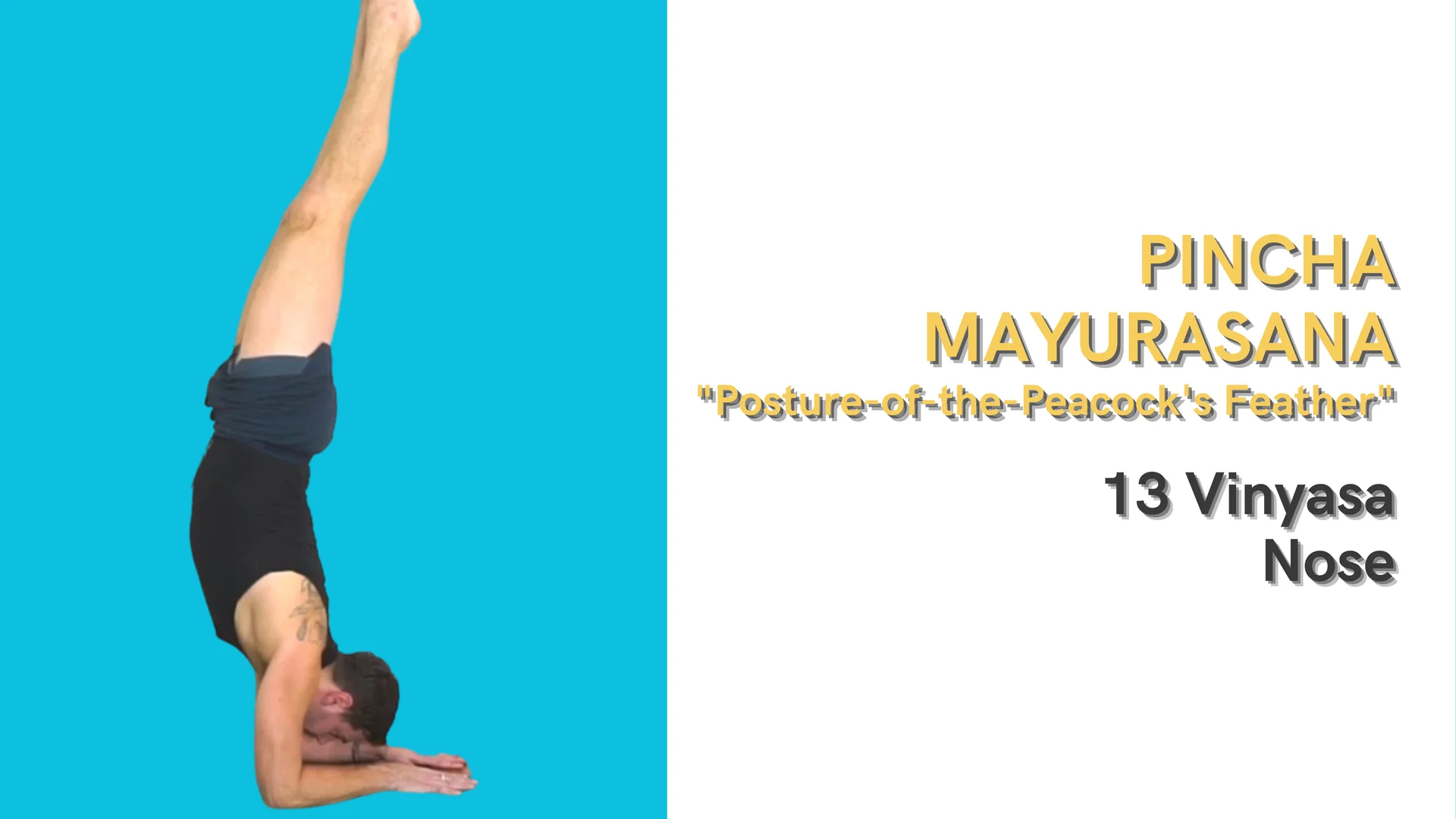
Pincha Mayurasana is a balancing pose in which the body forms the slight arch of a feather. Proper alignment of the shoulders and hips leads to a feeling of lightness and ease in the pose. The deep and superficial shoulder muscles are strengthened as one balances and aligns the shoulder and hip girdles.
Vinyasa Count: Pincha Mayurasana
| # | Sanskrit | Instruction |
|---|---|---|
| 7 | Sapta | Prepare |
| 8 | Astau | Inhale, lift up, five breaths |
| 9 | Nava | Exhale, jump back, Chaturanga Dandasana |
| 10 | Dasa | Inhale, Urdhva Mukha Svanasana |
| 11 | Ekadasa | Exhale, Adho Mukha Svanasana |
Anatomy
In pincha Mayurasana the weight of the body is spread across the forearms and into the palms. This pose shares the same benefits as Full Arm Balance, with the additional advantage of an unusual shoulder stretch. When the arms are held overhead in this position, the humeri are required to externally rotate near their maximum. This stretches the internal rotators of the shoulders. Tight internal rotators cause the hands to slide inward. Counter this tendency by preparing the shoulders with stretches such as Gomukhasana and Garudasana arms before taking the pose. Remember that the shoulder is a combination of several joints. Use this knowledge to strategize how to obtain the optimal position of the pose. For example, protract the shoulder blades (move them away from the midline of the spine) to allow the elbows to adduct, or move inward. Protracting the scapulae also externally rotates the shoulders but from the scapulothoracic joint rather than the shoulder joint proper. This allows the external rotators to more efficiently turn the humerus at the glenohumeral joint. Fix the shoulders in this position by pressing the hands into the mat. Then draw the scapulae back toward the midline of the spine. This is an example of using coupled joint actions to bring the body safely into a pose.
BASIC JOINT POSITIONS
- The shoulders flex and externally rotate.
- The elbows flex.
- The forearms are pronated.
- The wrists flex.
- The trunk extends.
- The hips extend and adduct.
- The knees extend.
- The ankles are neutral or the plantar flexes slightly.
- The feet evert.
- The toes extend.
- The cervical spine extends.
Continue Reading with Ashtanga Tech
This study guide is available to members. Join to access 800+ in-depth guides on anatomy, philosophy, sequencing, and the science of practice.
Join for $5.50/mo — the cost of a DC coffeeAlready a member? Log in here
Discussion
or explore Student Union