
Padangusthasana & Padahastasana
 Yoga Techniques and Fitness
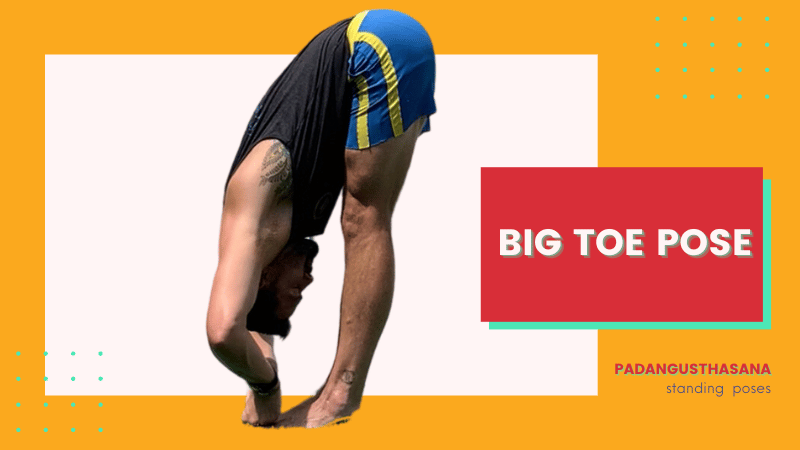
Uttanasana is a symmetrical pose, offering the opportunity to identify asymmetry and imbalances between the two sides of the body. It is also a form of inversion, since it takes the head below the heart and is used during periods of rest in the practice.
Looking Place: Nose
PADANGUSTHASANA (3 MOVEMENTS)(START WITH FEET APART, HOLD BIG TOES) | ||
| 1 | EKAM | Inhale, look up, lengthen |
| 2 | DVE | Exhale, fold forward |
| 3 | TRINI | Inhale, look up, lengthen |
| Exhale | ||
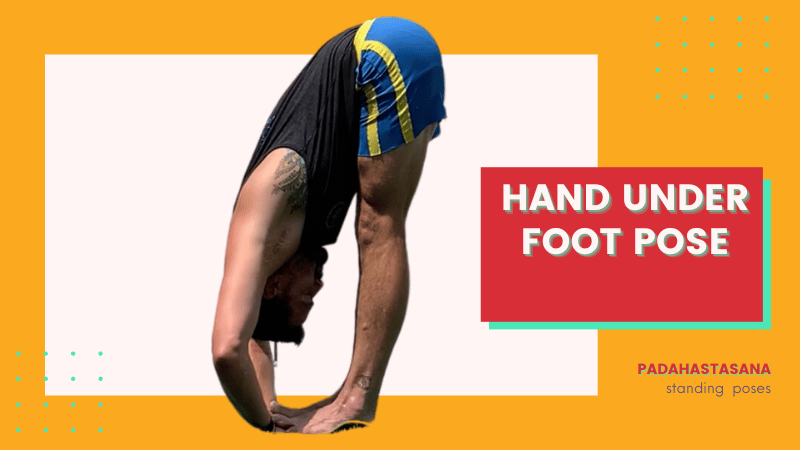 PADAHASTASANA (3 MOVEMENTS) | ||
| 1 | EKAM | Inhale, hands under feet, look up, lengthen |
| 2 | DVE | Exhale, fold forward |
| 3 | TRINI | Inhale, look up, lengthen |
| Exhale, Samasthiti | ||
Anatomy:
UTTANASANA
INTENSE FORWARD-BENDING POSE
Uttanasana is a standing pose and a forward bend that functions to lengthen the hamstring and calf muscles, with a secondary stretch of the back. You can use a technique called triangulation to locate the focus of the stretch and deepen it. For example, activate the quadriceps to straighten the knees. This moves the hamstring insertions farther away from their origin on the ischial tuberosities (the sitting bones). Flex the trunk to draw the ischial tuberosities up and away from the ham- string insertions on the lower legs. To produce this action, simultaneously contract the hip and trunk flexors to draw the torso forward while engaging the quadriceps. These actions combine to move the origin and insertion of the hamstrings farther apart, “triangulating” the hamstrings and stretching the muscle. To add to this stretch, constrain your hands on the mat and attempt to drag them forward by bending the elbows; this draws the trunk further into flexion and exemplifies a sec- ondary action contributing to the primary action of the pose. If you cannot reach the floor, grasp the backs of your knees or lower legs and bend the elbows. Be- cause the hands are fixed in place, on the mat or holding the legs, the contractile force of the biceps draws the trunk deeper into flexion. This force is transmitted through the posterior kinetic chain to the pelvis, tilting it forward and lifting the ischial tuberosities, thereby augmenting the stretch of the hamstrings. Remember that contracting the quadriceps creates reciprocal inhibition of the hamstrings, their antagonist, signaling the hamstrings to relax and move more deeply into the stretch. Experience this in Uttanasana by firmly engaging the quadriceps, and note how the sensation of the stretch changes.
BASIC JOINT POSITIONS
- The hips flex.
- The trunk flexes.
- The femurs internally rotate (slightly).
- The knees extend.
- The cervical spine is neutral.
- The shoulders flex overhead.
- The elbows flex.
- The forearms pronate.
Continue Reading with Ashtanga Tech
This study guide is available to members. Join to access 800+ in-depth guides on anatomy, philosophy, sequencing, and the science of practice.
Join for $5.50/mo — the cost of a DC coffeeAlready a member? Log in here
Discussion
or explore Student Union