
Salamba Sarvangasana (all postures)
 Yoga Techniques and Fitness
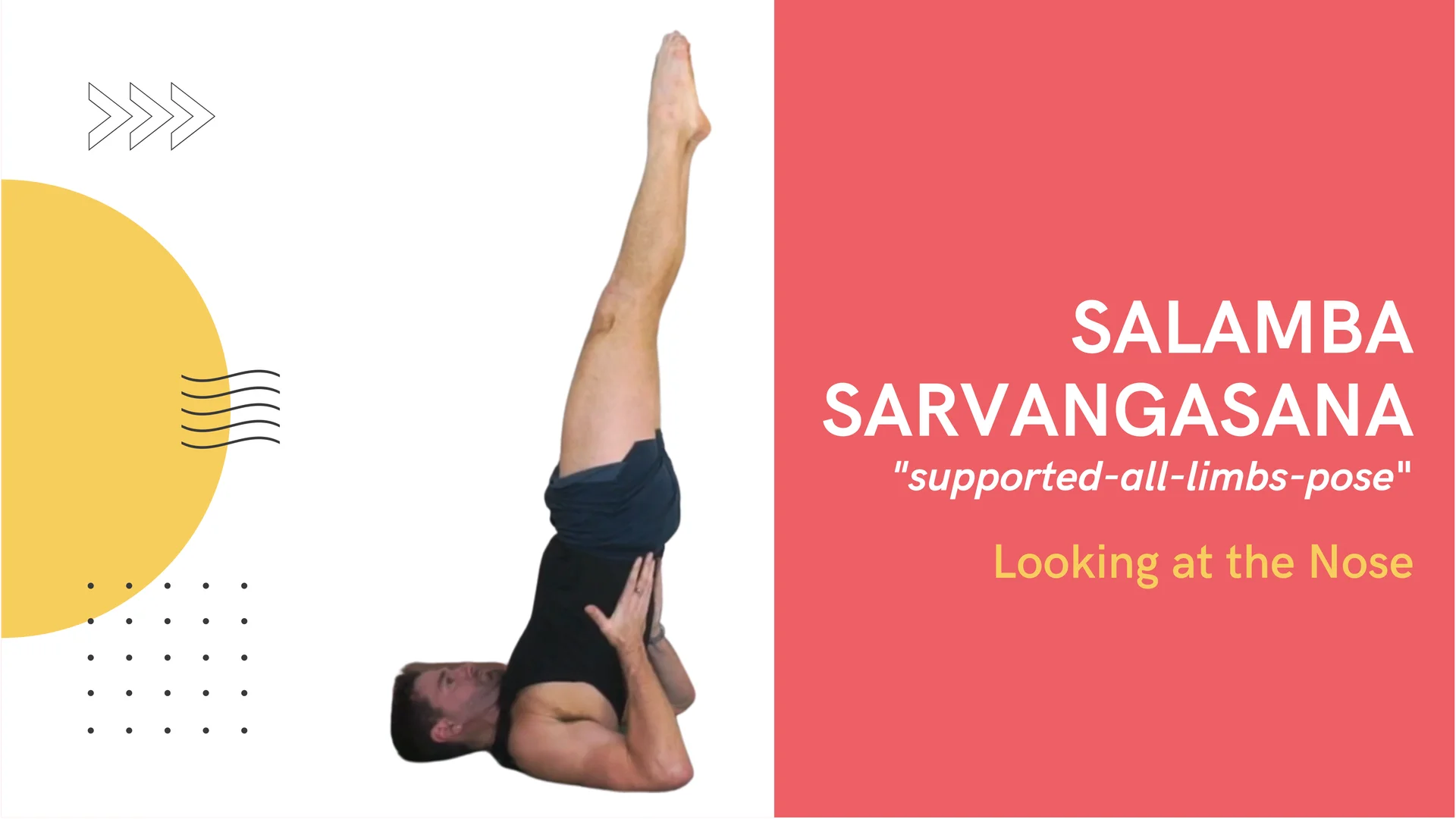
Salamba Sarvangasana is the first shoulder stand inversion. Where Headstand has the shoulders flexing forward, Shoulder Stand has them extending, with the hands supporting the back. Additionally, the neck is flexed.
| SARVANGASANA (11 movements) | ||
| 7 | SAPTA | Inhale, jump through |
| Exhale, lie down | ||
| 8 | AŞTAU | Inhale, lift up |
| HALASANA (11 movements) | ||
| 8 | ASTAU | Exhale, lower feet, bind |
| KARNAPIDASANA (11 movements) | ||
| 8 | ASTAU | Exhale, bend knees, bind |
| ÚRDHVA PADMASANA (12 movements) | ||
| 9 | NAVA | Inhale, take lotus balance |
| PINDASANA (12 movements) | ||
| 9 | NAVA | Exhale, fold, bind |
| MATSYASANA (12 movements) | ||
| 9 | NAVA | Exhale, lift up |
| UTTANA PADASANA (12 movements) | ||
| 9 | NAVA | Inhale, take pose |
| Exhale, down | ||
| 10 | DASA | Inhale, Chakrasana |
| Exhale, Chaturanga | ||
| 11 | EKADAŚA | Inhale, Upward-Facing Dog |
| 12 | DUÄDASA | Exhale, Downward-Facing Dog |
Anatomy
Salamba Sarvangasana is the first shoulder stand inversion. Where the Headstand has the shoulders flexing forward, the Shoulder Stand has them extending, with the hands supporting the back. Additionally, the neck is flexed. As with other postures, there are several subplots to the story of Sarvangasana an inversion, a shoulder stretch, and a chest opener. Do not place the weight of the body onto the neck. Instead, lean back into the hands and elbows to distribute the weight across the shoulders and upper arms. This frees the neck. At the same time, contract the biceps to press the hands into the back. This levers the chest open one of the great hidden benefits of the pose. Shoulder Stand also shares many of the potential benefits of other inversions, including improved venous return and cardiac output and increased parasympathetic outflow (temporarily lowering heart rate and blood pressure).
BASIC JOINT POSITIONS
- The shoulders extend and externally rotate.
- The elbows flex.
- The forearms supinate.
- The trunk extends.
- The cervical spine flexes.
- The hips extend and adduct.
- The knees extend.
- The ankles are neutral or the plantar flexes slightly.
- The feet evert.
- The toes extend (the big toe can flex).
Continue Reading with Ashtanga Tech
This study guide is available to members. Join to access 800+ in-depth guides on anatomy, philosophy, sequencing, and the science of practice.
Join for $5.50/mo — the cost of a DC coffeeAlready a member? Log in here
Discussion
or explore Student Union