
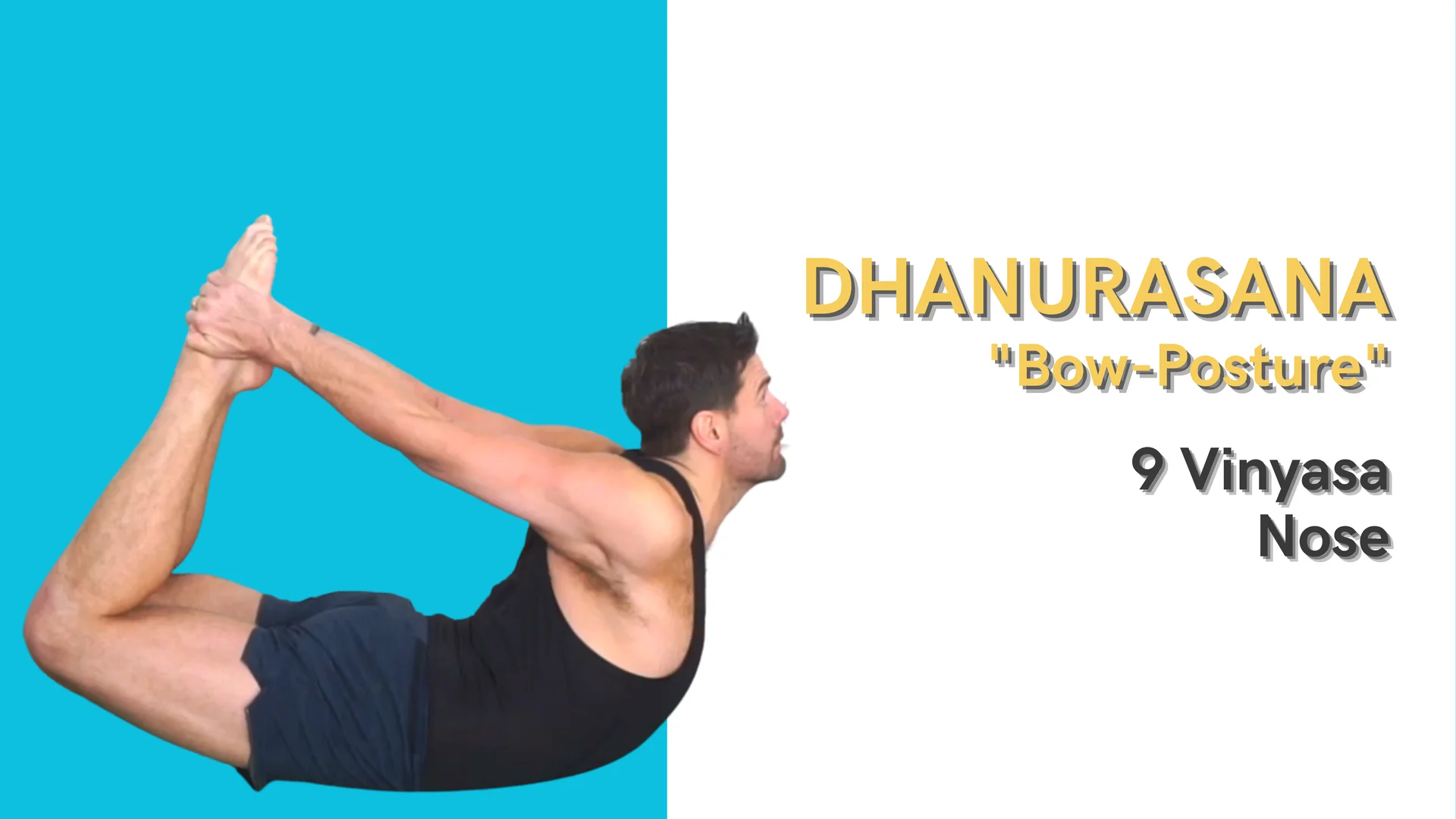
Dhanurasana
 Yoga Techniques and Fitness
Overview
In this lesson, we explore Bhekasana, or Frog Pose, which stretches the front of the thighs and challenges the spine to extend while the knees are deeply bent.
Objective
Become familiar with the unique demands of Bhekasana, where hip extension and knee flexion combine to create an intense stretch through the quadriceps and hip flexors.
What You'll Get
What You'll Get: You'll learn how to position your body so that the stretch targets your quads and hip flexors without compressing your lower back. Bhekasana is demanding, but it teaches you how to work with deep knee flexion while maintaining length through your spine. This has practical applications for anyone working on backbends or addressing tightness in the front of the hips. For professionals, this lesson offers insight into how to safely guide clients through a pose that challenges both flexibility and spinal integrity.
Bow Pose Here the torso and legs form the body of a bow and the arms form the string. Contracting the muscles on the back of the body slackens the string. Keeping the muscles along the front of the body active tightens the bow. Further bending the elbows draws the string and bends the bow.
Anatomy
In Dhanurasana, we connect the upper and lower appendicular skeletons (the hands and the feet) to lever the axial skeleton (the spinal column) into extension. Grasping the ankles with the hands is a secondary action that contributes to the primary stretch of the front of the body. The shoulders extend to lift the feet, with the arms forming the string of the bow. Lifting the arms and bending the elbows tightens the body of the bow—the femurs, pelvis, and trunk. The body of the bow stretches, resisting the action of the arms to form a bandha. Work toward extending the hips and straightening the knees; this pulls on the arms to further extend the spine. All of these actions combine to deepen and stabilize the posture. Facilitated stretches that create length in the fronts of the hips and shoulders, such as those described in the preparation, can be used to train these regions of the body for Dhanurasana. Numerous subplots contribute to the final pose. For example, you can grip the ankles more firmly and then bend the elbows. Gripping tightly with the hands will recruit additional fibers in the muscles that flex the elbows biceps and brachialis. Bending the elbows and straightening the knees increases the stretch of the front of the body and the bend of the back of the body.
BASIC JOINT POSITIONS
- The shoulders extend.
- The elbows extend.
- The forearms pronate.
- The hips extend, internally rotate, and adduct.
- The knees flex.
- The ankles dorsiflex (extend).
- The trunk extends.
Continue Reading with Ashtanga Tech
This study guide is available to members. Join to access 800+ in-depth guides on anatomy, philosophy, sequencing, and the science of practice.
Join for $5.50/mo — the cost of a DC coffeeAlready a member? Log in here
Discussion
or explore Student Union