
Salabasana
 Yoga Techniques and Fitness
Overview
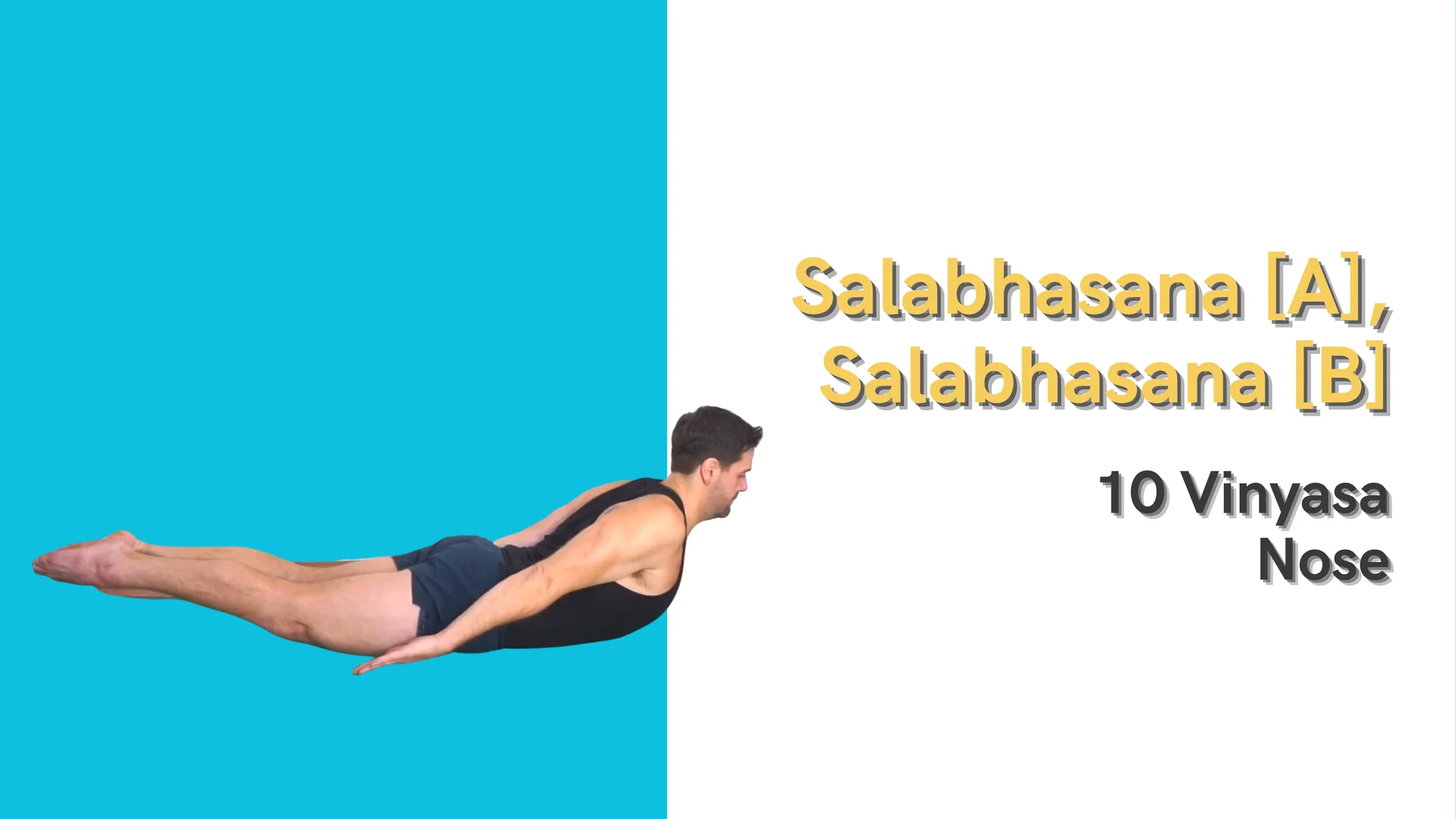
In this lesson, we explore the detailed anatomy of Salabhasana (Locust Pose), examining the muscles activated and strengthened in this foundational backbend and its role in preparing the body for deeper extensions.
Objective
Understand the muscular anatomy of Salabhasana — including the roles of the erector spinae, quadratus lumborum, lower trapezius, gluteus maximus, and hamstrings — along with its vinyasa count and function as preparation for deeper backbends.
What You'll Get
A thorough anatomical breakdown of Salabhasana that goes well beyond 'lie on your belly and lift.' You'll learn which muscles are doing the work — erector spinae, QL, lower traps, glutes, hamstrings — how they synergize, and why this pose matters as groundwork for the backbends that follow. The vinyasa count is included for Ashtanga practitioners. Whether you're a student wanting to understand what you're feeling in the pose or a teacher looking to cue with anatomical precision, this gives you the substance behind the shape.
Salabhasana strengthens the muscles that arch the back, including the erector spinae along the length of the spine, the quadratus lumborum in the lower back, the lower trapezius spanning the upper back, the gluteus maximus, and the hamstrings. This prepares the body for back bends that create greater extension of the spine, such as Urdhva Danurasana and Ustrasana.
Vinyasa Count: Salabhasana [A], Salabhasana [B]
| # | Sanskrit | Instruction |
|---|---|---|
| 4 | Catvari | Hold, exhale, lower |
| 5 | Panca | Inhale, position A, five breaths |
| 6 | Sat | Inhale, position B, five breaths |
| 7 | Sapta | Inhale, Urdhva Mukha Svanasana |
| 8 | Astau | Exhale, Adho Mukha Svanasana |
Anatomy
Salabhasana strengthens the muscles that arch the back, including the erector spinae along the length of the spine, the quadratus lumborum in the lower back, the lower trapezius spanning the upper back, the gluteus maximus, and the hamstrings. This prepares the body for backbends that create a greater extension of the spine, such as Urdhva Danurasana and Ustrasana.
Continue Reading with Ashtanga Tech
This study guide is available to members. Join to access 800+ in-depth guides on anatomy, philosophy, sequencing, and the science of practice.
Join for $5.50/mo — the cost of a DC coffeeAlready a member? Log in here
Discussion
or explore Student Union